
Movie Urban Legends Revealed #4

This is the fourth in a series of examinations of legends from movies and the people who make them and whether they are true or false.
Click here to view an archive of the previous movie urban legends.
Let’s begin!
MOVIE LEGEND: Vera-Ellen neck had to be covered at all times in the film White Christmas because her neck was ravaged by the effects of anorexia.
STATUS: I’m Going With False
Vera-Ellen was a popular musical actress during the 1930s, 40s and 50s.
She appeared in such legendary musicals as On The Town and White Christmas.
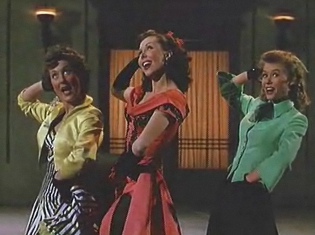
Here she is in On the Town (1949) (she is the third woman in the picture)…
Here, then, are a number of pictures of Vere-Ellen from the 1954 film, White Christmas…
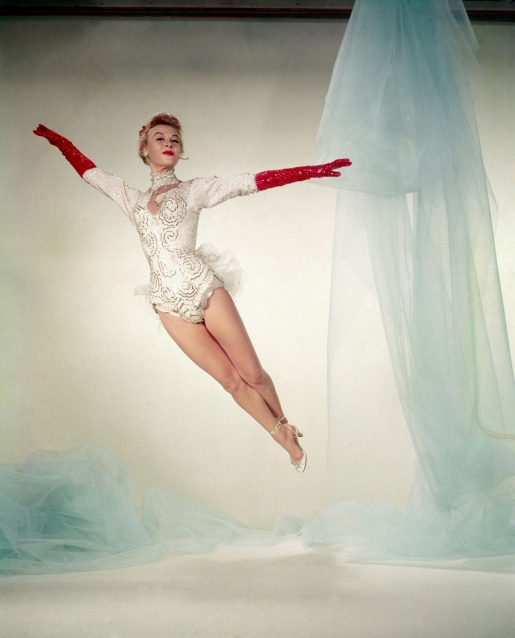
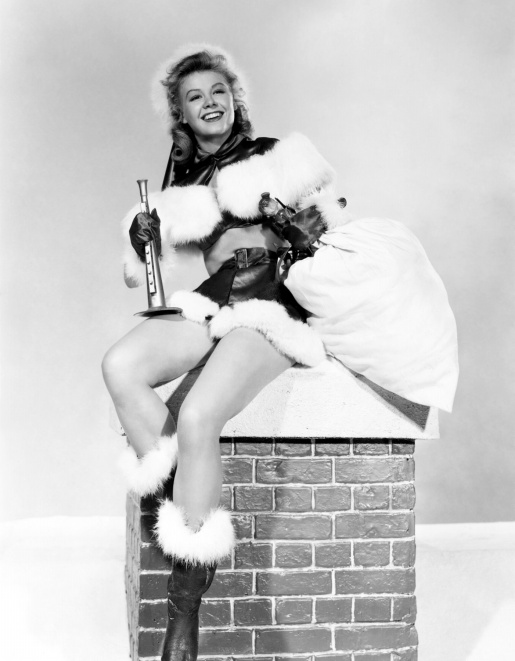
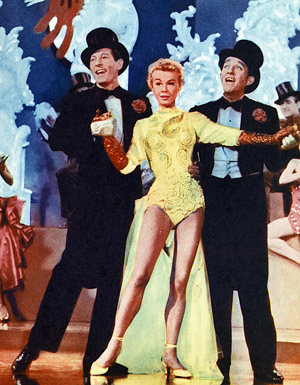
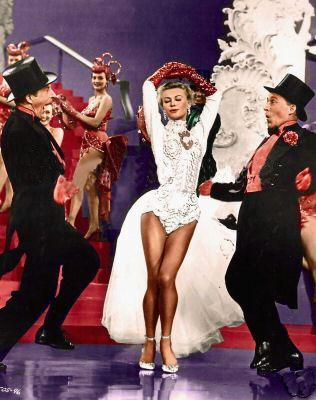
As you might notice, Vera-Ellen’s neck is covered in all of these pictures. In fact, her neck is covered up in the entirety of White Christmas.
Vera-Ellen was an extremely thin woman who died in 1980 (at the age of 61). While never officially diagnosed during her lifetime (heck, the term itself was barely around during her lifetime), Vera-Ellen is alleged to have suffered from either anorexia nervosa or bulimia nervosa (or possibly both).
Anorexia nervosa is a mental illness pertaining to a distorted view of how skinny a person is that results in many different effects in people, most specifically, the physical problems of having their body waste away due to their belief that they are too fat. Bulimia nervosa is a similar illness where women binge eat and then purge (through vomiting, laxatives or other means) what they eat. Some women alternate between anorexia and bulimia.
Vera-Ellen was an EXTREMELY skinny woman for the rest of her life, and biographers of her have made it pretty clear that she suffered from one or both of the diseases (it was perhaps exacerbated by studio weight requirements, something that afflicted Judy Garland, as well).
While it has not been proven, I do agree that the circumstantial evidence is probably there enough that I would tend to agree that she had SOME sort of eating disorder.
Bill Dennington, a friend of Vera-Ellen, had the following to say on the matter:
Vera-Ellen was a friend for 20 years until her death. I was in L.A. and had lunch with her 2 weeks prior to her death. If you’ve read David Soren’s book Vera-Ellen: The Magic and The Mystery you would have seen my personal photographs of Vera-Ellen. The photographs were taken in the 60’s and 70’s and she looked fine. All of her life she wore something around her neck, a necklace,a choker, a scarf, a collar, etc., etc. It was her “trademark” like Van Johnson wore red socks. I saw her neck many times it was lovely…..like Audrey Hepburns. Hate that people think of her as “the dancer with anorexia” and not just the FABULOUS DANCER WHO HAS BEEN SO OVERLOOKED !!!!!!!!!!!!
Thanks to Bill for his valuable insight.
In addition, Vera-Ellen’s niece, Ileana Rothschild, stopped by to share her thoughts, as well:
I am Ileana Rothschild, and Vera Ellen was my aunt by marriage. I was born in 1967 and my mother and I went for my first visit to my aunt Vera’s home on Outpost Cove in Hollywood, CA.
My mother became one of her very close friends, and Aunt Vera gave her many of her baby Victoria’s personal items for me.
I know for a fact that Vera never stopped taking dance classes and maintained her slim figure always. Vera was an avid swimmer and she took me for my very first swim with her in her beautiful heated pool when I was only one month old.
My mother and Vera stayed good friends and often had dinner together. At times when having dinner at Vera’s home they were accompanied by Vera’s aged mother.
At this time Aunt Vera had been recovering from a mild stroke and would use a regimented swimming program as part of her total recovery: but had no eating disorder.
My aunt Vera Ellen was a fine loving and kind person with a beautifully toned body, which she always maintained.
Thanks for sharing, Ileana!
In any event, to the matter at hand – the story is that Vera-Ellen’s neck had to be covered up in White Christmas because they (quoting from her wikipedia page here, to give you an idea of what the general thought is regarding the situation):
were designed to cover her neck, which was aged beyond her years due to her eating disorder.
If you search around, you’ll get that basic story in lots of places.
However, while I would agree that it seems to be too much of a coincidence that they happened to cover her neck in EVERY shot in White Christmas, I differ about the reason behind it.
One of the great “piece of Hollywood history” films that is available to us is the filming of the premiere of A Star is Born in September of 1954.
White Christmas filmed in late 1953.
Here is Vera-Ellen at the red carpet in September of 1954…
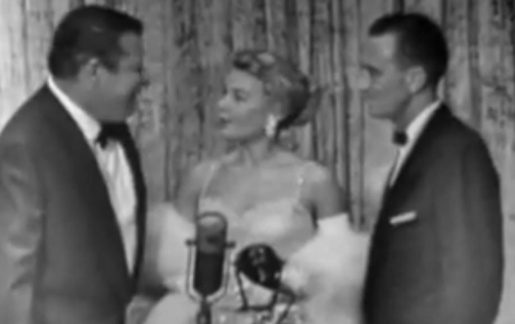
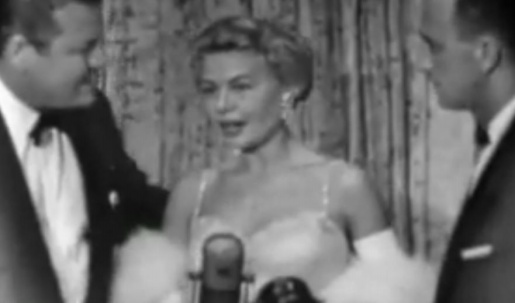
As you can see, Vera-Ellen’s neck is clearly evident in the shots, and her neck looks fine.
Similarly, here is a shot of Vera-Ellen from early 1953, right around the time she was filming Big Leaguer (which was filmed during Spring Training 1953).
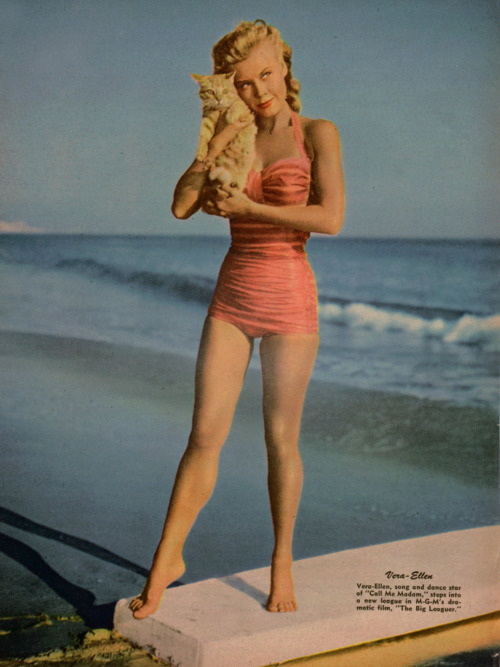
So right before she filmed White Christmas and less than a year after she filmed White Christmas her neck looked fine.
This, of course, does not mean that there was not SOMEthing wrong with her neck during the filming of White Christmas, of course.
But the most commonly repeated story about it is that her neck was so ravaged with seeming old age that they had to cover it up, and that’s NOT the sort of thing that would just clear up in a year after not being present just a few months earlier in 1953, so that’s why I’m going with false, even though there could be some OTHER anorexia-related reason for the neck covering (like a general “It looked odd on camera uncovered”).
In addition, as Bill theorized, it could simply be something as simple as a covered neck being her trademark, like Van Johnson always wearing red socks or Flo in those auto insurance ads always wearing an open collar shirt.
Here’s the footage of Vera-Ellen from the 1954 event if you’d like to see her some more…
Thanks to LisaLaLisa92 for the footage and thanks to Doctor Macro for the great scans of Vera-Ellen from White Christmas. And thanks again to Bill and Ileana for their valuable insight into the life of a wonderful dancer who really HAS been far too overlooked in film history.
MOVIE LEGEND: Burt Reynolds turned down an Academy Award-winning acting role that was specifically written with him in mind so that he could do Stroker Ace.
STATUS: True
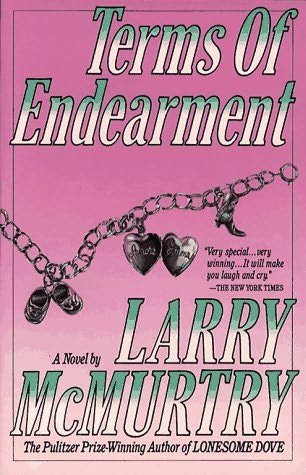
Terms of Endearment was a 1975 novel by Larry McMurtry about the strained relationship of a mother and her grown daughter…
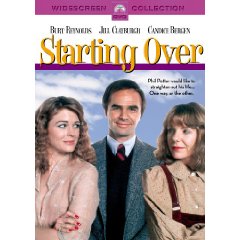
James L. Brooks made his film debut as a writer with the screenplay for the popular 1979 film, Starting Over, starring Burt Reynolds as a divorced man balancing his relationship with his new girlfriend and his ex-wife…
In 1983, Brooks made his film debut as a writer/director with the film adaptation of Terms of Endearment, starring Shirley MacLaine and Debra Winger as the mother and daughter.
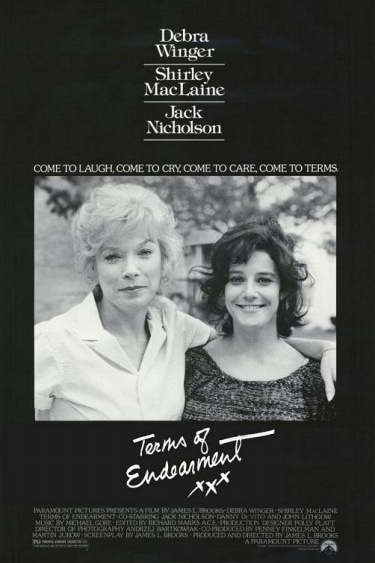
Brooks decided to add a new character to the film, a romantic interest for MacLaine’s character. The character, Garrettt Breedlove, was a retired astronaut who was a bit of an arrogant boozehound, but with a heart of gold.
Brooks wrote the character with Reynolds in mind, who was in his late 40s at the time.
However, Reynolds at the time had a lead role in an action-comedy called Stroker Ace, where he played a race car driver.
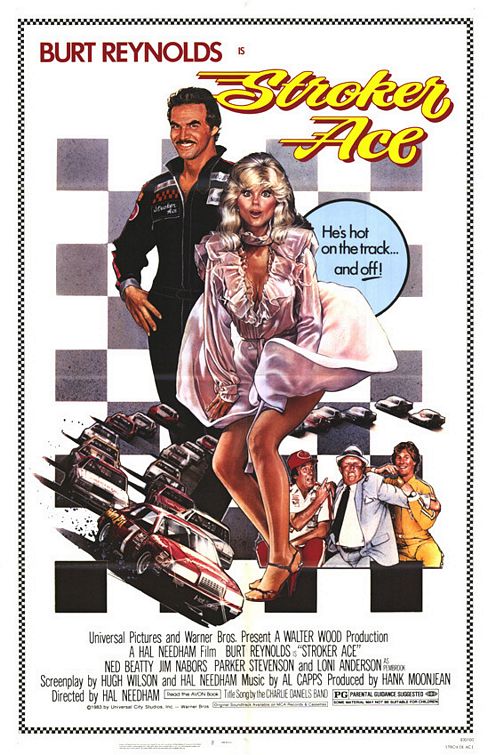
Stroker Ace was a film in the mold of previous Reynolds hits like Smokey and the Bandit and The Cannonball Run, so the odds were pretty good that it, too, would be a commercial success.
Brooks, instead, appealed to Reynolds’ ego as an actor, arguing that the role would show off Reynolds’ range as an actor and would give him a very good chance at an Academy Award nomination for Best Supporting Actor. (Staring Over netted nominations for the two actresses in it, Jill Clayburgh and Candice Bergen)
In the end, though, Reynolds just could not reconcile less money for a smaller role that required him to be a bit of a wreck of a guy in a film that was no sure bet for success, while his other option was a well-paid starring role that let him be the macho hero in a film that was likely to succeed.
So Reynolds turned it down, and after a couple of other actors passed on it as well, James Garner had the role for a bit, but he and Brooks differed on how to play the character, so Jack Nicholson was given basically the same speech from Brooks that Brooks gave Reynolds, and Nicholson was willing to take a pay cut and be a supporting actor.
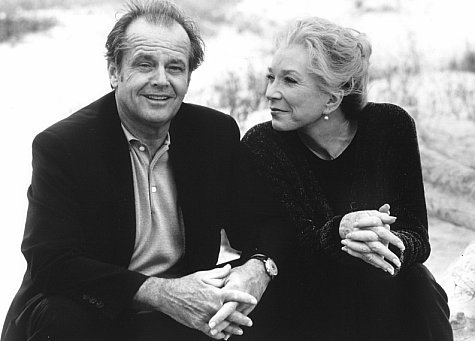
And as these things often turn out, Nicholson did, in fact, win the Academy Award for Best Supporting Actor and Terms of Endearment ended up being a critical and commercial success, while Stroker Ace was a flop, both critically and commercially.
Reynolds later asserted that it was the worst mistake in his career.
MOVIE LEGEND: People all across the United States were flooded with calls due to their number being shown in the film Bruce Almighty, including a church with a pastor named Bruce!!!
STATUS: True
Bruce Almighty was a 2003 blockbuster film starring Jim Carrey, Jennifer Aniston and Morgan Freeman where God (played by Freeman) gives all of his powers to Bruce (Carrey) to see if he can do a better job than God.
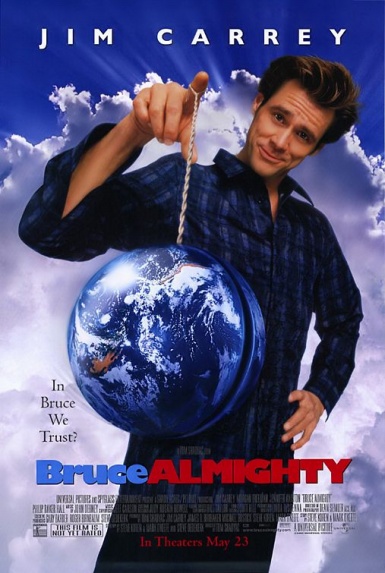
The film’s massive popularity backfired a bit when the filmmakers failed to fully vet a phone number.
In most films, when phone numbers are given, they use the prefix 555, or more specifically 555-0100 through 555-0199 (as 555 numbers outside of this group might actually exist, as they ARE available for use).
In Bruce Almighty, however, in a scene where God pages Bruce, the number given is (no area code) 776-2323. The filmmakers checked that number in Buffalo, New York, Area Code 716, (where the film is set) and found that it did not belong to anyone.
However, they did not check the rest of the country, and soon, people and companies and groups with that number (with different area codes, of course) began receiving calls directed to “God.”
One of the numbers even led to a church, and their pastor’s first name actually WAS Bruce!!!
For the DVD release of the film, the number was changed to 555-0123.
Okay, that’s it for this week!
Feel free (heck, I implore you!) to write in with your suggestions for future installments! My e-mail address is bcronin@legendsrevealed.com



You state that “Vera-Ellen was an EXTREMELY skinny woman her whole life.” However, in “Three Little Girls in Blue” (1946) she had obviously put on a few pounds. Maybe she didn’t like the pleasingly plump look and decided to diet? Just a thought.
You are absolutely right, Lon.
I actually meant to correct that phrase while I was writing to “the rest of her life,” which I’ll do right now!
Brian….Vera-Ellen was a friend for 20 years until her death. I was in L.A. and had lunch with her 2 weeks prior to her death. If you’ve read David Soren’s book Vera-Ellen: The Magic and The Mystery you would have seen my personal photographs of Vera-Ellen. The photographs were taken in the 60’s and 70’s and she looked fine. All of her life she wore something around her neck, a necklace,a choker, a scarf, a collar, etc., etc. It was her “trademark” like Van Johnson wore red socks. I saw her neck many times it was lovely…..like Audrey Hepburns. Hate that people think of her as “the dancer with anorexia” and not just the FABULOUS DANCER WHO HAS BEEN SO OVERLOOKED !!!!!!!!!!!!!!!
Bill Dennington
Thanks so much, Bill!
Like I say in the above piece, the “anorexia” stuff is strictly alleged, so I’m thrilled to have someone who knew Vera-Ellen speak definitively on the subject.
I’ll edit your response into the above piece.
Years ago, Reynolds stated that he had very much wanted the Terms role, but that he couldn’t get out of his Stroker contract. Of course he also once said that the Terms role came down between him and Jack, and that of course Jack won. He claimed that his agent told him it was down to Burt and “one other actor”. Burt supposedly replied “as long as the other guy isn’t Jack Nicholson I’ve got the part”. His agent’s face fell at the statement, etc. Hard to tell sometimes truth from fiction.
It was Cuckoo’s Nest that Reynolds had that famous line about, David.
But yeah, besides that, all we know absolutely is that the role was written for Reynolds and he turned it down for Stroker Ace, so that’s why I named the legend that. Beyond that, the specifics are a bit more up for grabs (did he try getting out of his Stroker Ace contract, etc.), and I’d like to think that I kept it suitably non-definitive on the parts of the legend beyond “It was written for Reynolds and he turned it down for Stroker Ace.”
Suggestion for future Movie Urban Legend investigation:
Please explain how/why LXG was such a departure from the source material.
oops!
By golly you’re right! It’s probably been twenty years since I read that, and I got it all a little muddled. Still sometimes hard to believe that the Burt Reynolds from “Deliverance” is the same guy from “Stroker Ace”.
Just as an aside, though, I actually liked Stroker Ace.
[…] just did a bit on Movie Legends Revealed where a recent film caused a stir when it listed God’s number withOUT a […]
“Please explain how/why LXG was such a departure from the source material.”
You have to phrase it in the form of a true/false question.
That said, the rights to the comic were optioned by Don Murphy’s production company before the comic had ever been released [he knew about it early because of his involvement in ‘From Hell’], and they sold the movie rights using the just-released issue 1 as part of the pitch. The movie script is based on two or three issues of the comic, with the screenwriters filling in the rest from either their own imagination or from the script ‘Cast of Characters’ by Larry Cohen.
Huh. I’ve seen White Christmas a dozen times (my wife LOVES it, and we watch it every year during the holiday season) and I never noticed her neck was covered throughout.
Needs to be in the form of a “true or false” statement, eh? Okay, then….
Did the producers of the film adaptation of “League of Extraordinary Gentlemen” add the character of Tom Sawyer (not to mention the many, many other fundamental changes in the story) in order to pander to an American audience?
I’ve heard that people with anorexia (or other forms of malnutrition) have a tendency to bruise very easily, and that the bruises can take a long time to fade. That could’ve made covering her neck necessary, without causing any permanant damage, so that her neck could be shown at later times.
As regards Vera Ellen’s health situation, there is another possiblity that has not been brought forth. She may have had an illness called Marphan’s Syndrome. Marphans is revealed by the patient being tall, thin with very long fingers and long narrow feet, just to name a few of the symptoms. I have noticed that she had these qualities. I, also note that she died at 61, that could have been as a result of Marphan’s also. Abraham Lincoln had Marphans. It’s just a thought.
Movie magic gone amok! Vera-Ellen was about 5’4″ tall and had tiny feet!
Concerning Vera Ellen’s possible eating disorder – if you happen to look at photos of her in very early life prior to becoming famous, you will see that in fact, Vera Ellen was heavier. Her face also photographed quite wide in her early years in certain shots. This would not have been good if you wanted a career in Hollywood. Considerng that the studios required that their stars be of a certain weight and appearance, it would not surprise me that she dieted to stay thin and perhaps it got a bit out of hand. Also keeping in mind that regardless of her thin stature, her legs remained toned and very muscular due to her continued dancing. There are many photographs of Vera Ellen where she appears quite thin and you can see her bones protruding from her chest. You can also see how thin her arms are in these photos. This would also require some adjustments in the costume department to hide this during filming. Since most dancers are quite thin anyway, I think it was a combination of extreme exercise through dancing and the need to remain and photograph thin.
LOL on the Bruce Almighty phone number to God. I wonder how many people actually thought God might pick up? It sounds stupid, but I remember reading somewhere that a town in Italy, that stood in for Bethlehem in a film about Christ, popular among fundamentalist Christians, regularly gets American visitors who want to see where Christ was born. In Italy.
Hi,
As I am watching White Christmas, I am thinking that maybe her neck isn’t showing because the look makes her legs look longer. Perhaps it was to keep the movie modest for the times, as well.
Something this simple can explain lots of things 🙂
Shai
Sitting here watching White Christmas and my husband and I talking about this and how she had to have anorexia. That’s what made me google her name!
I never noticed when I was a kid but it is so glaringly obvious by looking at her strange figure and how Danny Kay’s hand on her stomach it almost is bigger than her hips, gross. I cant believe the studios used her let along there is nothing to hide it!
Hope we have learned!
Julie
Has anyone ever heard of a connection between an “aging neck” and anorexia? I have never heard of that before, and I could not find any medical connection anywhere on the web. But since this girl had such gorgeous legs, it might be that you would want to cover up everything from the waist up to accentuate her legs. Of course, her face must be visible, but a covered neckline does make the legs seem longer in my opinion.
this is veering toward ghoulish now.
I am Ileana Rothschild, and Vera Ellen was my aunt by marriage. I was born in 1967 and my mother and I went for my first visit to my aunt Vera’s home on Outpost Cove in Hollywood, CA.
My mother became one of her very close friends, and Aunt Vera gave her many of her baby Victoria’s personal items for me.
I know for a fact that Vera never stopped taking dance classes and maintained her slim figure always. Vera was an avid swimmer and she took me for my very first swim with her in her beautiful heated pool when I was only one month old.
My mother and Vera stayed good friends and often had dinner together. At times when having dinner at Vera’s home they were accompanied by Vera’s aged mother.
At this time Aunt Vera had been recovering from a mild stroke and would use a regimented swimming program as part of her total recovery: but had no eating disorder.
My aunt Vera Ellen was a fine loving and kind person with a beautifully toned body, which she always maintained.
Thanks so much, Ileana. I’ll share this on the other post I have on Vera-Ellen.
Wikipedia is not considered a credible source.
THANK you Sarah Goetsch! I am so tired of people acting like Wikipedia is the be all to end all fact site!
In re: Vera Ellen’s neck.
Take a look at the very last film she made, Let’s Be Happy (1957) http://www.imdb.com/title/tt0050632/. At the beginning and end of the film, she’s wearing an open-necked shirt. No choker, no necklace — just bare neck.
No wattle, no wrinkles.
Can we FINALLY put that rumor to rest?
Regards,
Vince Runza
Wikipedia is not being cited as a source of fact. I even specifically explain that IN the piece, so as to not confuse anyone into thinking that it was being cited as a source of fact, and yet still, you complain about it being used as a source of fact. Now doesn’t that beat all?
Vera-Ellen had THE most sexy legs I’ve ever seen in my life and my gawd….what a dancing legend!
I have seen several movies with Vera-Ellen, and at no time have I ever viewed her as “ill”. The woman had a flawless figure as well as flawless movement when she danced…and that smile! As for neck coverings, she was just a little ahead of her time…in the 70’s and 80’s she would have fit in perfect!
Through what I’ve seen and experienced, I think that the more likely reason for covering her neck in WC (if it was indeed done for a cosmetic reason) would be due to protruding bones in her chest rather than any problems with the neck itself. Depending on body composition, on an extremely thin person, (whether with an eating disorder or not) the appearance of the collarbones and upper chest/ribs can be very jarring. There definitely are pictures of Vera-Ellen showing her upper chest at her lowest weights, and you can see her upper ribs clearly. Since it’s a difficult area to cover in terms of creating a nice line on a costume that is also easy to dance in, the best bet was probably just to cover her entire neck. There’s also been speculation that it was done to make her seem like the younger sister in the film, when she was actually 7 years older than Rosemary Clooney.
[…] has gathered wrists and little pleats at the neck for extra fanciness. Because as Nora Ephron and Vera-Ellen know, there’s nothing women want more than a pleated […]
Looking at White Christmas it’s quite possible that Vera-Ellen had Ehlers-Danlos Syndrome(like Jim Carrey) which leads to hyperflexibility. Its inherited and could have been a factor in the death of her child (from SIDS). Some variants of EDS are very marfanoid…
You are all off base. Edith Head did the gowns. She was known for having her own ideas about how to dress and showcase star beauties. Those who did not agree did not work with her (like Claudette Colbert). Those who did benefitted from her exquisite, timeless taste (Stanwyck, Hepburn). On Hepburn she also hid the long thin neck in order to show off better assets. Do your homework folks. In those days they showed up to the job and let the pros do their jobs, just as the stars did theirs!
I miss that now! All the techno wonders of today pale!
I just happened to be watching “White Christmas” for the first time last night, and I was taken aback by how her blody looked so skinny and unhealthy. I immediatly googled her name and anorexia…. it is clear to me that she had an eating disorder of some kind. HAving said that, her talent and energy in that film is astonishing considering the disease the was dealing with.
I believe that is Arlene Daul (don’t know how to spell it) not Vera Ellen in the video of A star if Born night
I’ve never heard of anorexia causing damage to the neck. This condition causes extreme puffiness of the face. And in “White Christmas” her face appears slightly swollen based upon her size. If you notice she had a very long neck and both she and Edith Head probably thought that her beautiful face was enhanced by a high neckline. She is the main reason that WC is one of my favorite movies of all time.
Taking Lesley’s, Ileana Rothschild’s and Bill Dennington’s comments together with the fact that Vera first entered show business as a Rockette at an early age, where a dancer’s legs and face are her stock-in-trade, the White Christmas pics showcase precisely those parts of her body which were her greatest assets. Besides, the film’s title is “White Christmas”, with the ideas of cold, snow and winter weather running throughout, so costumes covering Vera’s neck certainly imply cold, as opposed to hot weather. I daresay Edith Head was well aware of that and used it to elegant advantage in designing for the film and its stars. Just remember — gossip and morbid fascination with speculative secret details of the stars’ private lives know no bounds, where the focus of their fans’ prurient attentions are concerned.
I don’t believe Vera Ellen had anorexia, I think the reason her neck was covered was to show off her legs and beautiful face, being a dancer takes a lot of energy and is very physically demanding, why can’t she just be thin? I personally think she is one of the most beautiful woman of that time
In White Christmas, When Vera is dressed in the yellow outfit dancing on stage only half of her neck is covered and it looks fine. I dated a girl in High School that was skinnier than Vera. When I put my arm around her waist I could almost go all the way around her waist and she wasn’t anorexic or anything like that. She just looked that way naturally. She was quite tall too at 5’10” so she looked thinner than Vera Ellen. Even Rosemary Clooney (George Clooney’s aunt) had a small waist in the White Christmas movie. It was just the style of the 1940’s and ’50’s and even thru the 1960’s. Just look at the waist of a Barbie doll made during that era.
I have a slightly different take on why Vera Ellen’s neck was covered in White Christmas. I just saw the film for the umpteenth time, and the one thing that struck me throughout the film was the contrast between Vera Ellen and Rosemary Clooney as regards their figures. Remember, this is the early 1950’s. The curvy look was gaining in popularity…I think perhaps they wanted to draw attention away from the fact that VE was not especially well-endowed or curvy, and they achieved this illusion by drawing the eye up and away from her upper body… which I have to admit, actually appeared ‘stuffed’ much of the time. Clooney’s curves and cleavage were on constant display; the opposite could be said of Vera Ellen’s. Even the red dress in the closing scene was designed with a white fur trim draped across the bust, as though to hide it. They obviously were going for contrast with the two actresses, and succeeded.
[…] complexes for little girls. True, I’ll give the complainers the fact that her waist is Vera-Ellen tiny. But do I think that Lily James’ waist was enhanced to look that small? No. Do I […]
All these rumor that Vera had anorexia are started by overweight women who are too lazy to diet and exercise and spend their time trying to convince men that slim and in shape women are somehow diseased. Nonsense. Vera was a beautiful athletic dancer with a wonderful physique. How could you be anorexic and in failing health yet dance 14 hours a day the way she did? Impossible. We all wish we were in the shape she was in. Just watch her dancing. Does that look like someone not healthy? She was gorgeous. Eat your hearts out, ladies.
I’m willing to bet that it was not in fact Vera Ellen’s neck that they were trying to conceal, but instead her entire decollete. Regardless of whether or not she had an eating disorder, she was incredibly thin around the time of filming White Christmas, and it’s quite possible her ribs and clavicle were protruding in some shots. As a dancer she would have been shot from a multitude of angles and under different lighting, which could’ve exacerbated any figure flaws in her chest area. It might’ve been her own requests to raise the neckline on her garments (in the “Sisters” performance her neckline on the blue dress sits a touch higher, however, Rosemary Clooney’s neck length is shorter in comparison to Vera-Ellen’s and it might’ve only been designed to flatter each women’s figure individually). Her neck isn’t always covered, there are a few brief shots where you can see quite a bit of it, but compared to her costar she is quite gaunt and her neck looks a touch ropey. Rosemary looks full and voluptuous with a large bust and when propping Vera next to her it might’ve been quite the contrast, perhaps they needed to find ways to balance them out visually? I would think drastic aging on the neck would cause deep creases or sagging and neither seems to be the case here. When I was anorexic my bones in my chest were disgustingly apparent and my bust quite small and sunken, I loathed wearing tank tops and almost always wore t-shirts with high jewel cut necklines.