Was Rodin’s First Major Sculpture Really Just a Plaster Cast of a Model?

Here is the latest in a series of examinations into urban legends related to the world of sculpture and whether they are true or false.

SCULPTURE URBAN LEGEND: Auguste Rodin made a mold of a person for the basis of his statue, Age of Bronze.

In a lot of ways, the beginning of Auguste Rodin’s career helps prove the old saying, “Any publicity is good publicity.”

The first 30 years of Auguste Rodin’s life likely brought a good deal of development to him as an artist, but it did not do a lot for his bank account. He dealt with poverty for most of these years. 1870 was a turning point, though, for Rodin, as he moved to Brussels with his boss, artist Albert-Ernest Carrier-Belleuse to do some ornamentation work on a palatial Brussels estate.

Although the two parted ways soon after arriving in Brussels, Rodin managed to get work in various other studios, and over time, he began to save up enough money to travel and study the masters of sculpture in Italy, like Donatello and Michelangelo.

In 1877, Rodin finally burst on to the international art scene with his work, Age of Bronze…

However, the stunningly life-like sculpture also brought a great deal of controversy to Rodin, as he was charged with a major no-no by the rest of the art world. It was said that Rodin made a cast of a model and then sculpted around that cast. That was a major artistic taboo.

Was it true?
Read the rest of this entry »
Did Leonard Nimoy Request For Spock to Be Killed Off in Star Trek II: The Wrath of Khan?

Here is the latest in a series of examinations into urban legends about movies and whether they are true or false. Click here to view an archive of the movie urban legends featured so far.

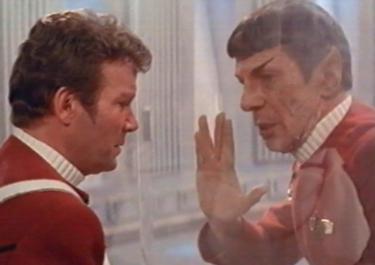
MOVIE URBAN LEGEND: Leonard Nimoy requested that Spock be killed off if Nimoy was to play Spock again in Star Trek II: The Wrath of Khan.

Norm Macdonald has an old joke about the time he met a guy at a bar and they ended up drinking so much that when Macdonald woke up the next day, he was in a rehab facility. As it turns out, the guy he was drinking with was an alcoholic who presumed that Macdonald was one, as well, so he checked them both in to rehab. As Macdonald jokes, he tried to explain to the people at the facility that he was not an alcoholic, but as it turns out, that’s apparently exactly what alcoholics say, as well. That has been the situation that Leonard Nimoy has been dealing with for over thirty years with regards to the long-standing legend that Nimoy requested that Spock be killed off in Star Trek II: The Wrath of Khan.

He’s been denying it for decades, but people figure that he would deny it even if it were true, so his denials have not held much weight. So let’s try to settle it as best as we can this week. Did Leonard Nimoy request for Spock to be killed off if Nimoy were to return to play the character in Star Trek II: The Wrath of Khan? Read on to find out!
Read the rest of this entry »

Tags:

June 5th, 2013 | Posted in Movie Legends Revealed | 8 Comments

Was a Shakespeare Expert Really Called in to Rule on the Genital Authenticity of a Statue of a Character from a Shakespeare Play?

Here is the latest in a series of examinations into urban legends related to the world of sculpture and whether they are true or false.

SCULPTURE URBAN LEGEND: A Shakespeare expert was called to rule on the genital authenticity of a statue of a character from a Shakespeare play.

Eric Gill was a widely respected designer of typefaces, and his work can still be seen on some Penguin books and some British Broadcasting Corporation (BBC) programs.

He was also a noted sculptor, and in 1931, he was commissioned by the BBC to do a sculpture outside of their offices in London. It seems as though Gill had a decent amount of freedom with his choice of subject, except that it was supposed to have something to do with culture (like based on a novel, a play, etc.).

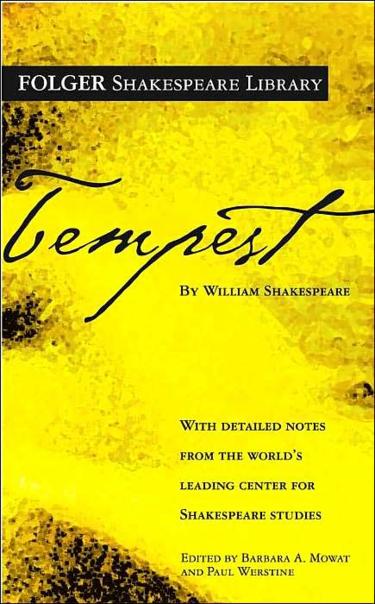
Gill decided to draw two characters from William Shakespeare’s play, The Tempest.

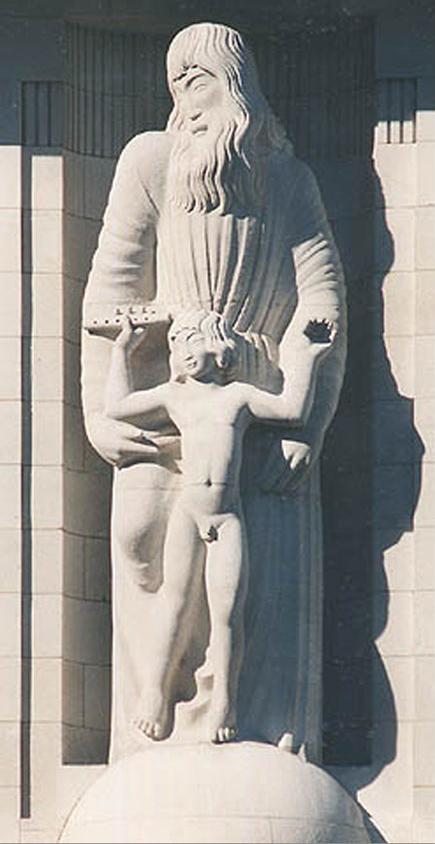
He decided on the lead character from the play, the banished sorceror, Prospero, as well as the sprite, Ariel (Gill chose Ariel as a bit of a play on words, as the BBC delivered their radio content through aerial transmissions). Gill decided to depict the two almost like father and son.

Here is the statue…

Well, there was a bit of a problem with Ariel’s, well, his penis.
Read the rest of this entry »

Was a Fictional Character Nominated for an Best Screenplay Academy Award?

Here is the latest in a series of examinations into urban legends about movies and whether they are true or false. Click here to view an archive of the movie urban legends featured so far.

MOVIE URBAN LEGEND: A fictional character was nominated for a Best Screenplay Academy Award.

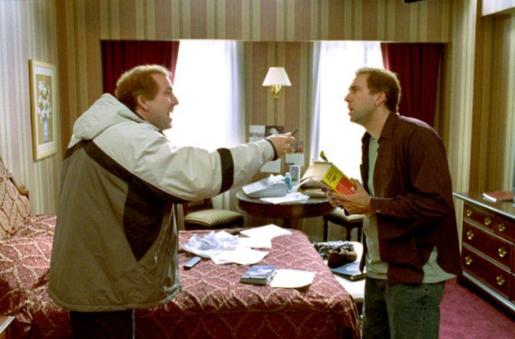
Adaptation is an engaging film about the struggles that screenwriter Charlie Kaufman had with adapting Susan Orlean’s book The Orchid Thief into a movie.

In the film, which was directed by Spike Jonze (who had directed Kaufman’s screenplay, Being John Malkovich, to great acclaim), Charlie is aided by his twin brother, Donald Kaufman. Both characters are played by Nicolas Cage (with the aid of “movie magic”).

As you can see from the film poster above, the film is credited as being written by Charlie and Donald Kaufman.

The brothers were nominated for an Academy Award for Best Adapted Screenplay.

Fair enough, right?

Not so fast!
Read the rest of this entry »

Did the Baroness Shirley Williams Almost Get the Lead in National Velvet?

Here is the latest in a series of examinations into urban legends about movies and whether they are true or false. Click here to view an archive of the movie urban legends featured so far.

MOVIE URBAN LEGEND: Shirley Williams almost got the lead in National Velvet!

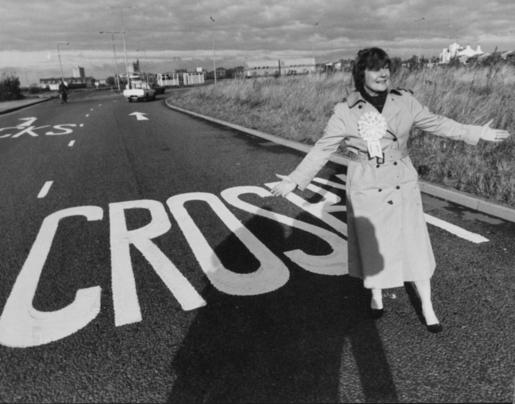
Shirley Williams is The Baroness Williams of Crosby, PC, a title bestowed upon her for her long life of political service.

She is most known for her split from the Labour Party in the early 1980s to form the Social Democratic Party, along with Roy Jenkins, David Owen and Bill Rodgers.

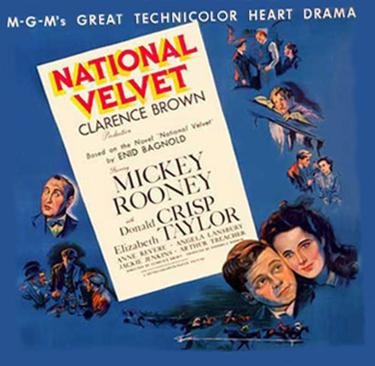
For years, though, a story has made the rounds that Williams’ long, storied career in politics might have been de-railed at a young age had she gotten a movie role that she was up for – the lead role in National Velvet!

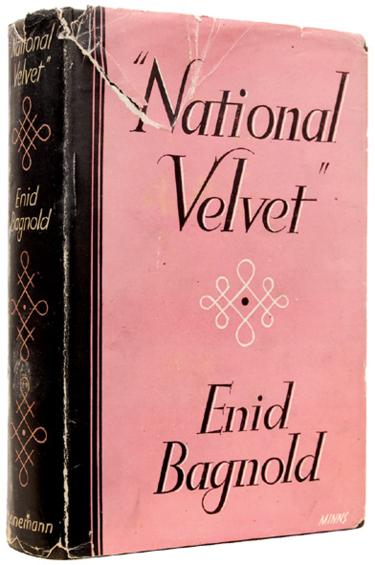
National Velvet was a very popular novel by Enid Bagnold that came out in 1935.

The book is about a young girl who wins the Grand National steeplechase with her beloved horse.

The novel was adapted into a film in 1944, and 1943 was spent on a nation-wide talent search for the young girl who would play the lead. The search had to be reserved to American girls, because of a British law not allowing women under the age of 18 to travel abroad to work for profit without a special license. And only girls 14 and older could obtain said license. So for this film, where the lead was an 11-year-old girl, it would not work.

However, Shirley Williams (then Shirley Catlin), the 13-year-old daughter of noted author Vera Brittain, had been evacuated to the United States in 1940 because of World War II. So she would be eligible (as she was already over here). And for years, as noted above, the story has gone that Shirley barely lost out to the ultimate lead of the picture, 11-year-old Elizabeth Taylor.

People love “What If..?” stories, and few have more potency as this one, as not only would Williams’ political career likely have been de-railed, but so, too, would Taylor’s film career!

So is it true?
Read the rest of this entry »
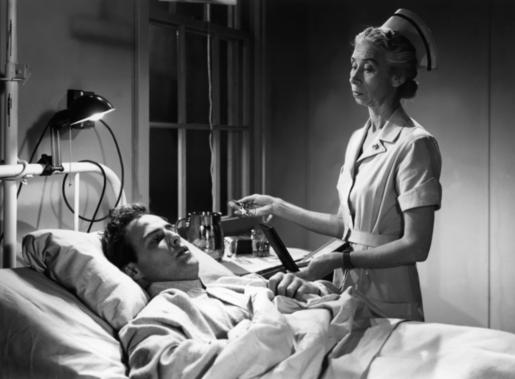
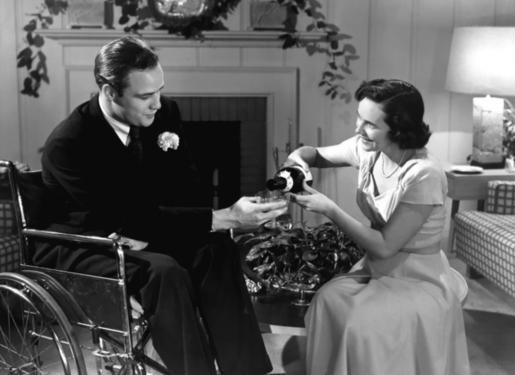
Did Marlon Brando Once Make a “Miraculous Recovery” to a Proselytizing Visitor When He Was Pretending to be a Paraplegic in a Veteran’s Hospital?

Here is the latest in a series of examinations into urban legends about movies and whether they are true or false. Click here to view an archive of the movie urban legends featured so far.

MOVIE URBAN LEGEND: Marlon Brando made a “miraculous recovery” while preparing for his first motion picture role.

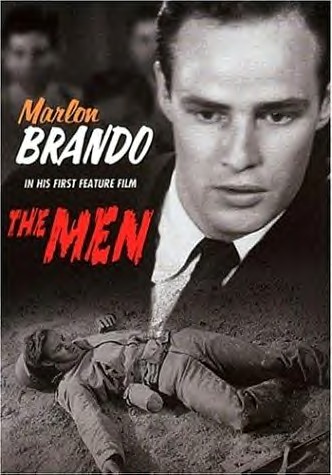
Marlon Brando was already a noted theater actor when, in 1949, he was picked to star in Fred Zinneman’s The Men, Brando’s motion picture debut.

In the film, Brando plays a soldier who is paralyzed after being shot during World War II.

Well, to prepare for the role, Brando asked to be admitted as a patient at the Birmingham Veterans Hospital in Van Nuys as a paraplegic. Since Brando was not famous at this point, he was able to blend in pretty well. Eventually, he let his fellow patients know that he was a movie actor there researching a role, but still, the vast majority of the other patients there did not know that Brando was not actually a paraplegic.

As the popular story goes, Brando in a bar with some friends from the hospital when a Salvation Army lady comes in collecting waste paper. She is shocked at the sight of all these paralyzed veterans, and cries out, “Oh Lord, grant that these men may be able to walk again!”

At which point, Brando gets up from his wheelchair, shocking the woman and delighting his friends.

That’s a pretty shocking story if true, right? But IS it?
Read the rest of this entry »

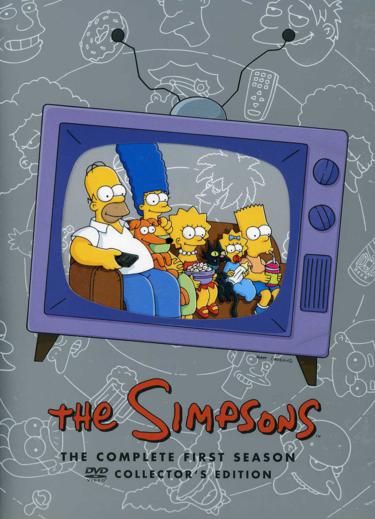
Was Krusty the Clown Originally Going to be Homer Simpson in Disguise?

Here is the latest in a series of examinations into urban legends about TV and whether they are true or false. Click here to view an archive of the TV urban legends featured so far.

TV URBAN LEGEND: Was Krusty the Clown Originally Going to be Homer Simpson in Disguise?

One of the more interesting challenges in the world of television is how to develop a spin-off. A character or a concept being strong enough to be a supporting character/aspect of a popular TV show is one thing, but taking that character/idea and developing it into something that can handle its own show is a whole other thing. Compare the way that the creators of Frasier were able to add a great cast and a strong show concept around the Frasier Crane character from Cheers against what the creators of Joey were able to do around the Joey Tribbiani character from Friends (I still think Drea de Matteo was a great piece of casting on Joey, at the very least). It’s certainly quite a challenge. That was what faced Matt Groening, James L. Brooks and Sam Simon as they took Groening’s Simpsons characters and adapted them from simple shorts on The Tracey Ullman Show into their own full-length sitcom.

All sorts of off-the-wall ideas were tossed around as they tried to develop concepts for the new series. One of these ideas, amazingly enough, was that Homer Simpson and Krusty the Clown would be the same person!!
Read the rest of this entry »

Tags: ,

May 29th, 2013 | Posted in TV Legends Revealed | 2 Comments

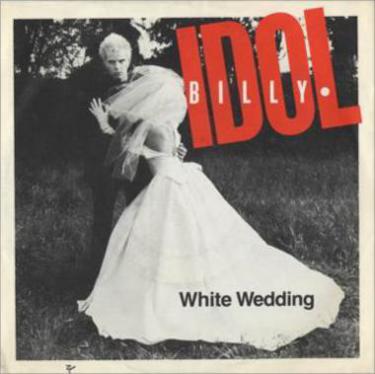
Did Billy Idol Write “White Wedding” as a Put-Down Towards His Sister?

Here is the latest in a series of examinations into urban legends about music and whether they are true or false. Click here to view an archive of the music urban legends featured so far.

MUSIC URBAN LEGEND: Billy Idol wrote “White Wedding” as a put down towards his sister.

Billy Idol’s single “White Wedding” (specifically it’s “White Wedding (Part 1)” – I don’t know why it’s called that – there might be a legend there!) was released in 1982 off of Idol’s 1982 self-titled album.

It was a Top 40 hit in the United States and did even better in Idol’s native England.

The music video was one of the most memorable MTV videos of the era.

In any event, when the song was showed on VH1’s Pop-Up Video program in the early 1990s, it was claimed that the song was about Idol’s dissatisfaction with his sister getting married because she was “knocked up” by her fiancĂ©.

Is that true?
Read the rest of this entry »
Did Seaquest Correctly Predict That the Florida Marlins Would Win the 2003 World Series?

Here is the latest in a series of examinations into urban legends about TV and whether they are true or false. Click here to view an archive of the TV urban legends featured so far.

TV URBAN LEGEND: Seaquest correctly predicted the Florida Marlins’ 2003 World Series victory.

Reader Paul asked:

I was hoping you could help me with this one. A friend of mine told me that the TV Show Seaquest DSV correctly predicted the World Series, 10 years before it happened. In the first episode he said one of the actors was wearing a Marlins Jersey, and on the back it said World Series Champion, 2003. So not sure if this is true, or if the guy was just wearing a Marlins Jersey. Was hoping you knew the answer.

Sure thing, Paul!

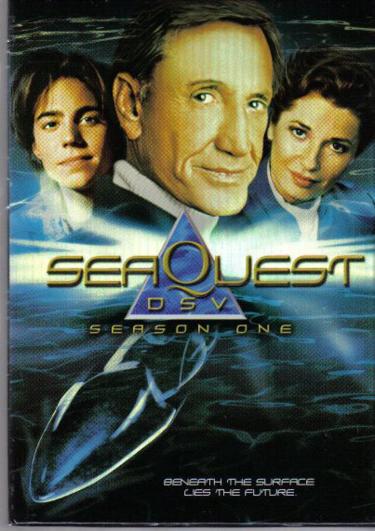
Seaquest DSV was about submarine, appropriately named seaQuest DSV 4600, in the year 2018, where the world has wasted almost all of its resources on land, and thereby is forced to colonize under the sea, with Seaquest being there to protect the colonists (and also do some exploring, of course).

Jonathan Brandis played Lucas Wolenczak, a teenaged genius who invented a device that allowed humans to communicate with dolphins.

In any event, Lucas was, indeed, a fan of the National League baseball team, the Florida Marlins, which was likely:

A. A cute reference to how the show was in the future and the Marlins (who were an expansion team that began playing baseball in 1993, the same year Seaquest debuted) were now a veteran team

B. Logical, as the show was based near Florida

and

C. Perhaps a fish joke, seeing as how the show was about underwater exploration, and the character’s favorite team is named after fish.

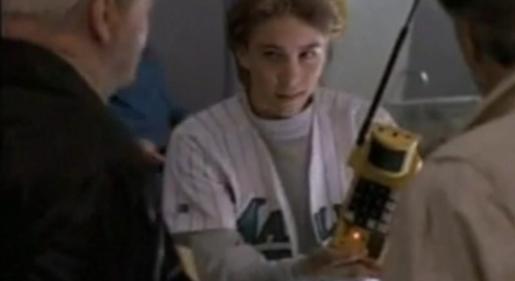
Here Lucas is wearing his jersey…

So Paul’s friend is correct, Lucas DID wear a Marlins jersey. But is it like Paul said – it was just a Marlins jersey and nothing more?
Read the rest of this entry »
Who Bet his Entire Company That the Madness Song “It Must Be Love” Would be a Hit?

Here is the latest in a series of examinations into urban legends about music and whether they are true or false. Click here to view an archive of the music urban legends featured so far.

MUSIC URBAN LEGEND: The head of Madness’ record company bet his company that “It Must Be Love” would be a hit.

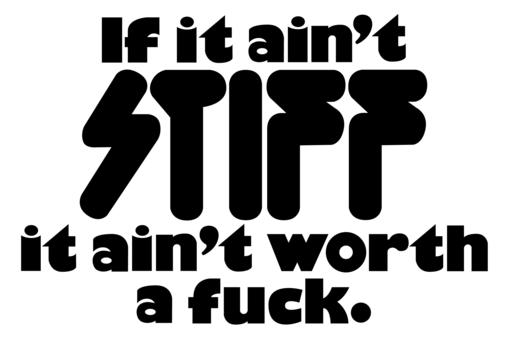
Dave Robinson and Jake Riviera’s Stiff Records was definitely one of the more offbeat record companies of the late 1970s/early 1980s.

Just click here to see a sample logo they used in the late 1970s (be warned, profanity is included in the logo!)

Riviera left the company in 1978, and as part of his separation agreement, he took Elvis Costello and Nick Lowe with him.

Luckily for Robinson, in 1979 he signed the band Madness, whose commercial success throughout the early 1980s basically kept the label afloat, financially.

Some time in late 1980/early 1981, Madness keyboardist Mike Barson heard Labi Siffre’s song “It Must Be Love,” which was released as a single in 1971 (it reached #14 on the UK charts).

Barson worked out a new arrangement of the song and the band would often play it on encores at the end of their shows.

Dave Robinson thought that the song would be a hit.

The band disagreed.

Not only that, but seeing as how they were already quite successful with their own material, they did not feel like releasing a cover song.

Robinson insisted that their version of the song would be a big success – a top five smash, and success like that would be worth it, even if it were not their song.

Still, though, the band did not believe it.

That’s when Robinson made a striking offer – if they released their version of the song and it did NOT reach the Top Five in the UK Charts, Robinson would give them Stiff Records!!
Read the rest of this entry »