Was Beverly Hills Cop Really Originally Written for Sylvester Stallone?

Here is the latest in a series of examinations into urban legends about movies and whether they are true or false. Click here to view an archive of the movie urban legends featured so far.

MOVIE URBAN LEGEND: Beverly Hills Cop was written for Sylvester Stallone.

In Warren Littlefield’s recent oral history of NBC’s string of successes in the 1990s, Will and Grace star Eric McCormack had an amusing story about auditioning for the role of Ross on Friends and seemingly just missing out on the role to David Schwimmer. “I went out for Schwimmer’s role on Friends. Years later I told [famed TV director and Will and Grace producer James] Burrows the story, and he said, “Honey, you were wasting your time. They wrote the part for Schwimmer.” As it turned out, the creators of Friends had worked with Schwimmer on an earlier TV project and they had written the role with him in mind (as a result, Schwimmer was the last actor to sign, as he and his agents knew that they wanted him for the role, giving them a great deal of leverage in negotiations). Roles in films and television series are frequently written with a specific actor in mind, although they do not always have the happy ending that the Friends creators had with Schwimmer. I have written in the past about how Burt Reynolds turned down the role in Terms of Endearment that writer/director James L. Brooks had created for the film (adapted from Larry McMurtry’s novel) specifically for Reynolds, who Brooks had worked with in the past (click here to find out what film masterpiece Reynolds chose to do instead). Reynolds got to watch as Jack Nicholson won an Academy Award with the role. Reader Kyle wrote in to ask if this was the case with Beverly Hills Cop.
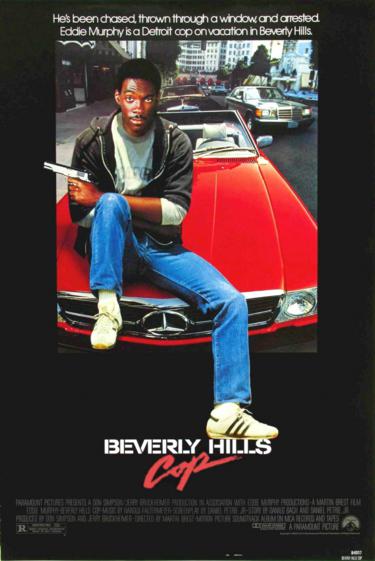
Is it true that the smash hit film starring Eddie Murphy was originally written for Sylvester Stallone?
Read the rest of this entry »

Tags:

February 13th, 2013 | Posted in Movie Legends Revealed | 3 Comments
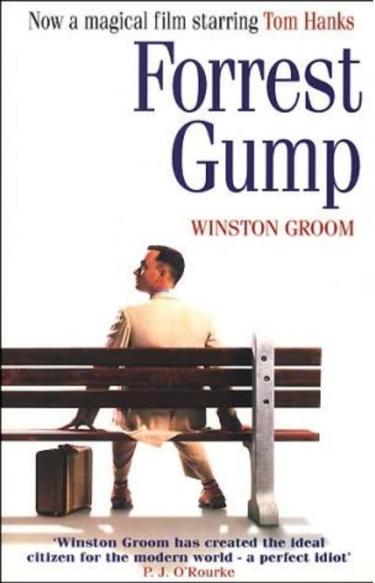
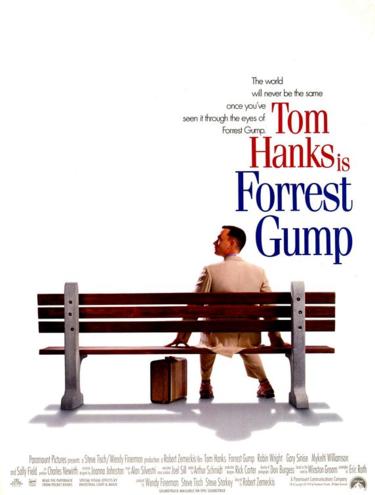
Ten Months After Its Release, Was Paramount Pictures Over $60 Million in the RED on Forrest Gump?

Here is the latest in a series of examinations into urban legends about movies and whether they are true or false. Click here to view an archive of the movie urban legends featured so far.

MOVIE URBAN LEGEND: Ten months after the release of Forrest Gump, the studio behind the film ostensibly were in the HOLE over $60 million on the film!

In 1986, Winston Groom wrote a novel called Forrest Gump…

It didn’t do particularly well, but in the early 1990s, Robert Zemeckis and Paramount Pictures optioned the book for a movie. He agreed to a $350,00 up front fee, plus 3% of the net profits of the film.

The movie then went on to become one of the biggest movie hits ever upon its release in July of 1994.

The film won Best Picture, Best Director and Best Actor (Tom hanks) at the Academy Awards, and by May 1995, it had sold over $600 million in ticket sales worldwide (and the VHS home movie had just recently been released).

However, by May 1995, Groom had yet to be paid ANYthing past his initial salary!

You see, Winston Groom, along with a few other people involved in the film (including the screenwriter, Eric Roth, and producers Wendy Finerman and Steve Tisch), only got percentages of the films’ NET profits, and in May of 1995, Paramount had yet to acknowledge that the film had actually MADE money yet!
Read the rest of this entry »

Tags: , , , , , , , ,

February 13th, 2013 | Posted in Movie Legends Revealed | 2 Comments

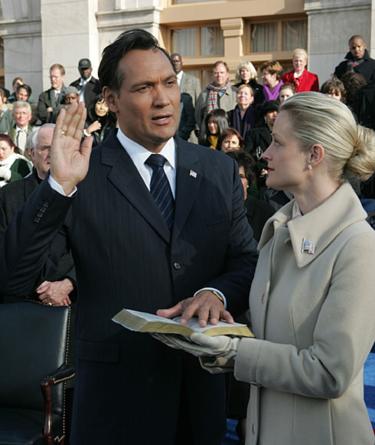
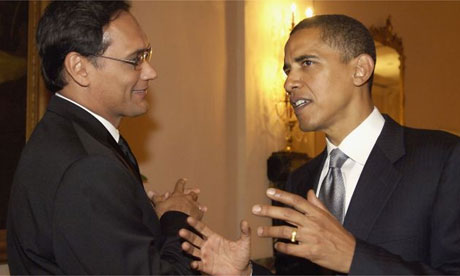
Was the West Wing’s Matt Santos Based on Barack Obama?

Here is the latest in a series of examinations into urban legends about TV and whether they are true or false. Click here to view an archive of the TV urban legends featured so far.

TV URBAN LEGEND: Congressman Matt Santos was based on Barack Obama.

Jimmy Smits’ Matt Santos’ campaign and ultimate election was the main plot of the last two seasons of the West Wing (and originally, was hopefully going to lead the show into a new Presidential term with a more or less brand new cast)…

In an amazing piece of seemingly life imitating art, the campaign of the charismatic young-ish minority Congressman (Smits) against the veteran Republican whose middle of the road ways endeared him to many Democrats (Alan Alda) seemed to repeat itself when Barack Obama took on (and defeated) John McCain.

Interestingly enough, though, the West Wing producers had contacted Obama’s people years earlier, when Obama was not even yet a Senator.

Jonathan Freedland had a great article about the connection in The Guardian back in early 2008…

For what those West Wing fans stunned by the similarity between the fictitious Matthew Santos and the real-life Barack Obama have not known is that the resemblance is no coincidence. When the West Wing scriptwriters first devised their fictitious presidential candidate in the late summer of 2004, they modelled him in part on a young Illinois politician – not yet even a US senator – by the name of Barack Obama.

“I drew inspiration from him in drawing this character,” West Wing writer and producer Eli Attie told the Guardian. “When I had to write, Obama was just appearing on the national scene. He had done a great speech at the convention [which nominated John Kerry] and people were beginning to talk about him.”

Attie, who served as chief speechwriter to Al Gore during the ill-fated 2000 campaign and who wrote many of the key Santos episodes of the West Wing, put in a call to Obama aide David Axelrod.

“I said, ‘Tell me about this guy Barack Obama.'”

Now here’s where it gets tricky.
Read the rest of this entry »

Tags: , , , ,

February 11th, 2013 | Posted in TV Legends Revealed | No Comments

Was Madeline Really an Orphan?

Here is the latest in a series of examinations into urban legends related to children’s literature and whether they are true or false.

CHILDREN’S LITERATURE URBAN LEGEND: Madeline was an orphan.

Madeline was a series of children’s books created by writer/artist Ludwig Bemelmans in 1939, starring a cute little girl named Madeline who lived in 1930s France.

In an old house in Paris that was covered with vines,
lived twelve little girls in two straight lines
They left the house, at half past nine…
The smallest one was Madeline.

There are many books in the series (here are the first four), and the series continues to this day, now written by Bemelmans’ grandson, John Bemelmans-Marciano.

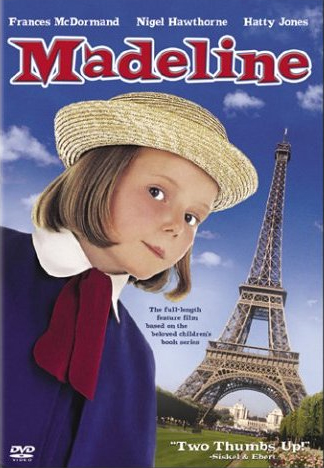
The books were adapted into a live action film in 1998…

The books have also been adapted to a number of animated programs over the years. I can’t speak to all of the animated series, but I know that the live action film made a major change that I think is likely to be the cause for a notable misconception people have of the Madeline books.
Read the rest of this entry »

Did Jay Thomas Get Fired From Cheers Because He Insulted His Co-Star Rhea Perlman?

Here is the latest in a series of examinations into urban legends about TV and whether they are true or false. Click here to view an archive of the TV urban legends featured so far.

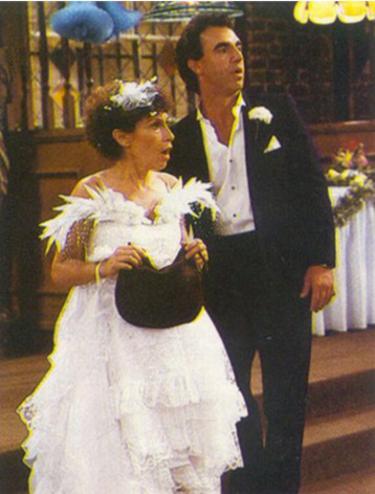
TV URBAN LEGEND: Jay Thomas’s character on Cheers was killed off because he called Rhea Perlman ugly.

While obviously one of the most amazing things that can happen to an actor working in television is to be part of a show that turns out to be a major hit (look at the ways that, say, the cast of Friends went from an assortment of mostly no-names and “Hey, that’s the girl from the Bruce Springsteeen video!” to global superstars), there is something that is almost more amazing, which is to join one of these shows after it has become a hit and become accepted as part of the show’s DNA. It is very difficult to work your way into a hit TV show after it has become a hit. All the leads from Friends in its final season were the same as in their first season. Same with Seinfeld. A very notable exception to this rule was Cheers. The show, about a bar in Boston, lost one of its main characters after the third season when Nicholas Colasanto (who played the beloved old bartender “Coach”) passed away. He was replaced by a young hayseed bartender named Woody Boys, played by Woody Harrelson (amazingly enough, the character was named Woody before they cast Harrelson!), who improbably became even more popular than Coach! Even before Coach’s departure, the show had introduced a wrench into the show’s main romantic relationship between bar owner Sam Malone and uptight bar waitress Diane Chambers. Originally intended for just a short story arc as Diane’s new boyfriend, Kelsey Grammer’s Frasier Crane ended up sticking with the show for the rest of its run (plus eleven more seasons in his own spin-off series). Later, Bebe Neuwirth joined the cast as Frasier’s wife, Lilith. Finally, and most importantly, Kirstie Alley successfully replaced the female lead, Shelley Long (who played Diane) after season five. The show actually aired longer without its first female lead than it did with her, a remarkable achievement for any television show. So Cheers had clearly established itself as a series where notable characters could be added to the ensemble. That is exactly what it looked like what was going to happen with Jay Thomas’ character, Eddie LeBec, who joined the show in Season 5 as the boyfriend to Rhea Perlman’s character, the perpetually pregnant bar waitress Carla. In Season 6, they got married and it seemed like Thomas would be sticking around.

Instead, his character was killed off off screen in Season 8. As it turns out, it appears that Thomas’s own big mouth got himself kicked off of the show.

Read the rest of this entry »

Tags:

February 6th, 2013 | Posted in TV Legends Revealed | 8 Comments

Was Where the Wild Things Are Originally Where the Wild HORSES Are?

Here is the latest in a series of examinations into urban legends related to children’s literature and whether they are true or false.

CHILDREN’S LITERATURE URBAN LEGEND: Where the Wild Things Are was originally Where the Wild Horses Are.

Maurice Sendak had an interesting journey to international stardom as a children’s author.

As an adolescent, he marveled at the Walt Disney film, Fantasia, and he aspired to become an artist from that point on.

Later on, while he was having some success as an illustrator, he and his brother began producing beautiful wooden toys. They attempted to sell them to FAO Schwartz, but were told that, while beautiful, the toys were a bit too pricey. However, they liked Sendak’s design sense so much that they hired him to decorate their windows. It was while decorating windows at FAO Schwartz in the late 1940s that Sendak was discovered by a children’s book editor (Ursula Nordstrom, who would become a major part of Sendak’s professional life) who saw that his style lent itself beautifully to illustrating children’s book.

For the next decade plus, Sendak became one of the leading children’s book illustrators.

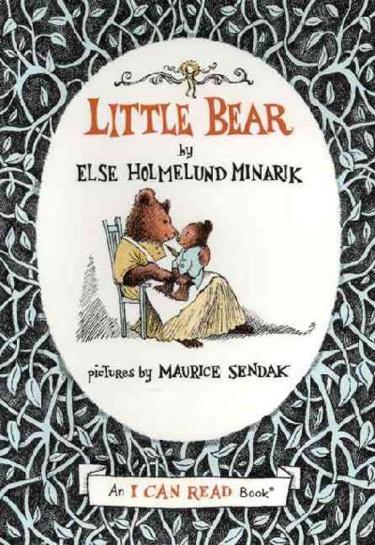
Perhaps his most famous work as an illustrator was on Else Holmelund Minarik’s Little Bear series of books…

However popular he was as an illustrator, Sendak wanted to do his OWN ideas, as well.

So beginning in the mid-1950s, he started to develop some ideas for books written and drawn by himself.

His first idea might surprise you!
Read the rest of this entry »

Tags: , , , , , , ,

February 5th, 2013 | Posted in Children's Literature Legends Revealed, Grab Bag Legends | No Comments

Was Where’s Waldo? Removed From a School Because it Contained an Exposed Female Breast?

Here is the latest in a series of examinations into urban legends related to children’s literature and whether they are true or false.

CHILDREN’S LITERATURE URBAN LEGEND: Where’s Waldo? was removed from a school due to an exposed breast inside the book.

When you take a look at “The 100 Most Frequently Challenged Books of 1990–2000” (according to the American Library Association), you can certainly understand why most of them are on the list (you don’t have to AGREE, but you at least get why they’re there).

#1 on the list is Alvin Schwartz’s Scary Stories, which is an especially gruesome collection of scary stories that most parents feel is TOO gruesome for kids.

#2 is Daddy’s Roommate, and, well, we know how up in arms people get about homosexuality.

#3 is I Know Why the Caged Bird Sing, which is Maya Angelou’s rather frank look at her childhood. Certainly some parents feel that she is too graphic describing how she was raped when she was eight years old.

#4 is The Chocolate War, which, similar to, say, South Park, fairly accurately describes how young boys act, and as such, is far too vulgar and profane for many parents.

#5 is The Adventures of Huckleberry Finn, and obviously people are upset over the fact that Mark Twain uses the n-word extensively in the book.

So whether you agree with the complaints over these books, they’re fairly straightforward.

But then you zoom down to #88 on the list and see that it is Where’s Waldo? and a big “Huh?” is elicited.

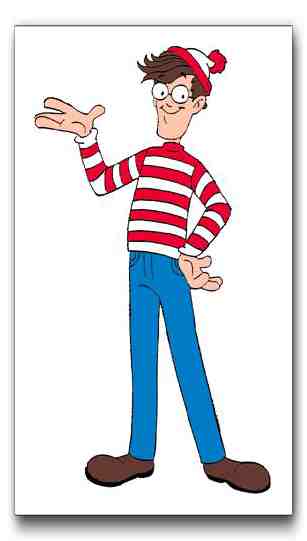
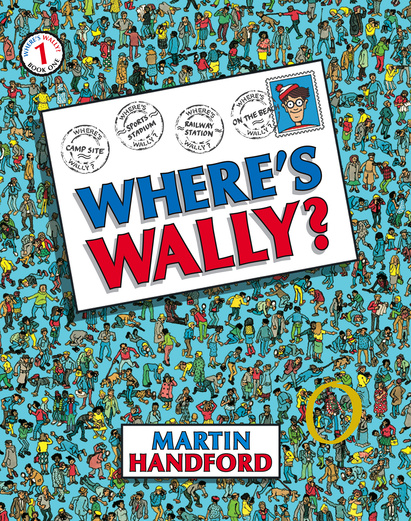
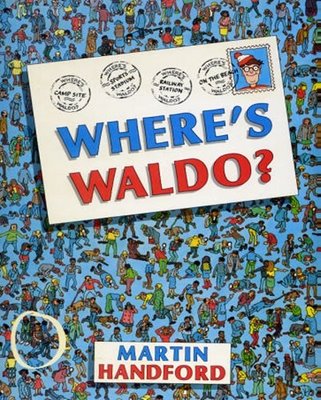
Where’s Waldo? was born in England in 1987, brainchild of British illustrator Martin Handford.

Handford was known for drawing detailed scenes for his clients, so someone came up with the idea of him doing a whole book of his detailed scenic drawings. In an attempt to give the scenes some sort of visual continuity, Handford and his editors came up with the idea of having a traveler be VISITING each of the scenes in question. And then the idea was developed of making finding said visitor in the extremely detailed scenic drawings be a little challenge/game and thus, the concept of Where’s Wally? began!

And yes, that’s right, originally, in England, the books were called (and are still called that in England) Where’s Wally?

However, it was when the books made the transition to the North American market (and had the name changed to Where’s Waldo? – which is weird, since Wally is a perfectly normal American name) that the book really became a sensation.

In the early 1990s, Waldo exploded on the American scene, with every tie-in you could think of, including a cheapie cartoon series! And, of course, multiple additions to the Waldo book franchise.

However, in 1993, people found a little bit more than just Waldo when they went looking into the book – they found some controversy!
Read the rest of this entry »

Tags: , , , , , , , , , ,

February 4th, 2013 | Posted in Children's Literature Legends Revealed, Grab Bag Legends | 10 Comments

Did 60 Minutes Gain Its Famous Time Slot Due to an FCC Regulation?

Here is the latest in a series of examinations into urban legends about TV and whether they are true or false. Click here to view an archive of the TV urban legends featured so far.

TV URBAN LEGEND: 60 Minutes gained its famous time slot due to an FCC regulation.

The world of television today is so vastly different from the world of television forty years ago that it is practically like comparing Gone With the Wind to a picture at a nickelodeon.

In any event, one thing that really worried the government during the late 1960s was that the three major networks, ABC, CBS and NBC, basically dominated the production of new television programs, because they controlled most of the time in which new programs would be aired.

The Federal Communications Commission (FCC) was worried that this consolidation of power over the creation of programs would curtail the development of new and diverse programming, as the fear was that if just these three networks were developing new shows, they would soon become homogenized. And their specific hope was that the affiliates would develop new shows designed to discuss news and politics on a local level.

So in 1970 (with it coming into effect for the 1971-72 TV season), the FCC introduced the Prime Time Access Rule, where the networks had to give back a half hour Monday through Saturday and an hour on Sunday during “prime time” to the Top 50 affiliates (which was basically every affiliate at the time) for their own use.

At the time, “Prime Time” was defined as 7:30 PM to 11:00 PM Eastern Monday through Friday and 7:00 PM to 11:00 PM on Sunday. The Brady Bunch, for instance, aired at 7:30 PM in 1970.

So the FCC steps in and says, “Okay, affiliates, you can now have the full 7:00 PM hour to develop your own programming, and hopefully you’ll make it intelligent stuff!”

That was all well and good but, well, you see most affiliates really did not WANT to develop their own programming. Making high brow television every day of the week cost a lot (well, more than what they wanted to spend) and the ratings were not very good. So instead, the affiliates turned to syndication. Hee Haw and Lawrence Welk had recently been canceled by the networks, and both shows went into first-run syndication, so a number of networks aired them, most of them on the very same nights and times that they originally aired! So with a mixture of syndicated programming and occasionally their own local news, the affiliates began to be quite happy with their newly found hour.

The networks HATED it, though, and fought it legally for years. Eventually they got an answer, although it was not one they liked. In 1975, it was decreed that the Monday through Saturday “loss” was permanent, but that the networks could have the 7pm hour back on Sundays, but only for family programming or news programming. Both ABC and NBC quickly moved established family programming to that time slot (NBC’s The Wonderful World of Disney and ABC’s Swiss Family Robinson). CBS, though, ended up going a different direction.
Read the rest of this entry »

Tags: , , , , , , , , , , ,

February 1st, 2013 | Posted in TV Legends Revealed | 8 Comments

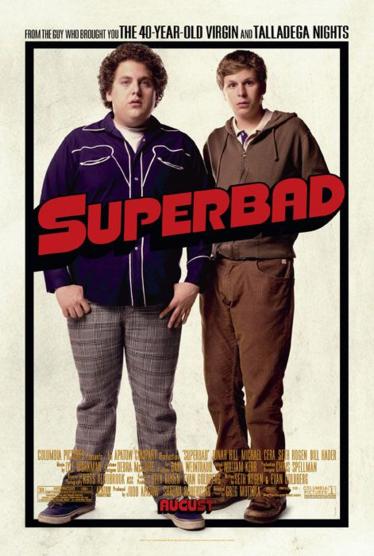
How Did Underage Actors Oddly Affect the Filming of the Movie Superbad?

Here is the latest in a series of examinations into urban legends about movies and whether they are true or false. Click here to view an archive of the movie urban legends featured so far.

MOVIE URBAN LEGEND: Underage actors resulted in a number of interesting filming issues during Superbad.

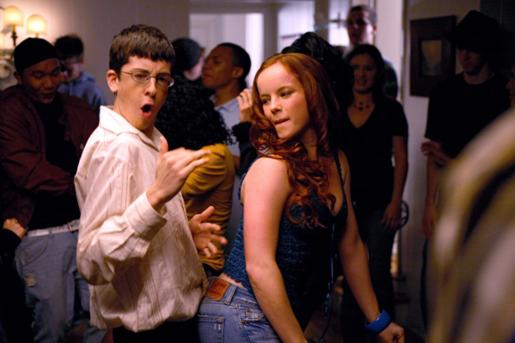
Christopher Mintz-Plasse was just along with a couple of friends auditioning for a role in Superbad (the casting call was for a regular, typical looking teen) when he decided on a whim to audition as well (using a camera phone to take a head shot).

He landed the role of Fogel, also known by his fake ID name, “McLovin.”

However, due to the fact that he was only 17 years old, certain issues had to be taken with his usage in the film. For instance, his mother actually had to be on the set for the filming of his sex scene!
Read the rest of this entry »

Tags: , , , ,

January 31st, 2013 | Posted in Movie Legends Revealed | 1 Comment

Was Roger Moore Really Ian Fleming’s First Choice to Play James Bond?

Here is the latest in a series of examinations into urban legends about movies and whether they are true or false. Click here to view an archive of the movie urban legends featured so far.

MOVIE URBAN LEGEND: Roger Moore was Ian Fleming’s first choice for James Bond.

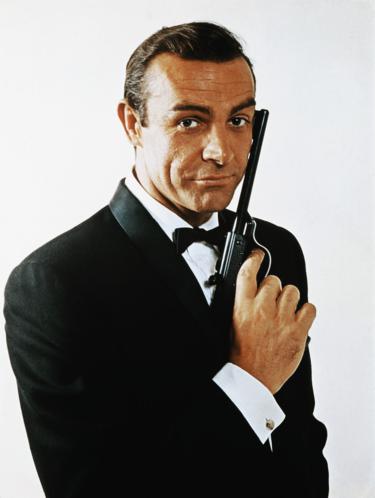
One of the most debated subjects in all of Hollywood (and beyond) is which actor should play James Bond in the film adaptations of Ian Fleming’s classic spy novels. Every time a new actor is needed for the role, the level of scrutiny and outrage is more similar to the selection of a new President of the United States, not the next actor to play a famous film character. While the selection process is still quite controversial (many die hard Bond enthusiasts still can’t wrap their heads around the idea of Daniel Craig playing the role, even as his latest Bond film, Skyfall, just passed a billion dollars in box office receipts worldwide), the level of controversy was even greater when the first James Bond, Sean Connery

was replaced for 1969’s On Her Majesty’s Secret Service with actor George Lazenby.

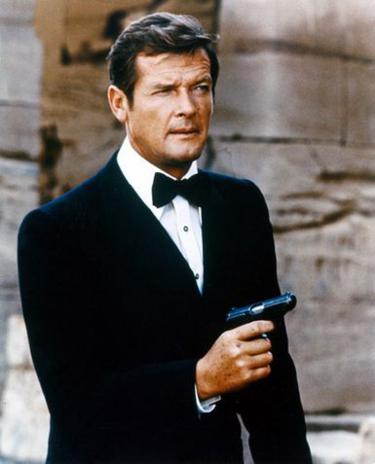
For various reasons, Lazenby only did a single film and Connery returned for the next Bond film, Diamonds Are Forever. However, in 1973, Connery was finally successfully replaced by actor Roger Moore, who ended up doing seven films as James Bond.

One of the hooks used to put minds at ease for Moore’s stint as Bond was the alleged fact that Ian Fleming’s first choice to play James Bond was Moore, who Fleming liked in the TV series, The Saint.

Is that true? Was Roger Moore almost the first actor to play James Bond? The truth is quite complicated, as you’ll soon find out…

Read the rest of this entry »

Tags: , , , , , , , , , , , ,

January 30th, 2013 | Posted in Movie Legends Revealed | 8 Comments