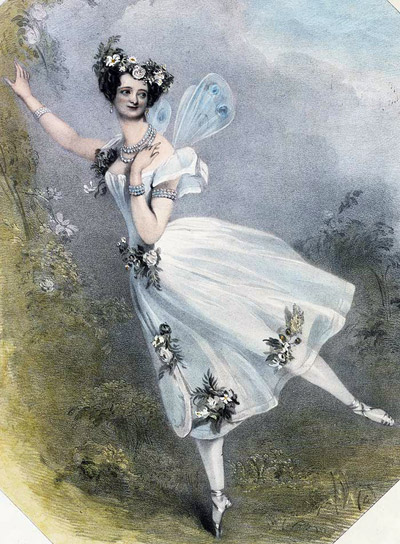
Was Marie Taglioni Really the First Ballet Dancer to Dance En Pointe?

Here is the latest in a series of examinations into urban legends related to dancing and dancers and whether they are true or false. Click here to view an archive of the dancing urban legends featured so far.

DANCING URBAN LEGEND: Marie Taglioni was the first ballet dancer to dance en pointe.

En pointe is a form of ballet that involves presenting the ballerina on the tips of her toes. Ballerinas wear specialized shoes to support this maneuver, which, as you might imagine, can be practically devastating to a ballerina’s toes and feet.

This is one of the more notable parts of ballet that requires a large amount of training to make the body capable of doing such a maneuver.

The invention of the en pointe in ballet is often credited to Marie Taglioni, a legendary ballet dancer of the 19th Century (she was born in 1804 and died in 1884).

Taglioni danced en pointe in 1831.

WAS that the first time someone danced en pointe?
Read the rest of this entry »

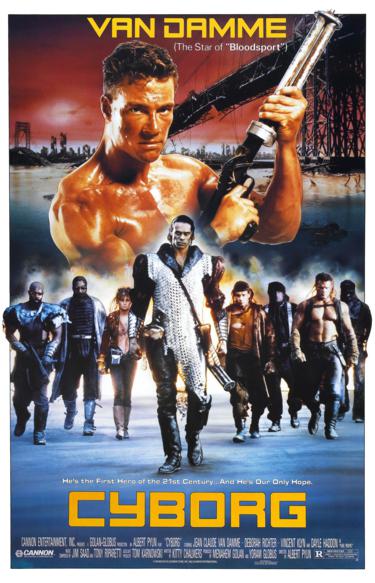
Was the Jean-Claude Van Damme film Cyborg Originally Meant to Be Two Films, Including a He-Man Film and a Spider-Man One?

Here is the latest in a series of examinations into urban legends about movies and whether they are true or false. Click here to view an archive of the movie urban legends featured so far.

MOVIE URBAN LEGEND: The Jean-Claude Van Damme film Cyborg was originally going to be both the sequel to the Masters of the Universe film AND a Spider-Man film.

Cannon Films was one of the most interesting film companies of the 1980s. The company began life as a small film distributor during the late 1960s, doing a number of different films. However, they were in dire financial straits when they were purchased by cousins Menahem Golan and Yoram Globus in 1979. Golan and Globus had a fascinating game plan for their new company. They would basically purchase tons of scripts for little money and make a lot of low budget films, under the theory that even if seven out of ten films bombed, that the three successful films would make enough money to pay for all of the films because of the low budgets. Their plans worked during the early 1980s as they had a string of low budget action films become major hits, most notably their series of Chuck Norris films (with Norris’ Rambo-esque Missing in Action likely being their biggest hit). However, by the end of the decade, the company began to experience what I guess you would call Icarus-syndrome. They became so successful that they tried to get closer and closer to the sun. They began spending more and more money on their films, financing them at least partially through the junk bond market. With bigger budgets, films that failed suddenly had a much bigger impact on their bottom line. They took over production on Superman IV: The Quest for Peace and even though they cut the budget on the film dramatically from its original budget, it was still their biggest film to date and it failed spectacularly. By the end of the decade, with the U.S. Securities and Exchange Commission investigating their finances and the junk bond market collapsing around them, things were bleak for the company. It was during this time that they had begun making a sequel to their film, Masters of the Universe, based on the toy line from Mattel. Similarly, they had the rights to do a film based on Spider-Man, the popular Marvel Comics character. They began an ambitious plan to do both a Masters of the Universe sequel AND a Spider-Man film, both directed by Albert Pyun at the same time. Things fell apart, though, and through bizarre circumstances, those two films instead became the 1989 film Cyborg, starring Jean-Claude Van Damme, the last film produced by Golan and Globus under the Cannon Films label.

Read on to see how it all happened!

Read the rest of this entry »

Tags:

February 27th, 2013 | Posted in Movie Legends Revealed | 12 Comments

Did Gelsey Kirkland Make Herself Sick to Avoid Starring in The Turning Point?

Here is the latest in a series of examinations into urban legends related to dancing and dancers and whether they are true or false. Click here to view an archive of the dancing urban legends featured so far.

DANCING URBAN LEGEND: Gelsey Kirkland made herself intentionally sick so that she would not be able to do the film The Turning Point.

Gelsey Kirkland has led a rather tumultuous life as one of the most famous American ballerinas in history.

She joined the New York City Ballet under famed choreographer George Balanchine in 1968 when she was only 15 years old. By 1969, she was a soloist and by 1972 she was principal.
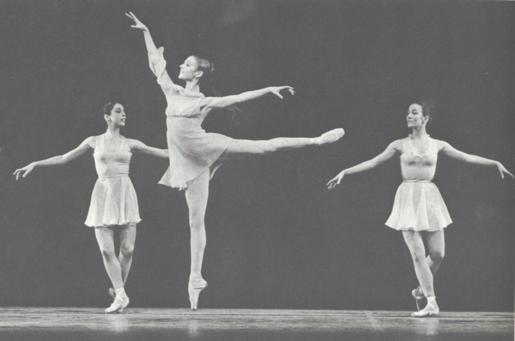
Later in the decade she joined famed ballet dancer Mikhail Baryshnikov at the American Ballet Theater, where they performed probably her most famous role, opposite Baryshnikov in the 1977 televised performance of The Nutcracker…
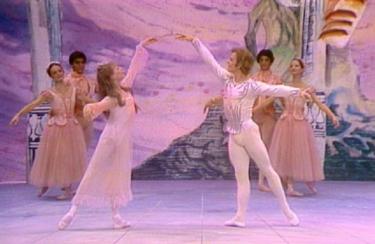
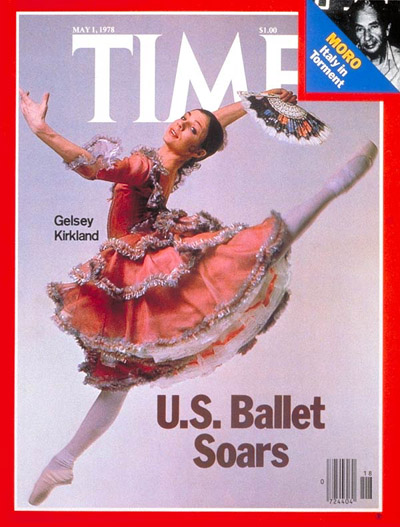
Later, she even made the cover of Time magazine in 1978 for her performance in Swan Lake. Kirkland was a star.
Hollywood did not fail to notice the buzz that was surrounding the American Ballet Theatre during the mid-to-late 1970s, so in 1976, Arthur Laurents (who certainly had no lack of experience with the world of theater and dancing, having written the book for the classic Broadway musicals West Side Story and Gyspy) wrote the script for the film The Turning Point, with the movie centering upon two old friends, one (Shirley MacLaine) who gave up ballet stardom to raise a family and the other (Anne Bancroft) who went on to become a prima ballerina. Now Bancroft is offering MacLaine’s daughter a position in her ballet company. The reunion brings back old memories for the two friends, both good and bad.
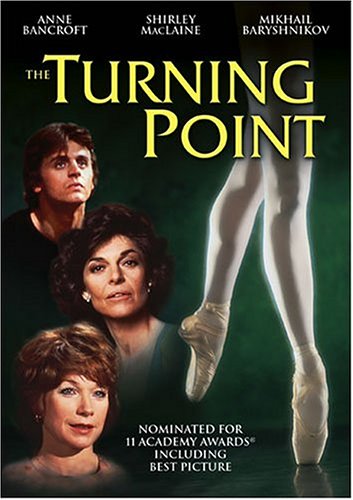
The ballet company in the movie is made up of American Ballet Theatre stars, including Baryshnikov (the director of the film, Herbert Ross, also choreographed for the ABT). MacLaine’s daughter was to be played by Kirkland.

However, Kirkland was removed from the film because of health problems. At five foot four inches, Kirkland was only 80 pounds! In addition, she was suffering severe potassium deficiency.

Kirkland was replaced by her understudy, Leslie Browne, who went on to receive a nomination for an Academy Award for her performance in the film. Here is Director Ross lifting Browne (with Baryshnikov in the background)…
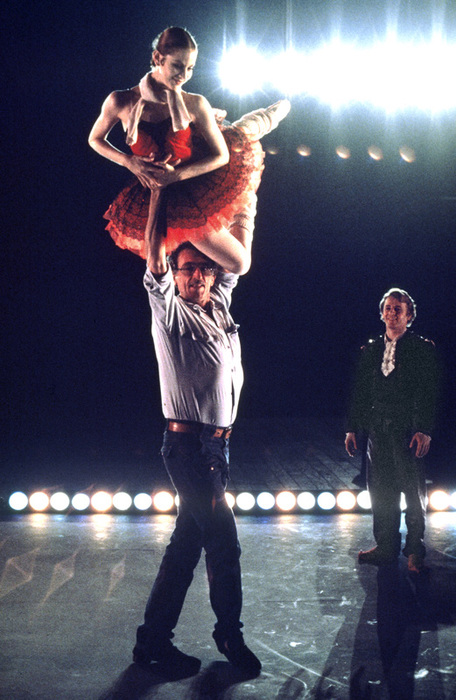
Okay, so the question at hand here revolves around Kirkland’s intent at the time. In her auto-biography, Kirkland stated that she made herself sick so that she would not have to do the film. Do we believe her?
Read the rest of this entry »

Did a Famous Ballet Dancer Have a Particularly Painful Introduction to Ballet?

Here is the latest in a series of examinations into urban legends related to dancing and dancers and whether they are true or false. Click here to view an archive of the dancing urban legends featured so far.

DANCING URBAN LEGEND: Ron Cunningham had a rather painful introduction to the world of ballet.

An interesting aspect of ballet training is the fact that almost all ballet dancers begin their training at an extremely young age, very often pre-adolescence. This is because ballet is extremely demanding on the human body, and it often asks people to do things with their bones and muscles that is just flat-out unnatural.

Ron Cunningham learned this first hand when he decided to become a ballet dancer late in his life.
Read the rest of this entry »

Did an Actress Actually Adopt the Name of the Character She Played in a Notable Film?

Here is the latest in a series of examinations into urban legends about movies and whether they are true or false. Click here to view an archive of the movie urban legends featured so far.

MOVIE URBAN LEGEND: An actress took on the name of the character she was playing in a film.

Wouldn’t it be odd if Daniel Radcliffe were to announce that, from this point forth, he would be known as Harry Potter?

And yet, that’s exactly what happened with the star of 1934’s Anne of Green Gables.
Read the rest of this entry »

Did Ava Gardner Make Disparaging Comments About Melbourne, Australia While Filming a Movie There?

Here is the latest in a series of examinations into urban legends about movies and whether they are true or false. Click here to view an archive of the movie urban legends featured so far.

MOVIE URBAN LEGEND: Ava Gardner made extremely disparaging comments about filming in Melbourne, Australia.

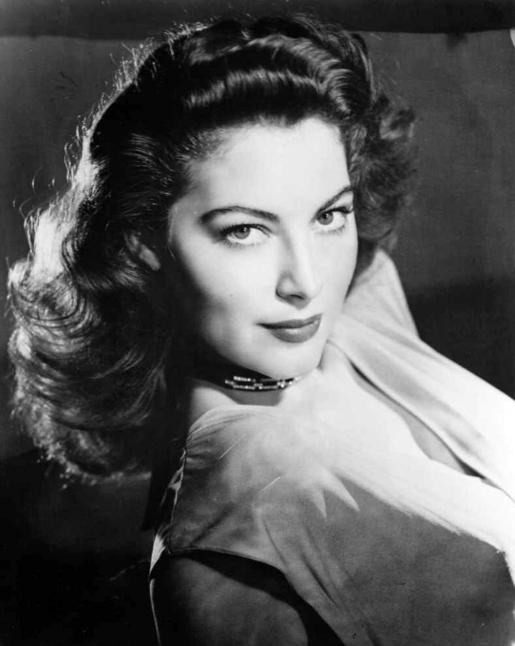
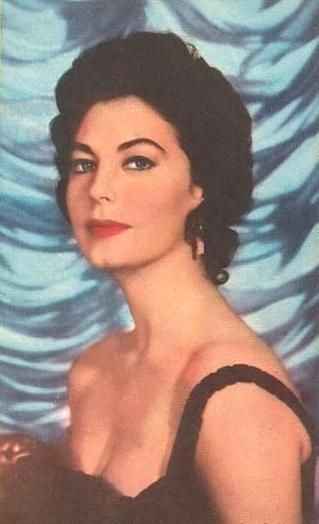
Ava Gardner (1922-1990) is one of the most famous film actresses in Hollywood history, perhaps known just as much for her famed beauty and celebrated romances with famous icons like Mickey Rooney, Artie Shaw, Frank Sinatra and Howard Hughes than for her acting roles.

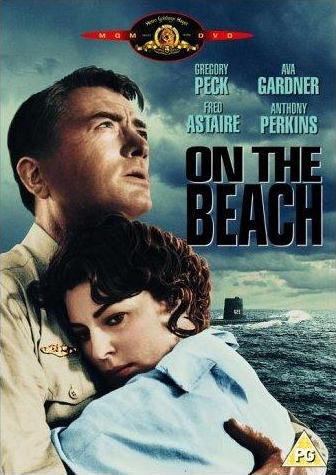
In 1959, later in her career, Gardner starred opposite Gregory Peck in Stanley Kramer’s adaptation of Nevil Shute’s post-apocalyptic novel, On the Beach, which tells the tale of a United States Navy submarine that is traveling the world following a nuclear war, looking for any vestiges of humanity.

They come across the last remaining human settlement in Australia, but the sad fact remains that the nuclear fallout is headed there, as well, so unless they can find somewhere else safe on the planet, humanity as a whole might be doomed.

The movie filmed where the story was set, Melbourne, Australia.

Melbourne is the second-largest city in Australia, with about 4,000,000 people living in the city today. While always a beautiful looking city, back in 1959 it was not exactly much of a modern metropolis, so when it was reported that Gardner said of the city during the filming that it was:

the perfect place to make a film about the end of the world.

Everyone pretty much believed that she said (and meant) it, and in fact, that quote was the basis for a lot of hurt feelings for decades (you could look through a number of books about Australian history which reference the quote), as it seemed like a perfect expression of Western countries looking down on Australia.

Did she actually SAY it, though?
Read the rest of this entry »

Did TV’s Greg Brady Really Date His TV Mom in Real Life?

Here is the latest in a series of examinations into urban legends about TV and whether they are true or false. Click here to view an archive of the TV urban legends featured so far.

TV URBAN LEGEND: Barry Williams dated his TV mother, Florence Henderson.

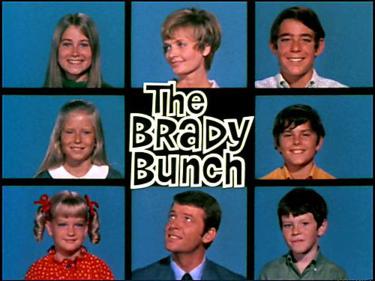
When it originally aired from 1969-1974, the television series The Brady Bunch, about a man with three sons marrying a woman with three daughters, was far from a major success. It never finished in the Top 30 in the Nielsen ratings and was never nominated for any notable critical awards. It was popular enough, though, to make it through five seasons, which was notable in that it gave the show enough episodes (117) to meet the then-minimum threshold for successful syndication (for years, 100 episodes was the figure series generally had to hit to be successful in syndication. Nowadays it is 88 episodes). It was while in syndication and airing daily on stations all over the country that the show became a cultural sensation, and there have been numerous sequels and remakes of the series ever since.

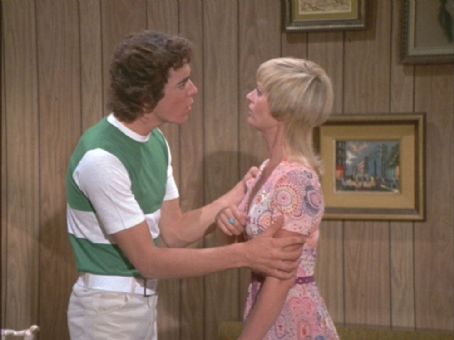
The seemingly perfect Bradys have become cultural icons and as such, any possible salaciousness involving the Bradys is latched on to with glee. Hence, the legend that Barry Williams, who played eldest son Greg Brady, dated Florence Henderson, who played his TV mother, Carol Brady.

Is it true?
Read the rest of this entry »
Did Universal Studios Used to Offer an Incentive Based on a Joke From Animal House?

Here is the latest in a series of examinations into urban legends about movies and whether they are true or false. Click here to view an archive of the movie urban legends featured so far.

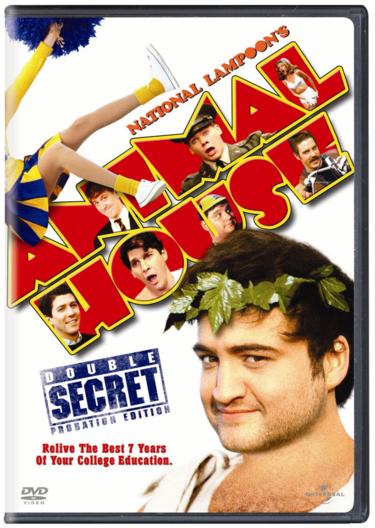
MOVIE URBAN LEGEND: Universal Studios used to offer an incentive tied in with a joke from National Lampoon’s Animal House.

National Lampoon’s Animal House was director John Landis’ big break as a director, as it was his first film for a major studio, specifically, Universal Studios.

The film was a very big hit (especially considering it was a very low budget film).

At the end of the film, there is a bit of a “where are they now” for each of the main characters.

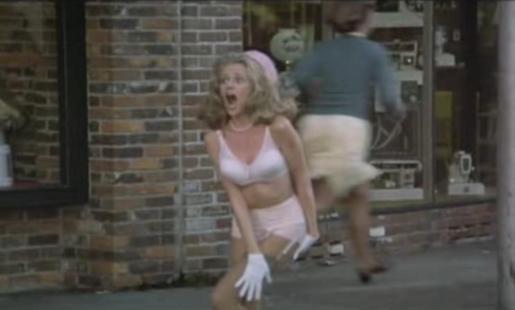
One of the “villains” in the film is the scheming sorority girl, Babs (played by Martha Smith, who is awesome), who hates the guys at Animal House and tries to worm her way into becoming the girlfriend of the rival fraternity, Omega House.

In any event, at the end of the film, she gets her comeuppance.

And for HER “Where are they now” bit, it is said that she’s now a tour guide at Universal Studios.

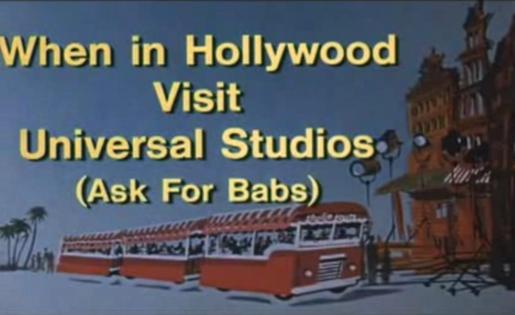
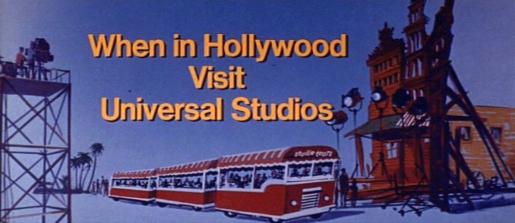
Well, after the closing credits finish, there is the Universal Studios logo and an old-fashioned ad saying “When in Hollywood, Visit Universal Studios.” Then, a second or so later, the parenthetical (Ask for Babs) appears on the screen.

Landis would go on to use this end joke after the closing credits on all of his films for Universal.

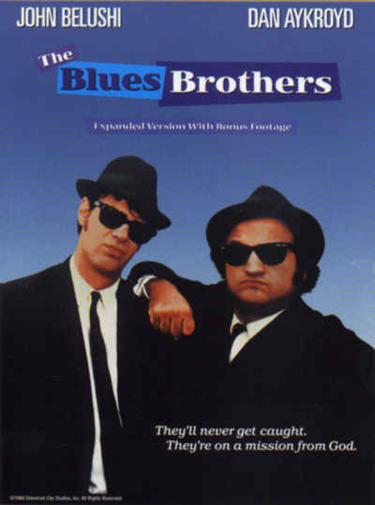
Including his next big hit (also with Animal House star John Belushi), the Blues Brothers…

What happened if you DID “ask for Babs?”
Read the rest of this entry »
Did a Singer Once Record 28 Variations of the Same Hit Song Depending on Where the Song Was Released?

Here is the latest in a series of examinations into urban legends about music and whether they are true or false. Click here to view an archive of the music urban legends featured so far.

MUSIC URBAN LEGEND: A singer once had a Top 40 song with 28 variations of the song depending on where the song was released!

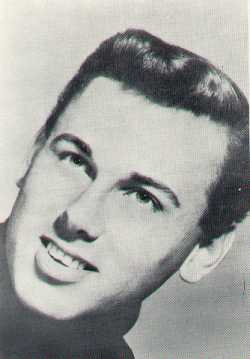
Tommy Facenda broke into the music industry while still in his teens, working as a member of Gene Vincent’s backing band, the Blue Caps, in 1957 (Facenda was 18).

Facenda was a strong guitarist, and a good singer, to boot, and soon he was pursuing a solo career, as well.

His solo career did not go particularly far, but he did have one Top 40 hit, and it was one of the more bizarre Top 40 hits that you’ll see!

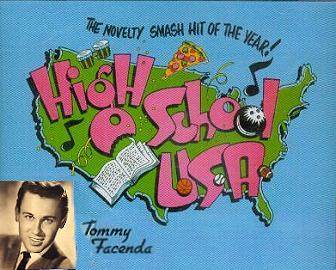
Frank Guida, head of Legrend Records, gave Facenda a song based on the high schools in Guida’s home state of Virginia, called “High School U.S.A.” The song references a number of high schools in Virginia.

Then Guida had a stroke of genius (or madness?)!

First, he would have Facenda record a “national” version of the song (where he would name cities rather than high schools), then he would have him record a different version of “High School U.S.A.” for each region of the United States (well, a lot of them, at least)!


Read the rest of this entry »
Did Morey Amsterdam From the Dick Van Dyke Show Really Write “Rum and Coca Cola”?

Here is the latest in a series of examinations into urban legends about music and whether they are true or false. Click here to view an archive of the music urban legends featured so far.

MUSIC URBAN LEGEND: Morey Amsterdam wrote the song “Rum and Coca Cola.”

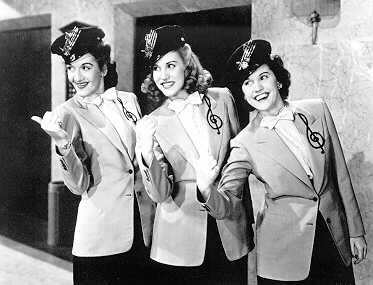
“Rum and Coca-Cola” was a smash hit in 1946 for the singing trio, the Andrews Sisters, spending a stunning TEN weeks at the top of the pop charts.

If you look at the copyright today for the song, you’ll find three names listed as the writers of the song, Paul Baron, Jeri Sullavan and Morey Amsterdam.

Paul Baron is the fellow who did the arrangement for the Andrews Sister’s song.

Jeri Sullavan was the first performer of the song.

Morey Amsterdam…well, Morey Amsterdam has an interesting history with the song.
Read the rest of this entry »