How Did a Haircut Get “As Time Goes By” Into Casablanca?

Here is the latest in a series of examinations into urban legends about movies and whether they are true or false. Click here to view an archive of the movie urban legends featured so far.

MOVIE URBAN LEGEND: “As Time Goes By” would have been removed from Casablance had it not been for a haircut.

The song “As Time Goes By” was written by Herman Hupfeld. It first appeared in a Broadway musical titled Everybody’s Welcome in 1931. The show was not particularly successful, and the song was only moderately more successful than the show, getting recorded by a few artists. For the most part, though, the song came and went and was basically forgotten.

Forgotten except for a fellow who was attending Cornell when the song came out. Murray Burnett thought that the song was excellent. So when he and Joan Allison co-wrote a play in 1940 about a bar in Casablanca named Everybody Comes to Rick’s, Burnett had the song be the song that their play’s two ill-fated lovers, Rick and Ilsa, listened to often when they spent their time together in Paris in love.

Burnett and Allison were not able to get the play produced, so they sold the rights to the play to Warner Brothers, who turned it into the classic film, Casablanca, starring Humphrey Bogart and Ingrid Bergman.
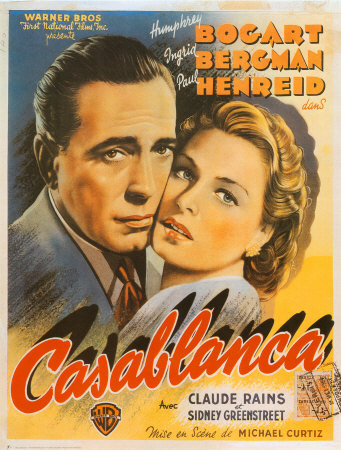
casablanca

As it turned out, Warner Brothers’ music department owned the publishing rights to “As Time Goes By,” so they agreed to keep the song as part of the film.

The song is used to tremendous effect in the movie, performed by Dooley Wilson…
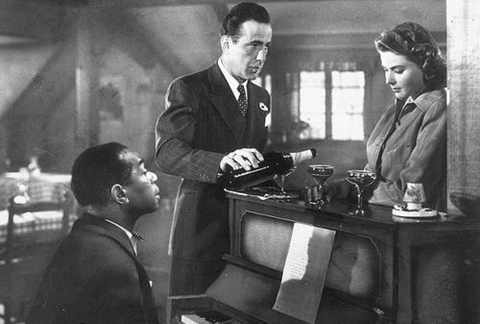
casablanca-splash

It is especially used well when Rick exhorts his piano playing friend, Sam, to play the song for him (as Sam played it at the bequest of Ilsa, who showed up in Rick’s bar not having seen him for years and now married to another man)…
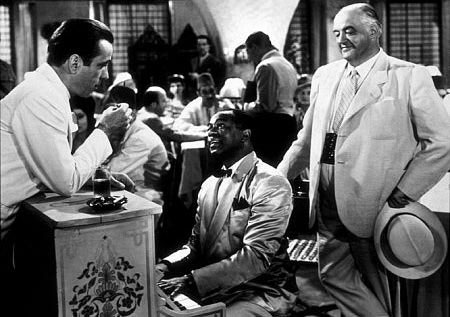
casablanca-screen

However notable the song is in the film, it very nearly did not make it into the finished product!

Read the rest of this entry »

Tags: , , , , , , , , , , , , , ,

September 27th, 2012 | Posted in Movie Legends Revealed | 2 Comments
Did the Temptations Win a Best R&B Instrumental Grammy for “Papa Was a Rolling Stone”?

Here is the latest in a series of examinations into urban legends about music and whether they are true or false. Click here to view an archive of the music urban legends featured so far.

MUSIC URBAN LEGEND: The Temptations’ “Papa Was a Rolling Stone” won a Grammy for Best R&B Instrumental!

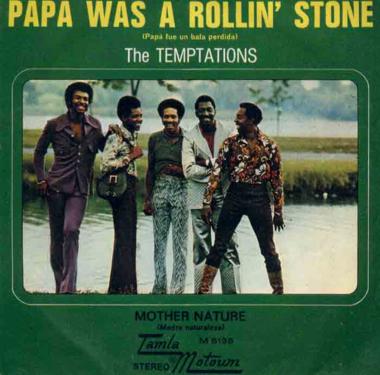
“Papa was a Rolling Stone” was likely the last massive hit song for the Temptations…

temptations-papa-was

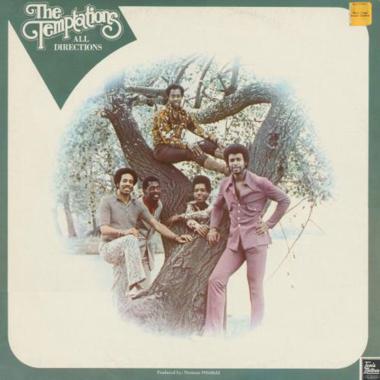
Released in 1972, it was a #1 hit song. It was featured on their 1972 album, All Directions…

all_directions

The song was written by Norman Whitfield and Barrett Strong for the Motown group The Undisputed Truth in 1971. Soon, though, Whitfield felt that the song would also work well with another group he produced, the Temptations (it was common at the time for a Motown producer to have multiple groups he was producing to release the same song – he did it frequently with the Undisputed Truth and the Temptations).

The Temptations were a bit hesitant to release the song, thinking it was going to flop. That said, one Temptation in particular REALLY had a hard time with the song. The song was done with the Temptations alternating lyrics, playing siblings who are telling the story of their father’s life and death.

Whitfield assigned Dennis Edwards the famous opening to the song, and Edwards resented it greatly. If you know the song, you know it opens with:

It was the 3rd of September/That day I’ll always remember/’cause that was the day/that my daddy died.

Well, Edwards’ father had, in fact, died on September 3rd, and he resented Whitfield for exploiting that fact (although Whitfield, naturally, pled ignorance).

Whitfield’s production of that part of the song, where he would make Edwards perform that one line over and over and over again until Edwards got the bitter delivery Whitfield wanted, was ultimately the straw that broke the Temptations’ back regarding Whitfield, and they fired him after this album.

Still, it WAS a huge hit, and it was critically lauded.

What it was lauded FOR, though, was pretty interesting.
Read the rest of this entry »

Tags: , , , , , , , , , ,

September 26th, 2012 | Posted in Music Legends Revealed | No Comments

Were the Rolling Stones Playing “Sympathy for the Devil” When A Crowd Member Was Killed at Altamont?

Here is the latest in a series of examinations into urban legends about music and whether they are true or false. Click here to view an archive of the music urban legends featured so far.

MUSIC URBAN LEGEND: The Rolling Stones were performing “Sympathy for the Devil” when a crowd member was killed at the Altamont Free Concert.

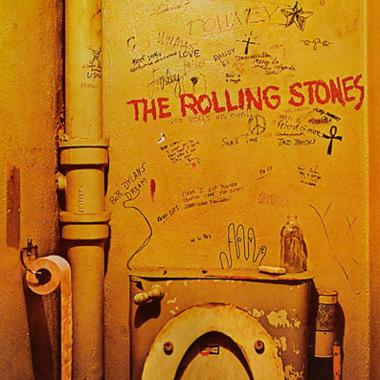
The song “Sympathy for the Devil” was written by Mick Jagger and Keith Richards of the Rolling Stones and appeared on the 1968 Rolling Stones album, Beggars Banquet.

beggars-banquet_1968

The song is a first person narrative from the viewpoint of Lucifer/Satan/The Devil. In the song, he takes credit for a great deal of current tragedies, including the assassinations of the Kennedy brothers.

For years, this dark song has been linked to the death of Meredith Hunter at a free concert that the Rolling Stones played at the Altamont Theater in December of 1969 (almost literally the end of the 1960s, let alone figuratively).

Read the rest of this entry »

Tags: , , , , , , , , , , , , , ,

September 26th, 2012 | Posted in Music Legends Revealed | 4 Comments

Was an Actor Fired From Playing John Lennon Because His Name Was Mark Chapman?

Here is the latest in a series of examinations into urban legends about TV and whether they are true or false. Click here to view an archive of the TV urban legends featured so far.

TV URBAN LEGEND: An actor was fired from a TV movie where he played John Lennon because it was revealed that his name was Mark Chapman.

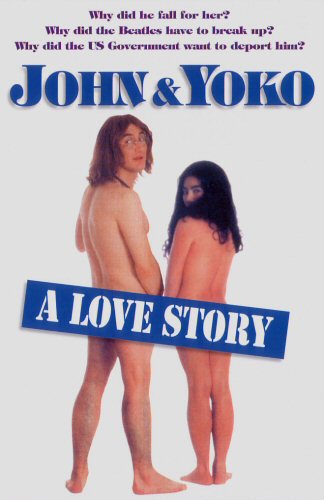
John & Yoko: A Love Story aired on NBC in late 1985.

john-and-yoko-a-love-story-poster-0

The film told the story of John Lennon and Yoko Ono, from their first meeting until Lennon’s tragic death in 1980 when he was assassinated by a crazed fan named Mark David Chapman.

Mark McGann played John Lennon and Kim Miyori played Yoko Ono.

Originally, though, actor Mark Lindsay was cast as John Lennon.
Read the rest of this entry »

Tags: , , , , , , , , , ,

September 25th, 2012 | Posted in TV Legends Revealed | 2 Comments
Did Lucille Ball and Desi Arnaz Really Divorce Twice?

Here is the latest in a series of examinations into urban legends about TV and whether they are true or false. Click here to view an archive of the TV urban legends featured so far.

TV URBAN LEGEND: Lucille Ball and Desi Arnaz divorced twice.

Often, it is difficult to figure out exactly where a particular legend got started. When it comes to the supposed two divorces of Lucille Ball and Desi Arnaz, however, it is quite simple how one might think that the couple had been married and divorced twice.
Read the rest of this entry »

Tags: , , , , , ,

September 25th, 2012 | Posted in TV Legends Revealed | 1 Comment

Was Good Times Not Originally Intended as a Spin-off of Maude?

Here is the latest in a series of examinations into urban legends about TV and whether they are true or false. Click here to view an archive of the TV urban legends featured so far.

TV URBAN LEGEND: Good Times was not originally a spin-off of Maude.

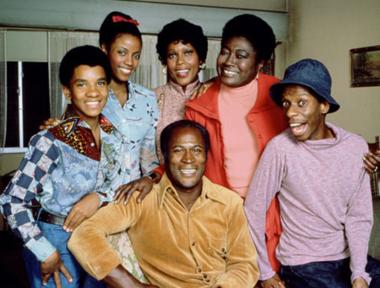
goodtimes

The television sitcom, Good Times, which initially starred Esther Rolle and John Amos as black parents raising their three children in a housing project in Chicago (with their oldest child being played by Jimmie Walker, who became famous for the role), is well known to be a spin-off of the TV series, Maude, where Esther Rolle’s character, Florida Evans, was the housekeeper for Bea Arthur’s Maude.

maudes11

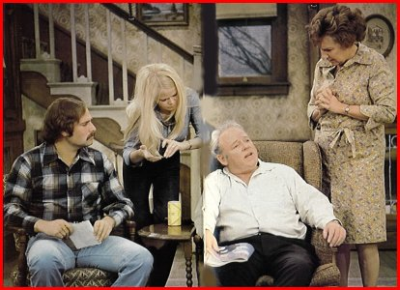
Maude, of course, was itself a spin-off of All in The Family (all three shows were produced by Norman Lear).

allinthefamily11

However, as originally conceived by show co-creators Eric Monte and Michael Evans (the show was based on Eric Monte’s memories of growing up in the infamous Cabrini-Green housing project in Chicago), the show was not tied to any other show.

Read the rest of this entry »

Tags: , , , , , ,

September 25th, 2012 | Posted in TV Legends Revealed | 1 Comment

Is There a Transgendered Character in the Super Mario Brothers Universe?

Here is the latest in a series of examinations into urban legends related to video games and whether they are true or false.

VIDEO GAME URBAN LEGEND: Super Mario Brothers features a transgendered character.

In Nintendo’s Super Mario Brothers 2, one of the various bad guys that Mario and Luigi have to fight is named Birdo.

birdo

Birdo would spit eggs, flames or some combination of the two. In Japan, the charcter was known as Catharine.

In the user manual, here is how Birdo is described:

Birdo thinks he is a girl and likes to be called Birdetta. He likes to wear a bow on his head and shoot eggs from his mouth.

The Japanese version says “Catharine” and “Cathy” in place of Birdo and Birdetta, respectively.

Well, as is the case with most of his former villains, Mario ended up befriending Birdo, and Birdo shows up in Mario Tennis…
Read the rest of this entry »

Tags: , , , , , , , ,

September 18th, 2012 | Posted in Grab Bag Legends, Video Game Legends Revealed | 7 Comments

Did Iraq Really Use Playstation 2 to Help Develop Their Weapon Systems?

Here is the latest in a series of examinations into urban legends related to video games and whether they are true or false.

VIDEO GAME URBAN LEGEND: Iraq was using Playstation 2 to help develop their weapons systems.

The second edition of Sony’s popular video game console, PlayStation, was released in 2000. Through various delays, only a million or so people had purchased consoles by the end of 2000, making it an extremely hard to find item, especially for Christmas 2000.

sony-playstation-2

Right in the middle of all the fears of the shortage of PlayStation 2’s was the report in December of 2000 by WorldNetDaily that Iraq had imported 4,000 PlayStation 2s!

The WorldNetDaily report tied in with some reports that had come out when the game was first released. When the PlayStation 2 was first produced, the Japanese Ministry of Trade had to approve of its release outside the country because of two aspects of the console.

1. It had a powerfully encrypted memory card. Anything over 56 bit encryption has to be approved by the Ministry before it is exported from Japan. PlayStation 2 had a 128 bit encryption. Sony said it needed the encryption to keep people from making copies of videos or music.

2. The central procession unit (CPU) of the PlayStation 2 had impressive graphics processing. It theoretically could be used as the “eyes” of a missile guidance system.

WorldNetDaily argued that that is why Iraq was importing all of these PlayStations, because the “toys” would be able to pass by any weapons embargo placed on Iraq.

Read the rest of this entry »

Tags: , ,

September 18th, 2012 | Posted in Grab Bag Legends, Video Game Legends Revealed | No Comments

Did Final Fantasy Get Its Name Because it Was the “Final” Chance the Company Had For Succeeding?

Here is the latest in a series of examinations into urban legends related to video games and whether they are true or false.

VIDEO GAME URBAN LEGEND: Final Fantasy got its name because it was the “final” shot at the company succeeding.

Square was founded by Masafumi Miyamoto in 1983 soon after graduating from college. At first, Square, which was devoted to developing computer games, was part of a larger company owned by Miyamoto’s father, but in 1986, Square spun off as its own company. Its games were published under the brand name Squaresoft.

One of the earliest employees at Square was a young man who had recently taken a break from college, Hironobu Sakaguchi. Sakaguchi began working part-time at Square, and while part-time, he developed Square’s first two games, The Death Trap and its sequel Will: The Death Trap II, but by the time that the company spun off, Sakaguchi was the Director of Planning and Development.

Square’s first games, which were developed for the Nintendo Famicon Disc System, did not go over very well.

The company was in desperate need of a success soon or it was very likely that it would go out of business.
Sakaguchi, too, was frustrated, but the company placed all of their hopes on a game that was designed to respond to the success Square’s competitor, Enix, had with the role playing game Dragon Warrior.

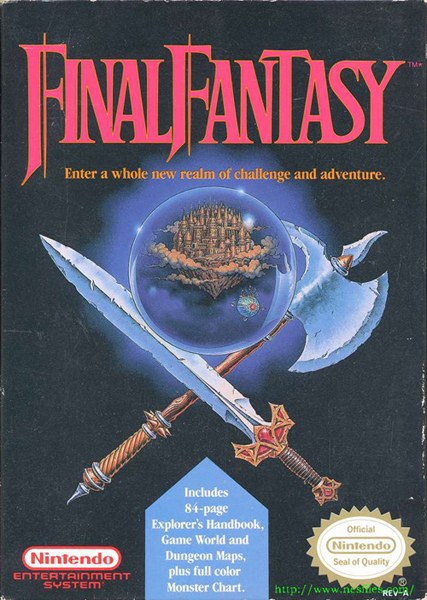
The game was titled Final Fantasy.

final_fantasy_1_nes_usa

It sold 400,000 copies and basically saved the company from financial ruin.

There are basically two stories about where the name Final Fantasy came from (it IS a bit of an odd name).

Read the rest of this entry »

Tags: , , , , , , , ,

September 18th, 2012 | Posted in Grab Bag Legends, Video Game Legends Revealed | No Comments

Were People All Around the U.S. Inundated With Calls After Their Phone Number Was Given in the Film Bruce Almighty?

Here is the latest in a series of examinations into urban legends about movies and whether they are true or false. Click here to view an archive of the movie urban legends featured so far.

MOVIE URBAN LEGEND: People all across the United States were flooded with calls due to their number being shown in the film Bruce Almighty, including a church with a pastor named Bruce!!!

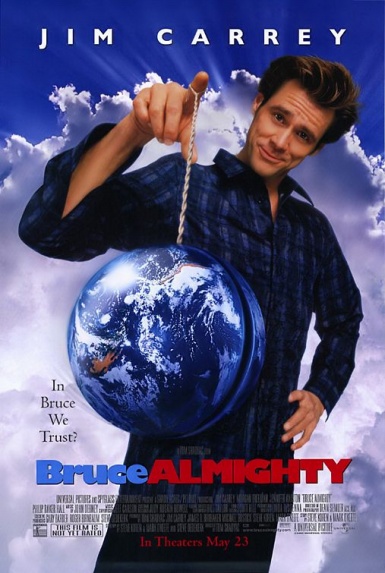
Bruce Almighty was a 2003 blockbuster film starring Jim Carrey, Jennifer Aniston and Morgan Freeman where God (played by Freeman) gives all of his powers to Bruce (Carrey) to see if he can do a better job than God.

bruce_almighty

The film’s massive popularity backfired a bit when the filmmakers failed to fully vet a phone number.
Read the rest of this entry »

Tags: , , ,

September 13th, 2012 | Posted in Movie Legends Revealed | 1 Comment