Here is the latest in a series of examinations into urban legends about movies and whether they are true or false. Click here to view an archive of the movie urban legends featured so far.
MOVIE URBAN LEGEND: Burt Reynolds turned down an Academy Award-winning acting role that was specifically written with him in mind so that he could do Stroker Ace.
Terms of Endearment was a 1975 novel by Larry McMurtry about the strained relationship of a mother and her grown daughter…
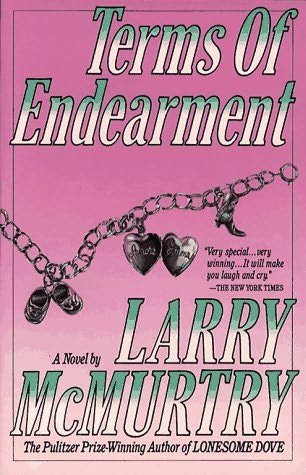
James L. Brooks made his film debut as a writer with the screenplay for the popular 1979 film, Starting Over, starring Burt Reynolds as a divorced man balancing his relationship with his new girlfriend and his ex-wife…
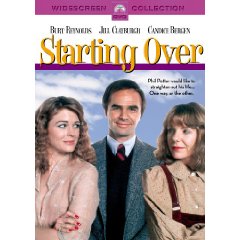
In 1983, Brooks made his film debut as a writer/director with the film adaptation of Terms of Endearment, starring Shirley MacLaine and Debra Winger as the mother and daughter.
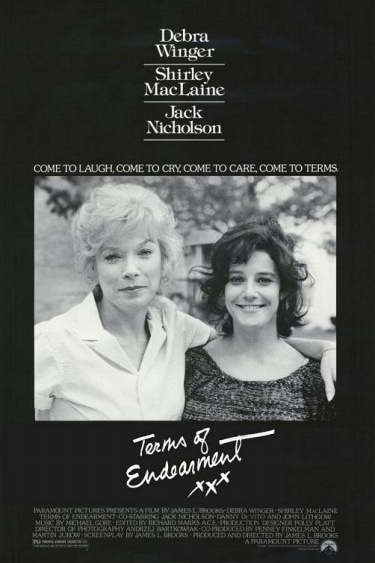
Brooks decided to add a new character to the film, a romantic interest for MacLaine’s character. The character, Garrettt Breedlove, was a retired astronaut who was a bit of an arrogant boozehound, but with a heart of gold.
Brooks wrote the character with Reynolds in mind, who was in his late 40s at the time.
However, Reynolds at the time had a lead role in an action-comedy called Stroker Ace, where he played a race car driver.
Read the rest of this entry »
Tags: Academy Award, Best Supporting Actor, Burt Reynolds, Candice Bergen, Cannonball Run, Debra Winger, Garrettt Breedlove, Jack Nicholson, James L. Brooks, Jill Clayburgh, Larry McMurtry, Shirley MacLaine, Smokey and the Bandit, Starting Over, Stroker Ace, Terms of Endearment
September 13th, 2012 | Posted in Movie Legends Revealed | No Comments
Here is the latest in a series of examinations into urban legends about movies and whether they are true or false. Click here to view an archive of the movie urban legends featured so far.
MOVIE URBAN LEGEND: Vera-Ellen neck had to be covered at all times in the film White Christmas because her neck was ravaged by the effects of anorexia.
Vera-Ellen was a popular musical actress during the 1930s, 40s and 50s.
She appeared in such legendary musicals as On The Town and White Christmas.
Here she is in On the Town (1949) (she is the third woman in the picture)…
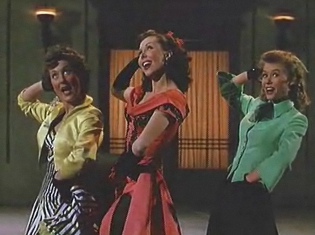
Here, then, are a number of pictures of Vere-Ellen from the 1954 film, White Christmas…
Read the rest of this entry »
Tags: A Star is Born, anorexia nervosa, Audrey Hepburn, Christmas, Judy Garland, On the Town, Vera-Ellen, White Christmas
September 13th, 2012 | Posted in Movie Legends Revealed | 81 Comments
Here is the latest in a series of examinations into urban legends about music and whether they are true or false. Click here to view an archive of the music urban legends featured so far.
MUSIC URBAN LEGEND: “Mr. Bojangles” is about the famous dancer Mr. Bojangles.
“Mr. Bojangles” was written and first recorded by Jerry Jeff Walker in 1968.
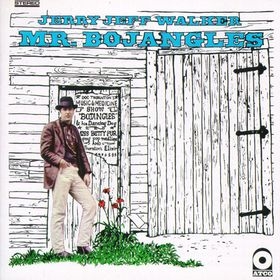
The song became famous, though, when it was released by the Nitty Gritty Dirt Band on their 1971 album, Uncle Charlie & His Dog Teddy.

The oddest thing about the song “Mr. Bojangles,” which is a nice, melancholy song about a tap dancing fellow named Mr. Bojangles is that while it IS written about a tap dancer named Mr. Bojangles, it is NOT about the famous tap dancer, Mr. Bojangles!
Read the rest of this entry »
Tags: "Mr. Bojangles", Bill Robinson, Bojangles, Jerry Jeff Walker, Nitty Gritty Dirt Band, Shirley Temple, Uncle Charlie & His Dog Teddy
September 5th, 2012 | Posted in Music Legends Revealed | 1 Comment
Here is the latest in a series of examinations into urban legends about music and whether they are true or false. Click here to view an archive of the music urban legends featured so far.
MUSIC URBAN LEGEND: George Michael’s “Father Figure” accidentally became a slow tempo song.
After having great success with the pop duo Wham!, George Michael decided to go out on his own, and after spending most of 1987 writing and recording, he finally debuted his much-anticipated solo album, titled Faith.
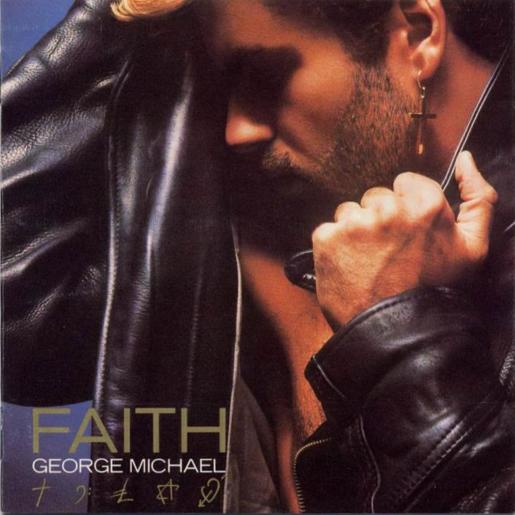
After three #1 singles with Wham! and one #1 single in a duet with Aretha Franklin, George Michael finally reached #1 on the Billboard charts with one of his solo efforts with the third single off of Faith, the title track, “Faith” (the first single off of the album, “I Want Your Sex” DID make it to #2).
The fourth single, and the second straight one to go to #1 was “Father Figure.”
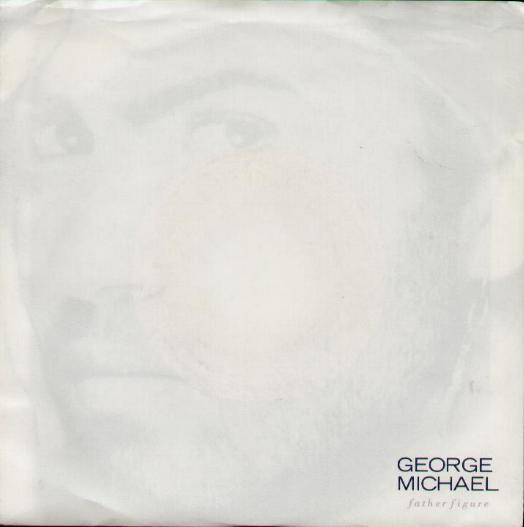
The song is a slow, almost haunting tune dealing with a perhaps inappropriate romantic relationship between two people, where the narrator wants to be a sort of teacher to the younger part of the relationship – he will be the “Father Figure.” It’s honestly a bit of an odd song.
In any event, as it turned out, the haunting quality of the song came about purely by accident!
Read the rest of this entry »
Tags: "Father Figure", "I Want Your Sex", Aretha Franklin, Faith, George Michael, Wham!
September 5th, 2012 | Posted in Music Legends Revealed | No Comments
Here is the latest in a series of examinations into urban legends about music and whether they are true or false. Click here to view an archive of the music urban legends featured so far.
MUSIC URBAN LEGEND: A misheard lyric led to the title of the song “In-A-Gadda-Da-Vida”
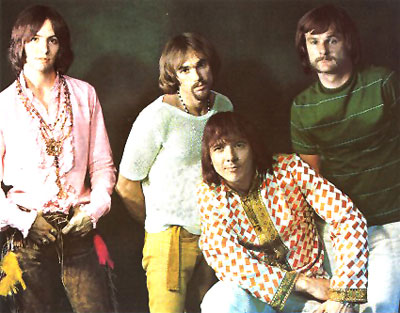
The heyday for the group, Iron Butterfly, was probably the lineup of Doug Ingle (keyboards and vocals), Lee Dorman (bass guitar), Ron Bushy (drums) and Erik Brann (lead guitar). This quartet toured in support of he bands first album (which featured a different lineup).
<
This group is the one who recorded the band’s second album, which is by far their most famous one, specifically for the hit title track, “In-A-Gadda-Da-Vida.”

“In-A-Gadda-Da-Vida” is what is called a mondegreen, a word or phrase that is created by mishearing the ACTUAL word or phrase.
In the case of “In-A-Gadda-Da-Vida,” the phrase would be “In The Garden of Eden.”
There are contrary stories that exist telling HOW the phrase got to be misheard, but they all basically end up in the same place – that the track was misheard and thus became “In-A-Gadda-Da-Vida.”
Here are the two competing stories:
Read the rest of this entry »
Tags: "In the Garden of Eden", "In-A-Gadda-Da-Vida", Doug Ingle, Erik Brann, Iron Butterfly, Lee Dorman, mondegreen, Ron Bushy
September 5th, 2012 | Posted in Music Legends Revealed | No Comments
Here is the latest in a series of examinations into urban legends about TV and whether they are true or false. Click here to view an archive of the TV urban legends featured so far.
TV URBAN LEGEND: RTE turned down Father Ted because of a similar show already airing on RTE.
Father Ted was an extremely popular British show (starring comedian Dermot Morgan) that aired on Channel 4 from 1995 until 1998. It told the story of an eccentric trio of Irish priests who lived on a remote island off the coast of Ireland in an archaic house along with their equally eccentric housekeeper, Mrs. Doyle.
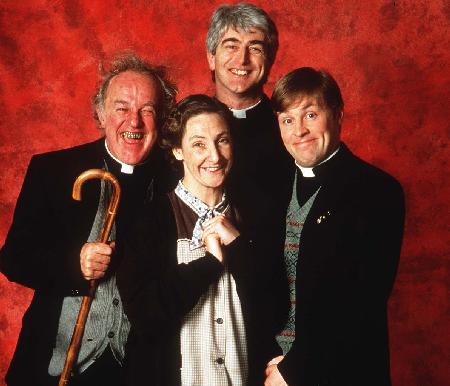
The show is interesting in that it is set in Ireland and is extremely popular in Ireland (for its more or less faithful adaptation of Irish mannerisms), and yet the show aired on a British television station instead of Radio Telefís Éireann (RTE), the Irish National Television station.
As I have mentioned in the past a few times, when there is an absence of a plain explanation, people will often fill in the blanks with their own explanations, and in this case, the story goes that RTE turned DOWN airing Father Ted, because they already had a fairly popular television program during the 1980s that was about a housekeeper and a group of priests.
It was called “Leave it to Mrs. O’Brien,” and it starred the late Anna Manahan as a wacky housekeeper for two priests in Ireland.
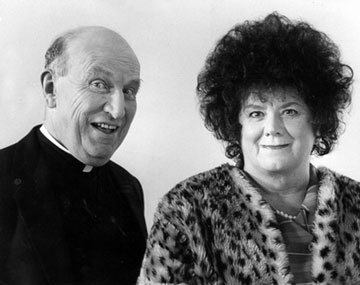
So is that why RTE did not pick up the show?
Read the rest of this entry »
Tags: Anna Manahan, Arthur Mathews, Channel 4, Dermot Morgan, Father Ted, Graham Linehan, Leave it to Mrs. O'Brien, Mrs. Doyle, Radio Telefís Éireann, RTE
August 28th, 2012 | Posted in TV Legends Revealed | No Comments
Here is the latest in a series of examinations into urban legends about TV and whether they are true or false. Click here to view an archive of the TV urban legends featured so far.
TV URBAN LEGEND: The Simpsons edited a scene from re-airings of an episode because the original episode was offensive to those with Tourette’s Snydrome.
The Simpsons are notable in being fairly equal opportunity offenders. They mock all sorts of people, places and things, even themselves, the company that airs them (they make fun of FOX a LOT) and even the corporate sponsors of the show (they made fun of Butterfingers while they were in the midst of doing an ad campaign for Butterfingers!).
However, the Simpsons apparently felt they went over the line with an episode in their fourth season titled “Marge Gets a Job.”
Read the rest of this entry »
Tags: "Marge Gets a Job", animation, Bart Simpson, Joshua Smith, Montgomery Burns, Mrs. Krabappel, The Simpsons, Tourette's Syndrome
August 28th, 2012 | Posted in TV Legends Revealed | 4 Comments
Here is the latest in a series of examinations into urban legends about TV and whether they are true or false. Click here to view an archive of the TV urban legends featured so far.
TV URBAN LEGEND: Warner Bros. sued a company over the rights to the term “Daisy Dukes.”
Catharine Bach’s character on the TV series, Dukes of Hazzard, is one of the unique fictional characters out there to actually have something named after them.

In Bach’s case, the short denim shorts that she would often wear on the TV series have been now commonly referred to as “daisy dukes.”
While Warner Brothers, who owned the show, certainly enjoyed the fact that their character was becoming such a big part of American society that her name was becoming the name of a style of clothing, they did NOT like the fact that that ended up losing their rights to the trademark on the name!
Read the rest of this entry »
Tags: Catharine Bach, Daisy Duke, Daisy Dukes, Dukes of Hazzard, Warner Brothers
August 28th, 2012 | Posted in TV Legends Revealed | No Comments
Here is the latest in a series of examinations into urban legends about plays and playwrights and whether they are true or false.
THEATER URBAN LEGEND: William Shakespeare left Stratford-on-Avon in the mid 1580s because he was arrested for poaching deer.
For centuries now, there has been one part of Shakespeare’s life that just doesn’t seem to be accounted for.

He was married at age 18 to the 26-year-old Anne Hathaway in 1582. They had three children, born in 1583 and 1585.
The next time anyone has definitive information about Shakespeare is when he popped up on the London theater scene in 1592.
Every story that has come about to explain what happened in those seven years originated years after Shakespeare’s death, but one particular popular one involved deer poaching.
As the story goes, and this was offered up by four separate biographies of Shakespeare in the 1700s, Shakespeare, who had a grudge against Sir Thomas Lucy of Charlecote, which was right across the river to Stratford. Shakespeare mocked Lucy in two separate plays.
So the legend is that Shakespeare was caught deer poaching on Lucy’s deer park at Charlecote and left Stratford for London to avoid punishment (an alternate to this legend includes Shakespeare being caught and whipped and then sent from Stratford).
Read the rest of this entry »
Tags: Anne Hathaway, Stratford-on-Avon, William Shakespeare
August 22nd, 2012 | Posted in Grab Bag Legends, Theater Legends Revealed | No Comments
Here is the latest in a series of examinations into urban legends about plays and playwrights and whether they are true or false.
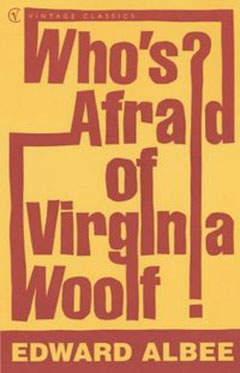
THEATER URBAN LEGEND: The Pulitzer Prize Committee chose to award no Pulitzer Prize for Best Drama in 1963 rather than to give it to Who’s Afraid of Virginia Woolf?
Edward Albee’s play, Who’s Afraid of Virginia Woolf? is one of the more remarkable works of drama in the 20th Century.
The play was first staged in 1962.
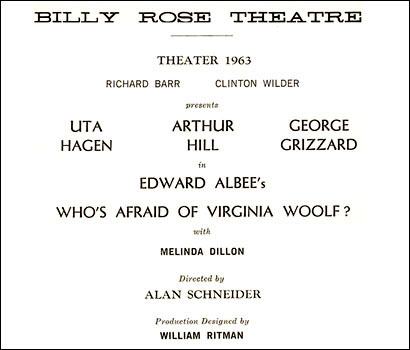
The story takes place at the home of George and Martha, a history professor at a college and his wife, the daughter of the president of the college. They have taken a new professor and his mousy wife out to dinner and are now back at George and Martha’s place for more drinks. The night continues as George and Martha slowly descend into a tirade of increasingly violent behavior towards each other.
Albee wished to take a darn look at the “standard” American couple and show the darkness hidden behind a typical white heterosexual couple in the early 60s.
The play opened to widespread acclaim.
It won the 1963 Tony Award for Best Play.
However much acclaim it attracted, though, it attracted the same amount of controversy. The play contained copious amounts of profanity and sexual references. In 1962-63, that was still quite shocking.
It was SO shocking that it resulted in a similarly shocking result when the 1963 Pulitzer Prizes were awarded.
Read the rest of this entry »
Tags: Best Drama, Best Play, Edward Albee, Pulitzer Prize, Tony Award, Who's Afraid of Virginia Woolf?
August 22nd, 2012 | Posted in Grab Bag Legends, Theater Legends Revealed | No Comments