Did the Museum of Modern Art Hang a Matisse Painting Upside Down for Over a Month?

Here is the latest in a series of examinations into urban legends related to paintings and painters and whether they are true or false.

PAINTING URBAN LEGEND: Henry Matisse’s Le Bateau was hung upside down at the Museum of Modern Art for 47 days.

Henri Matisse was one of the most famous artists of the 20th Century.
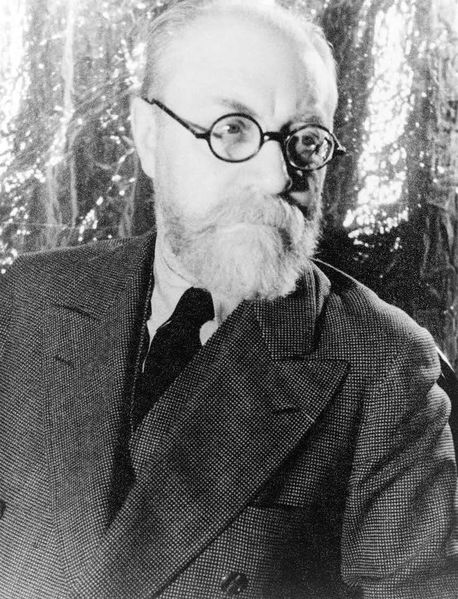
One of the leading figures of the modern art movement, Matisse was primarily known for his expressive usage of color in his work.

His style changed dramatically over the years, and by the end of his life (he died in 1954), he was working primarily in “paper-cut” paintings, where he would cut out pieces of paper and he would arrange them along with paint into interesting configurations.

One of these works was called La Bateau, and it was finished in 1953, a year before his death.

It’s a beautiful piece of work.

In any event, in 1961, the piece was hung at the Museum of Modern Art in New York City.

There was just one problem.
Read the rest of this entry »

Tags: , ,

January 17th, 2013 | Posted in Grab Bag Legends, Painting Legends Revealed | 1 Comment
Were Walt Disney’s Last Written Words Really “Kurt Russell”?

Here is the latest in a series of examinations into urban legends about movies and whether they are true or false. Click here to view an archive of the movie urban legends featured so far.

MOVIE URBAN LEGEND: The last thing Walt Disney wrote before dying was “Kurt Russell.”

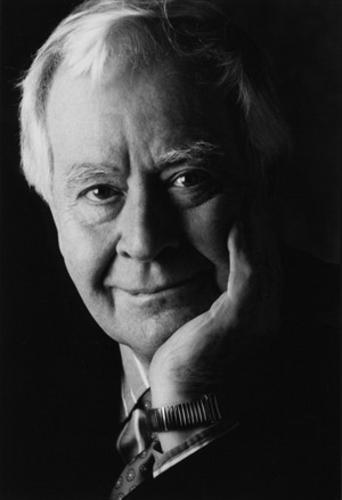
As the saying goes, there are only two constants in life, death and taxes. The former is something that society as a whole (and popular culture specifically) has always been fascinated with. Pretty much any hour of the day you can find some programming on television that is either about someone being murdered, someone escaping death or life after death. So it is only natural, then, that the last words of famous people are greatly scrutinized. After all, we have always given greater meaning to the ends of novels and films, so why not something even more important, the end of someone’s actual life? Heck, Orson Welles’ classic film Citizen Kane revolves around the last words of its title subject. Like that film’s mysterious “Rosebud,” the more attention that you give a subject the more likely that false or misleading stories will pop up about the topic. Like whether W.C. Fields’ tombstone really reads, “Here lies W. C. Fields. I would rather be living in Philadelphia” (I’ve addressed that one before here). Or today’s legend – was the last thing Walt Disney wrote before he died really “Kurt Russell”?

Let’s find out!
Read the rest of this entry »

Tags: , , , , , , , , ,

January 16th, 2013 | Posted in Movie Legends Revealed | No Comments

Did a Trained Camel Save Peter O’Toole’s Life During the Filming of Lawrence of Arabia?

Here is the latest in a series of examinations into urban legends about movies and whether they are true or false. Click here to view an archive of the movie urban legends featured so far.

MOVIE URBAN LEGEND: A trained camel saved Peter O’Toole’s life on the set of Lawrence of Arabia.

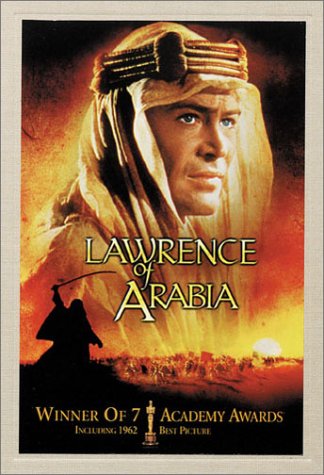
Lawrence of Arabia is a 1962 epic film directed by David Lean about the life of British officer T.E. Lawrence, who was famous for his role as the British liaison in the “Arab Revolt” of 1916-1918, which tied in with World War I for England.

In the film, Lawrence is played by Peter O’Toole and Omar Sharif plays his chief Arab compatriot, Sherif Ali ibn el Kharish.

As you might imagine, filming an epic film in the desert came with some difficulties for the actors involved, and the riding of camels was no exception.

Neither O’Toole nor Sharif were particularly adept camel riders, and that became especially important at the filming of the Lawrence-led attack on the city Aqaba.

In the film, O’Toole and Sharif would lead a cavalry of 500 extras on horses into battle. O’Toole and Sharif would be riding camels.

The two would prepare for the frightening scene the next day by doing what O’Toole would often do – get drunk.

However, during the day of the filming, Sharif tied himself to his camel. O’Toole was wary about being attached to the camel, for fear that the camel might go nuts and he would be stuck with it.

The actor likely regretted his decision later that day.
Read the rest of this entry »

Tags: , , , , , ,

January 15th, 2013 | Posted in Movie Legends Revealed | 2 Comments

What Was William Wyler’s Odd Reason For Missing Out on Accepting His Best Director Oscar For Mrs. Miniver?

Here is the latest in a series of examinations into urban legends about movies and whether they are true or false. Click here to view an archive of the movie urban legends featured so far.

MOVIE URBAN LEGEND: William Wyler had a rather interesting excuse for not being there to accept his Best Director Academy Award in 1943.

Throughout the history of the Academy Awards, people have had some rather…interesting reasons for not being able to be at the ceremony to accept their award (not counting folks like George C. Scott who refused the award).

Like Horton Foote missing out on accepting his Academy Award for Best Adapted Screenplay for To Kill a Mockingbird in 1963 because he was sure he would not win.

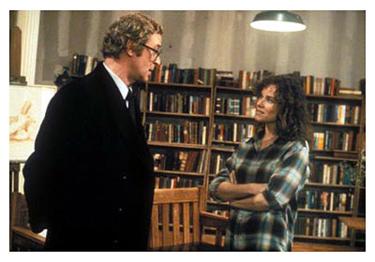
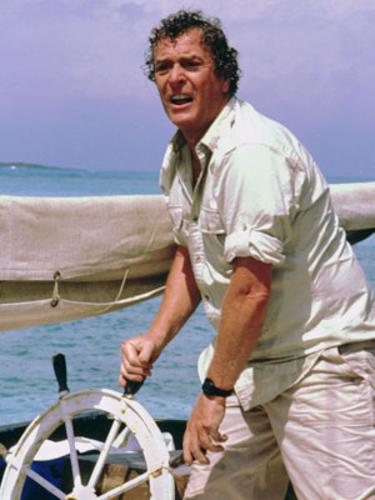
Or, infamously, Michael Caine missing out on accepting his Academy Award for Best Supporting Actor for Hannah and Her Sisters in 1987…

because he was busy filming Jaws: The Revenge in the Bahamas.

But one of the most striking examples of a winner not being there to accept his or her award was director William Wyler, who could not make the 1943 Oscars ceremony because he was in the middle of a bombing mission!!
Read the rest of this entry »

Tags: , , , , , , , , , , , , ,

January 14th, 2013 | Posted in Movie Legends Revealed | No Comments

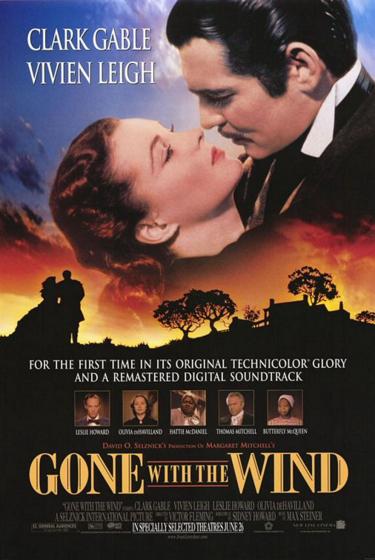
Did Gone With the Wind Use the Word “Damn” in Violation of the Motion Picture Association Production Code?

Here is the latest in a series of examinations into urban legends about movies and whether they are true or false. Click here to view an archive of the movie urban legends featured so far.

MOVIE URBAN LEGEND: Gone With The Wind used the line “Frankly, my dear, I don’t give a damn” in violation of the Motion Picture Association Production Code.

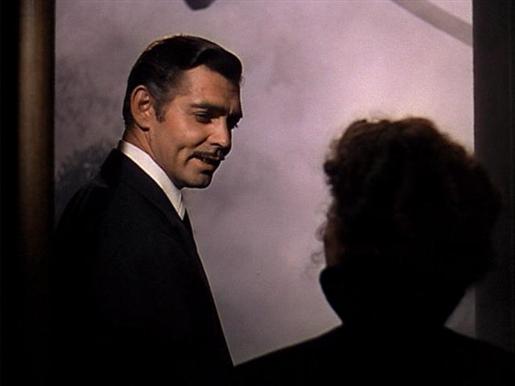
Probably the most famous line in Gone With the Wind, which is one of the most famous motion pictures of all-time, is at the end of the film, where Vivien Leigh’s Scarlett O’Hara tries to convince her long-suffering beau, Clark Gable’s Rhett Butler, that she really DOES love him and DOESN’T love Leslie Howard’s Ashley.

Reasonably enough, Rhett is sick of her shenanigans, so he leaves her with the line “Frankly, my dear, I don’t give a damn.”

That pesky “damn” was the cause of a great deal of controversy, but it’s controversy that has been misrepresented over the years.

The Motion Pictures Producers and Distributors Association (MPPDA) (precursor to today’s Motion Picture Association of America (MPAA)) formed the Motion Picture Production Code in 1930, detailing what was and was not acceptable to use in films. The Code existed, in one form or another, until 1968, when it was replaced with the current ratings system that is basically still used today.

The word “damn” would definitely be the type of word that would not be allowed, generally, by the Code.

So the story goes that Gone With the Wind’s producer, David O. Selznick, decided to basically say, “forget you” to the Code and use the word “damn” without their permission, and thereby accept a $5,000 fine.

That is such a simplification of the situation that it basically is false.
Read the rest of this entry »

Tags: , , , , , , , , , , , ,

January 13th, 2013 | Posted in Movie Legends Revealed | 2 Comments

What Striking Advice Did Famed Poet Delmore Schwartz Give a Young Lou Reed?

Here is the latest in a series of examinations into urban legends about music and whether they are true or false. Click here to view an archive of the music urban legends featured so far.

MUSIC URBAN LEGEND: Lou Reed was given some striking early advice from the legendary American poet and author, Delmore Schwartz.

Delmore Schwartz burst onto the literary scene as a young man, with his collection of short stories that was named after his most famous short story, “In Dreams Begin Responsibilities,” in 1938, when he was just 25 years old.

Schwartz definitely fit into the “Wonder Boy” definition – that is, the creative person who had their greatest success at a young age and then spend the rest of their lives trying to recapture that glory.

In 1959, Schwartz became the youngest person ever to win the Bollingen Prize, mostly for his collection of poems, Summer Knowledge: New and Selected Poems.

Schwartz had a profound impact upon the confessional poets of the 1950s, primarily John Berryman, who dedicated a book of poetry to Schwartz.

Saul Bellow later wrote a great book, Humboldt’s Gift, based on Schwartz’s life – how he began with such great promise and that promise haunt him for the rest of his life.

Schwartz was an extremely heavy drinker, which he used to self-medicate. Ultimately, he became basically a hermit, living in the Hotel Marlon in New York City. He was so isolated that he was dead for two days before he was discovered (he was only 53 years old).

Schwartz taught at a number of colleges during his life, and one of his most famous students (at Syracuse) was a young man named Lou Reed.
Read the rest of this entry »

Tags: , , , , , , , , ,

January 11th, 2013 | Posted in Music Legends Revealed | No Comments

Was the Who’s “My Generation” Banned by the BBC for Being Offensive to Stutterers?

Here is the latest in a series of examinations into urban legends about music and whether they are true or false. Click here to view an archive of the music urban legends featured so far.

MUSIC URBAN LEGEND: The BBC originally banned the playing of the Who’s “My Generation” because it was offensive…to stutterers!

It’s important to note that among the top British acts of 1964/1965, the Who and the Kinks stood out a bit from the Beatles and the Rolling Stones in terms of “rocking hard.”

In 1964 and 1965, the Beatles were still doing mostly middle-of-the road pop songs (amazing middle-of-the road pop songs, of course) and the Rolling Stones were still doing a mix of blues songs and pop songs.

Later on, both the Beatles and the Stones began to rock just as hard as the Who and the Kinks, but in 1964, the Who and the Kinks stood out in terms of how aggressive their sound was, which makes sense, as they were the front of the line of young musicians who were reacting TO the Beatles’ sound (and popularity).

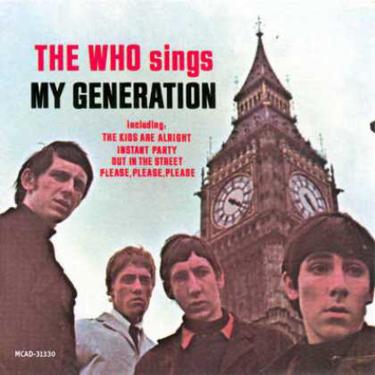
So when their album The Who Sings My Generation came out in 1965, it had a much harder sound than was typically played on British radio at the time.

And most specifically, the lead track from the album, “My Generation” was just that, a song that seemed to be about the next generation of British rockers. It reeked with attitude, most prominently where the song teases the audience with the possibility of a different “F” word when it says “Why don’t you just f-f-f-f-fade away.”

Amusingly enough, the song WAS banned by the BBC from its playlists when the song was released. That’s not THAT surprising, but what IS surprising is the reasoning – the BBC felt that the song was offensive….to stutterers!
Read the rest of this entry »

Tags: , , , , , , ,

January 10th, 2013 | Posted in Music Legends Revealed | 2 Comments

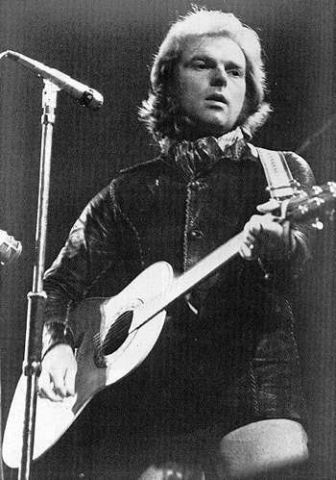
Did Van Morrison’s Record Company Force Him to Change the Name of His Song “Brown Skinned Girl” to “Brown Eyed Girl?”

Here is the latest in a series of examinations into urban legends about music and whether they are true or false. Click here to view an archive of the music urban legends featured so far.

MUSIC URBAN LEGEND: Van Morrison was pressured to change his song “Brown Skinned Girl” to “Brown Eyed Girl.”

In 1967, Van Morrison had recently separated from his band, Them…

And was looking to sign his first record contract as a solo artist. Sadly for Van, the contract he signed with Bang Records turned out to be pretty detrimental to Van, financially (Morrison claims that he has never received any royalties for “Brown Eyed Girl” – that is almost certainly an exaggeration, but likely close enough to the truth to shock you).

However, from a reputation standpoint, his work with Bang produced what is probably his signature song, and the song that made him a superstar recording artist.

That song was “Brown Eyed Girl.”

The tune, a fun nostalgic look back at young love, was a major hit, and remains today one of the most played songs on “oldies” radio stations.

The song is so established that it apparently is featured on the iPod of both Bill Clinton AND George W. Bush!

Amusingly enough, the song, now a fond look back at “the good ol’ days” was, at the time, considered a bit racy for radio, as it included the lines “makin’ love in the green grass.” Many radio stations just edited the song and used the lines “laughin and a runnin'” from the previous verse twice.

However, the most “controversial” aspect of the song is that it was originally called “Brown Skinned Girl,” not “Brown Eyed Girl.”

This has, reasonably enough, led to many stories about how Morrison was pressured to change the title by an uneasy record company.

Is it true?
Read the rest of this entry »

Tags: , , ,

January 9th, 2013 | Posted in Music Legends Revealed | 1 Comment
Did a Major Dark Shadows Character Come About Due to a Typo?

Here is the latest in a series of examinations into urban legends about TV and whether they are true or false. Click here to view an archive of the TV urban legends featured so far.

TV URBAN LEGEND: A major character on Dark Shadows came into existence due to a typo!

In June 1966, the daily soap opera Dark Shadows began on ABC.

The series began with a young governess moving to the spooky Collins mansion, where all sorts of eerie things seem to be going on – however, until about six months into the run, the spooky stuff did not involve any actual supernatural dealings.

That changed six months in, when the first ghost appeared on the series.

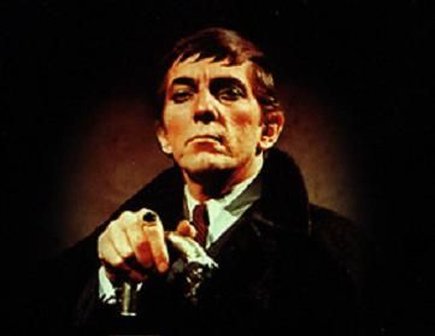
Then, a year into the run, the whole show dramatically changed when a vampire named Barnabas Collins, played by Jonathan Frid, made his debut.

Collins, whose character was introduced mostly as a stunt, soon became the central focus of the show, as Hird played him beautifully as a conflicted, self-loathing vampire. He was the epitome of the tragic soap opera hero – the one who is sort of a “bad boy” but not so much so that the fans can’t still root for him.

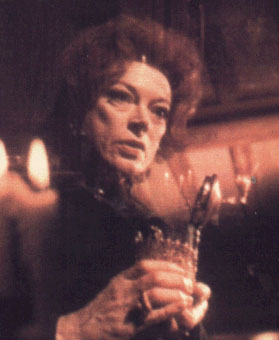
After introducing Barnabas, the show wanted to introduce a doctor who specialized in vampirism, and that doctor was Dr. Julia Hoffman (played by Grayson Hall), who would soon became Barnabas’ love interest (although it was more a case of Hoffman wanting Barnabas than Barnabas wanting her – but she DID become a very close friend to Barnabas) on the series, and therefore one of the biggest characters on the show.

However, amusingly enough, her creation came down to a typo!
Read the rest of this entry »

Tags: , , , , , , , ,

January 8th, 2013 | Posted in TV Legends Revealed | 6 Comments

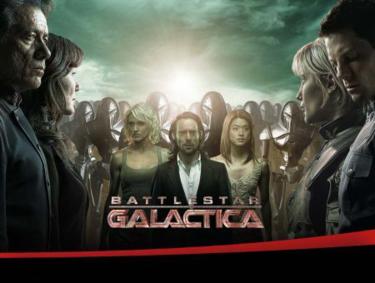
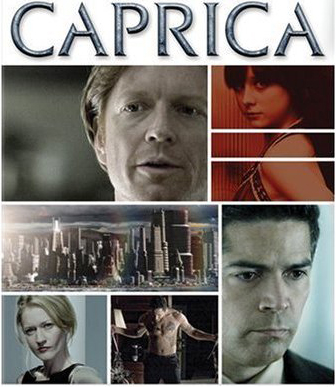
Was Caprica Not Initially Intended as a Battlestar Galactica Tie-In?

Here is the latest in a series of examinations into urban legends about TV and whether they are true or false. Click here to view an archive of the TV urban legends featured so far.

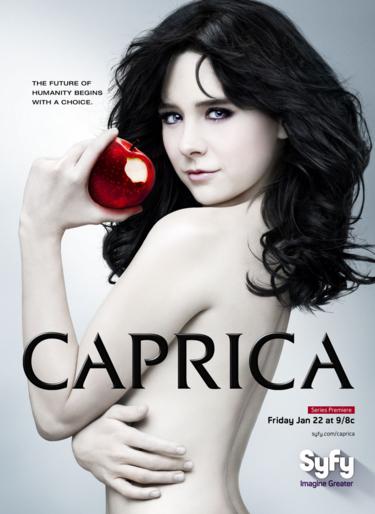
TV URBAN LEGEND: The TV series Caprica was originally pitched NOT as a Battlestar Galactica tie-in!

Caprica was a television series…

that worked as a prequel to the acclaimed television series, Battlestar Galactica.

Starting 58 years before the first episode of Battlestar Galactica, Caprica showed the rise of the artificial intelligence known as the Cylons (while also, of course, showing what human society was like at the time, as well).

The series starred Eric Stoltz and Esai Morales.

Amazingly enough, though, the genesis of the series began with a screenplay having nothing to do with Battlestar Galactica at all!
Read the rest of this entry »

Tags: , , , , , , , ,

January 3rd, 2013 | Posted in TV Legends Revealed | No Comments