Was the Sequel to the Adventures of Buckaroo Banzai Re-Worked Into Big Trouble in Little China?

Here is the latest in a series of examinations into urban legends about movies and whether they are true or false. Click here to view an archive of the movie urban legends featured so far.

MOVIE URBAN LEGEND: The sequel to Adventures of Buckaroo Banzai Across the Eighth Dimension was re-worked into the screenplay for Big Trouble in Little China.

Reader Devin wrote in suggesting a legend that was, well, just like the one I posted – was the sequel to Adventures of Buckaroo Banzia Across the Eighth Dimension re-worked into the screenplay for Big Trouble in Little China?

Big Trouble in Little China began in 1982 as a Fantasy/Western screenplay, with the Jack Burton character a cowboy and the whole thing set at the turn of the 20th Century in San Francisco. At this time, it was written by the film’s original screenwriters, Gary Goldman and David Z. Weinstein.

The studios liked the basic idea of the screenplay (doing an adventure film mixing Western heroics with Eastern mysticism), but disliked everything else, particularly the whole “set in the past” aspect of the script.

So after purchasing the script, the insisted the screenwriters update the story to modern times. When they balked at the changes, the studio had them removed.

In stepped W. D. Richter, writer and director of Adventures of Buckaroo Banzai Across the Eighth Dimension, a very cool, off-kilter science fiction adventure film from 1984.
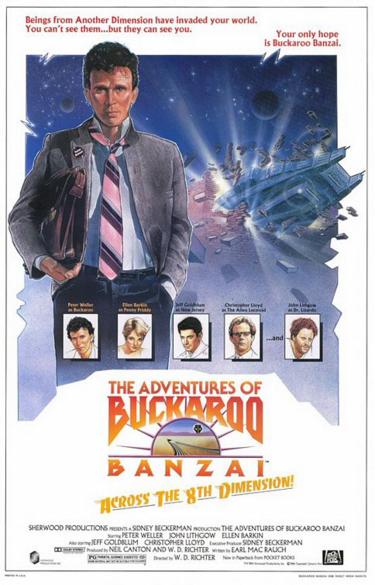
Sadly, while the film has achieved the level of “cult classic” in the years since its release, at the time, it was not a particularly profitable movie.

It did so poorly that the sequel to the film that was promised during the end credits (see below) never materialized…
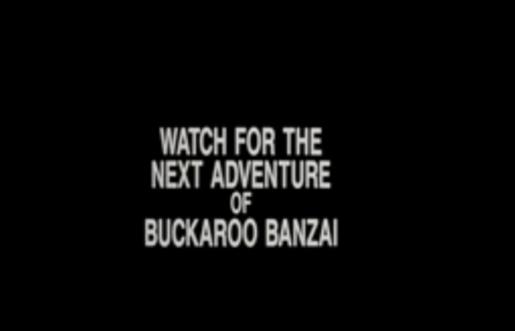
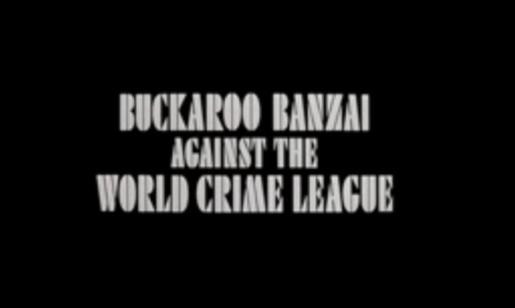
So since the sequel never showed up, people presumed that Buckaroo Banzai Against The World Crime League was just re-worked into Big Trouble in Little China.
True?
Read the rest of this entry »

How Did Optimus Prime Save the Life of Duke from G.I. Joe?

Here is the latest in a series of examinations into urban legends about movies and whether they are true or false. Click here to view an archive of the movie urban legends featured so far.

MOVIE URBAN LEGEND: The negative reaction to the death of Optimus Prime in the Transformers movie saved Duke from dying in the G.I. Joe movie.

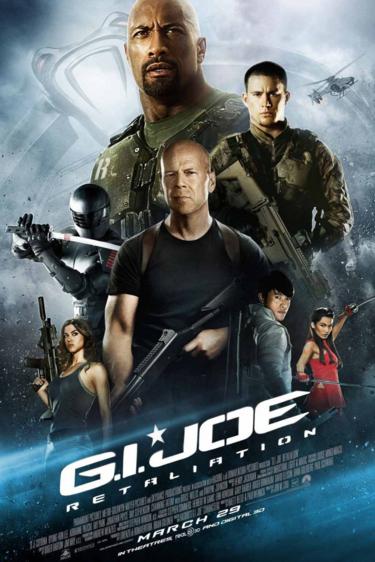
A recurring rumor in the months leading up to the release of G.I. Joe: Retaliation this past March suggested that the stated reason for the film being delayed in May of 2012 from the original release date of June 29, 2012 to the actual release date of March 28, 2013 was not just because of their stated reason, which was to convert the film into an additional 3-D version of the film (which was not originally filmed in 3-D) but also to change the original plot of the film so that Channing Tatum’s character of Duke did not die, as he was rumored to have been killed in the first version of the movie.

The fact that they did, in fact, shoot new scenes for the film with Tatum seemed to bear out the rumor that after they saw Tatum’s star status explode in early 2012 (with the hit films The Vow and 21 Jump Street coming out before they scrapped the 2012 release of G.I. Joe: Retaliation and the hit film Magic Mike following later in June 2012, as well) that they figured that they better change the film so that Tatum’s character, Duke, survives the film for possible use in future G.I. Joe movies. The film is new enough that I won’t spoil whether that actually happened, but it is fascinating to note that if they did do that, it would be the second time that Duke’s character had been saved from death after a G.I. Joe movie had been made! Read on to see how it happened last time and how the 1986 animated Transformers movie actually caused the reversal!
Read the rest of this entry »

Tags:

May 8th, 2013 | Posted in Movie Legends Revealed | 5 Comments

What Kind of Strange Race Against Time Did Frank Sinatra Do When Recording “Strangers in the Night?”

Here is the latest in a series of examinations into urban legends about music and whether they are true or false. Click here to view an archive of the music urban legends featured so far.

MUSIC URBAN LEGEND: Frank Sinatra had to conduct an odd race against time to record “Strangers in the Night.”

The mid-60s was an interesting time for Frank Sinatra. He was now in his early 50s, but he was still competing with a new batch of younger singers with styles similar to his, like Bobby Darin. Popular music is usually a young man’s game, but Sinatra still had more clout than other artists, and by the mid-60s, he also had another thing – his own record label, Reprise!

The song that would become “Strangers in the Night” made its appearance on the film soundtrack to a minor release, A Man Could Get Killed, as an instrumental track. The song was written by the German composer Bert Kaempfert. However, English lyrics were being written as the film was coming out in March, and everyone could tell that the melody was going to be a major hit.

So suddenly there became a race to see who would be the person who released “the” version of the song, and as these things usually go, whoever gets it out first is the one who gets the most attention. The guys who wrote the English lyrics, Charles Singleton and Eddie Snyder, were sending out demos to pretty much every major singer out there.

Sinatra was worried that Bobby Darin, or more importantly, Jack Jones (who Sinatra tended to view as more of a threat at the time), would release the song before he did.

And that’s when he found out that Jones WAS going to release the song on April 13th – only three days away! So a strange race against time was under way!
Read the rest of this entry »

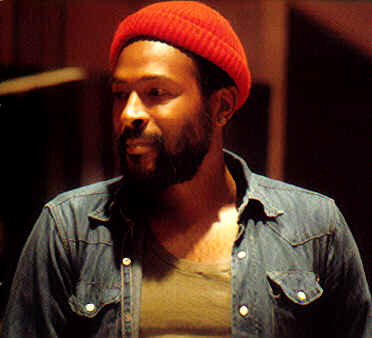
Did Marvin Gaye Try Out for the Detroit Lions?

Here is the latest in a series of examinations into urban legends about music and whether they are true or false. Click here to view an archive of the music urban legends featured so far.

MUSIC URBAN LEGEND: Marvin Gaye tried out for the Detroit Lions.

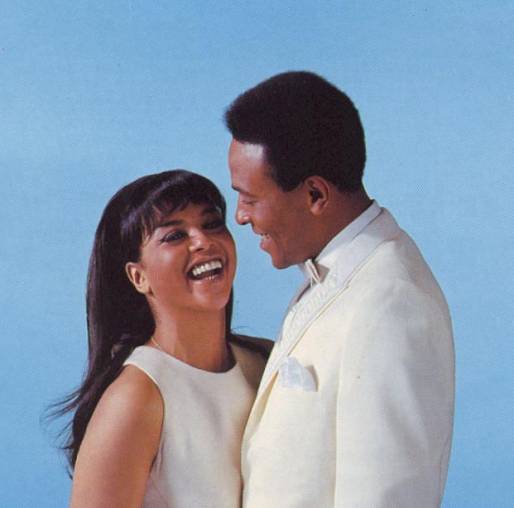
By the age of 30 years old (in 1969), Marvin Gaye was already a veteran songwriter and performer for Motown Records.

However, in the late 60s, he was reeling from a tragic turn of fortune in his life. His singing partner on a number of hit duets (including “Ain’t No Mountain High Enough” and “Your Precious Love”), Tammi Terrell, was diagnosed with a brain tumor in 1967.

By 1970, she was dead and Gaye was reeling, questioning his whole life and career. It was in the Spring of 1970 that Gaye stated that he wanted to try out for the Detroit Lions of the National Football League!!!

Now, you have to understand, Gaye was a very famous guy in Detroit at this point in time (Detroit being Motown and all), so the Coach of the Lions, Joe Schmidt, allowed Gaye to train with Lions players that Spring and Summer.

Gaye actually got himself into pretty darn good shape practicing with actual NFL players.

It was at this point in time that Gaye sat down to record one of the most famous songs of his career, “What’s Going On?,” which upon its release did so well that Motown asked Gaye to do a whole album of similar tracks, which he gladly complied with, and the full album was released late in 1970.

But what about the Lions?
Read the rest of this entry »

Did the First Two Best Actor in a Drama Emmys Go to the Star of a SITCOM?

Here is the latest in a series of examinations into urban legends about TV and whether they are true or false. Click here to view an archive of the TV urban legends featured so far.

TV URBAN LEGEND: The first two Emmy Awards for Best Lead Actor in a Drama Series went to Robert Young for Father Knows Best.

Over the years, there have been some debate when it comes time for the Emmy Awards nominations as to what category various shows belong in.

For instance, was Ugly Betty a comedy or a drama with comedic elements? Was Ally McBeal a comedy or a drama with comedic elements? Same with Desperate Housewives and Glee. Those four shows all were nominated as comedy series – there really does not seem to be as much of the same problem on the drama side of things (although one could argue that Boston Legal would apply).

However, there certainly was a bit of an issue for the very first two Emmy Awards given out for Best Lead Actor in a Drama Series.

The award was given to…Robert Young?!!?
Read the rest of this entry »

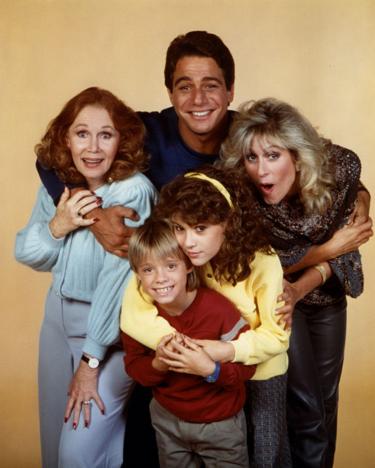
Are Joanna Kerns and Sandra Kerns Sisters?

Here is the latest in a series of examinations into urban legends about TV and whether they are true or false. Click here to view an archive of the TV urban legends featured so far.

TV URBAN LEGEND: Joanna Kerns and Sandra Kerns are sisters (in the alternative, they are related)

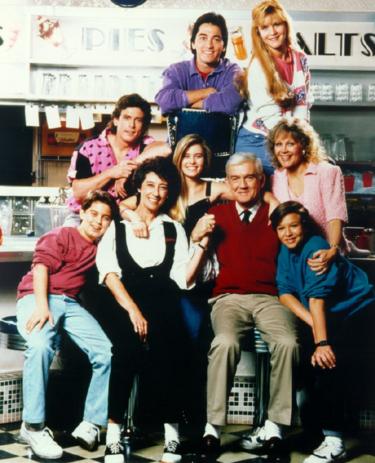
1984 was an odd year for television sitcoms in that it debuted not one, not two, but THREE “gender reversal” sitcoms, and more suprisingly, all three of them lasted for at least five seasons (although one of them did so in syndication).

Who’s The Boss? starred Tony Danza as a male housekeeper…

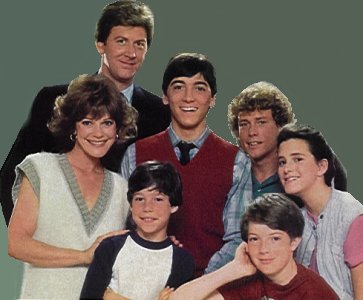
Charles in Charge starred Scott Baio as a male nanny…

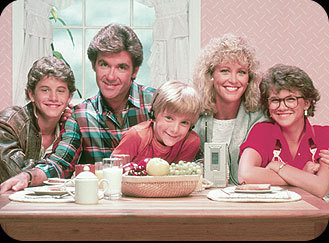
and Growing Pains starred Alan Thicke as a father who stayed at home when his wife decided to go back to work….

Even more connections came about, though, when Charles in Charge returned (after two years off) as a syndicated series, with a new family that Charles was the nanny for…

This new connection came due to the fact that, as you can see, all three shows also starred blonde women in their early-to-mid 30s.

Even odder, still, is that two of them were named Kerns!

Joanna Kerns was the mother on Growing Pains…

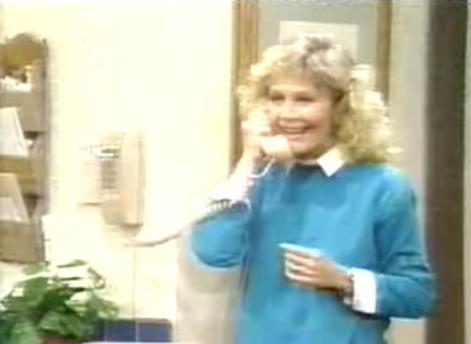
while Sandra Kerns was the mother on Charles in Charge…

For years, then, people have thought that the two women (separated in age only by four years) were sisters (or somehow related).

True?
Read the rest of this entry »

Does Vanna White Seriously Have a Trademark on Revealing Letters on a Gameboard in a Dress?

Here is the latest in a series of examinations into urban legends about TV and whether they are true or false. Click here to view an archive of the TV urban legends featured so far.

TV URBAN LEGEND: Did Wheel of Fortune‘s Vanna White win a lawsuit over a commercial featuring a robot with a blond wig turning letters?

One of the most interesting “new” legal right that has developed over the past thirty years or so has been the California common law to publicity (also known as “personality rights”). In 1985, California passed a law known as the Celebrity Rights Act, which gives control to celebrities over the usage of their likeness, voice and signature during their life and then the control would be given to their estate for seventy years after the celebrity’s death. This statute is why Fred Astaire’s estate can follow the strange stipulation in his will that he never be depicted in a film (you can read more about that odd decision in this old Legends Revealed here). However, while California has specifically codified this law, courts have also granted a certain amount of protection beyond that law to celebrities and their publicity rights. This protection has gotten more and more protective over the last thirty years. Perhaps the most dramatic example of this right came in 1988, when Wheel of Fortune‘s Vanna White sued Samsung Electronics over an ad depicting a robot in a blond wig turning letters…and essentially won!

Read on to see how it all went down…
Read the rest of this entry »

Was Baretta Originally Conceived as a Reboot of Another Series?

Here is the latest in a series of examinations into urban legends about TV and whether they are true or false. Click here to view an archive of the TV urban legends featured so far.

TV URBAN LEGEND: Baretta was originally intended as a continuation of a previous series.

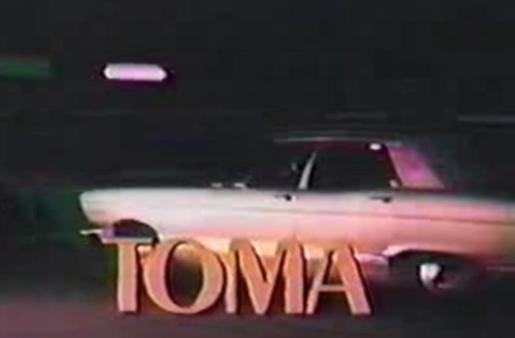
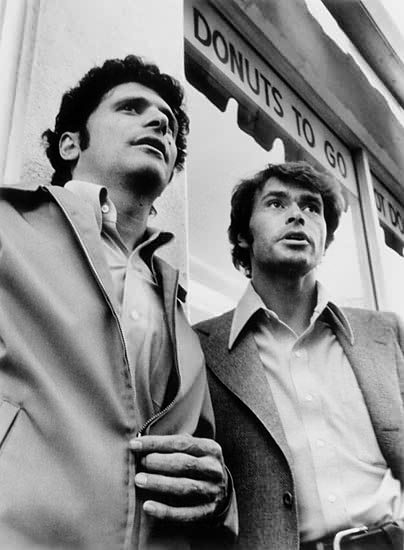
Toma was a detective series that aired on ABC from 1973 to 1974. The show was based on the real life exploits of David Toma, a famous police detective.

The show began as a TV movie in 1973 and was picked up for a full season of 22 episodes.

It starred Tony Musante as Toma (this was during the time when seemingly every detective show outside of Streets of San Francisco had to be called by the last name of the main character – Ironside, Mannix, etc. Someone tell me the first detective TV series to do that – name the show after the last name of the main character – Castle on ABC is reviving that trend!).

The show was critically acclaimed, although the violence in the series was often questioned as whether it was excessive.

In any event, after one season of unspectacular ratings, the series was cancelled.

People at first figured ratings were the reason, which seemed odd, as the ratings weren’t THAT bad, and the show certainly had a buzz about it.

That’s when the truth came out – as it turned out, Musante had only signed on for one season! The unusual request came about as soon as the TV movie Toma was filmed – Musante refused to sign a standard “if this gets picked up for a series I’ll do five seasons” contract, and insisted on just one season of 22 episodes, at which point, if he wanted to do more, he would do 10 episodes a year from that point on.

Well, producer Roy Huggins was willing to go along with this because he figured that once the show was picked up and done for a full season, no actor would walk away from the paycheck and the acclaim, but Musante surprised everyone and did just that. So ABC canceled the series.

Fast forward to the fall of 1974, and ABC’s new slate of dramas were not doing too well, so they decided, what the heck, and announced that Toma was coming back, only the role of Toma would now be played by Robert Blake.

I think you can see where this is going, but read on to be sure!
Read the rest of this entry »

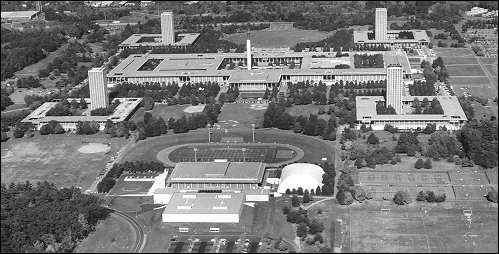
Was the Campus of the University of Albany Originally Designed to be Used in Arizona?

Here is the latest in a series of examinations into urban legends related to architecture and whether they are true or false. Click here to view an archive of the architecture urban legends featured so far.

ARCHITECTURE URBAN LEGEND: The campus at the University at Albany in New York was originally designed to be used in Arizona.

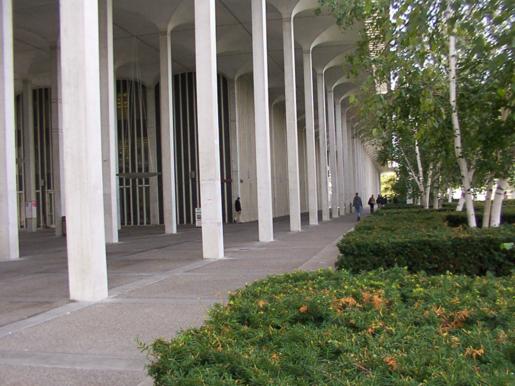
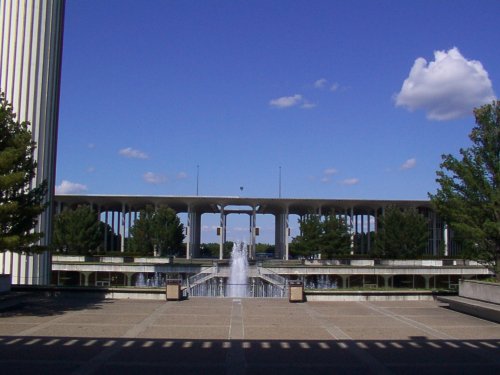
The campus at the University at Albany in Albany, New York (one of the four major state universities in New York State) is a striking looking design during the summer months, particularly the foliage and the beautiful fountain and water pool.

However, during the WINTER months, it can be practically torturous, as the enclosed design of the campus almost aids an already blustery climate by turning the campus into a bit of a wind tunnel.

It is so noticeable of a defect that it has become a university legend that the campus was originally designed for Arizona (or another warmer climate), where it would serve to amplify the meager winds there.

True?
Read the rest of this entry »

Discover the Bizarre Race to See Who Would Have the Tallest Skyscraper in the World!

Here is the latest in a series of examinations into urban legends related to architecture and whether they are true or false. Click here to view an archive of the architecture urban legends featured so far.

ARCHITECTURE URBAN LEGEND: Architects William Van Alen and H. Craig Severance engaged in a cloak and dagger race to see whose skyscraper would be the tallest in the world.

H. Craig Severance and William Van Alen were partners in an architecture firm for almost two decades, but by the late 1920s, the pair’s relationship had become strained, and they ended their professional relationship at the end of the decade.

The former friends then became bitter rivals, especially as they each began a competition to design the tallest building in the world.
Read the rest of this entry »