Did a Famous Opera Singer Convince a Group of Reporters That a Long Dead Composer Had Just Complimented Him?

Here is the latest in a series of examinations into urban legends related to opera and operettas and whether they are true or false.

OPERA URBAN LEGEND: The great opera singer Leo Slezak once convinced an audience of reporters that he had just received a compliment from Christoph Willibald Gluck.

Leo Slezak is one of the most popular tenors in the history of opera.

leo_slezak_1

Born in what is now the Czech Republic, Slezak rose to prominence in the late 19th Century before settling into a regular spot in the Vienna State Opera’s ensemble, where he became a bit of a folk hero in Germany and Austria.

In 1909, he began a three-year run at the Metropolitan Opera in New York City. It is his time there that we discussing today.

Slezak was a humorous fellow and he was well known to take any opportunity to crack a joke.

A very popular story tells of a time that Slezak was performing Armide.

Armide was a very popular opera first written by Jean-Baptiste Lully in 1686. It tells the tale of a sorceress (Armide) who fights a Christian knight named Renaud and uses her spells to ensnare him, but before she uses her dagger to kill him, she instead falls in love with him (what are the odds?). She uses her spells to make him love her, but two of his fellow knights show up and save him.

The legendary opera composer Christoph Willibald Gluck wrote his own version of Armide that was performed in 1777.

So as the story goes, Slezak was performing Armide at the Met when, during the curtain calls, he would bring an old, bearded man out from backstage and Slezak would genuflect in front of him.

After the show, as you might imagine, reporters wanted to know who he was. So at the post-show “press conference” (using the term loosely), Slezak would tell them, “That was Gluck, the composer of Armide. He told me that never in his life has he heard his opera sung as magnificently as I have sung it tonight.”

The statement made all the newspapers the next day, all, of course, missing the fact that Christoph Gluck died in 1787, over a hundred years before the performance.

It’s a great story, but the only problem is this Read the rest of this entry »

Tags: , , , ,

November 27th, 2012 | Posted in Grab Bag Legends, Opera Legends Revealed | No Comments
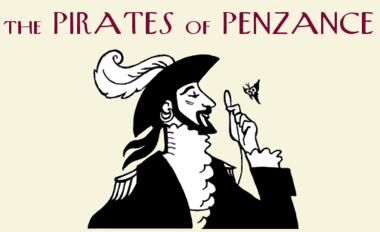
Were the “Pirates” of the Pirates of Penzance Named After Copyright Piracy?

Here is the latest in a series of examinations into urban legends related to opera and operettas and whether they are true or false.

OPERA URBAN LEGEND: The Pirates of Penzance was named as such after copyright piracy.

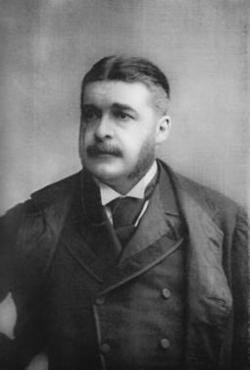
Librettist W. S. Gilbert and composer Arthur Sullivan formed one of the most famous musical partnerships this side of Rodgers and Hammerstein with their operas in the late 19th Century.

gilbert-gs-bigsullivan-gs

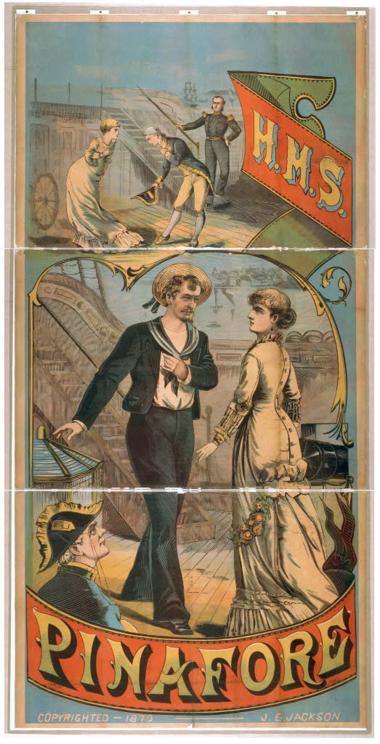
After a few modest hits with their operettas Trial By Jury (1874) and The Sorceror (1877), Gilbert and Sullivan had their first international smash hit with their operetta H.M.S. Pinafore (1878), which was a comic opera about the danger of incompetent people rising to high positions (while having some fun with the British Navy, as well).

The problem with having an international hit in 1878 was that British copyright laws, naturally, did not extend into the United States of America, so American productions of the opera took place without the permission of Gilbert and Sullivan (and certainly without any payment to the pair).

In fact, the first Copyright statute in the United States specifically stated:

nothing in this act shall be construed to extend to prohibit the importation or vending, reprinting or publishing within the United States, of any map, chart, book or books, written, printed, or published by any person not a citizen of the United States, in foreign parts or places without the jurisdiction of the United States. . . .

That basic law was still in place by the end of the 19th Century.

So naturally, Gilbert and Sullivan were quite irritated that their success did not translate into extra money from America.

They brought an “official” production to the United States in 1879, but still, they were so angered by the “piracy” of their work that they specifically wrote their next opera as a response to those pirates.

That opera was called, of course, The Pirates of Penzance…

penzance-crop

Read the rest of this entry »

Tags: , , , , , , , , ,

November 26th, 2012 | Posted in Grab Bag Legends, Opera Legends Revealed | No Comments
Did Oliver Reed Appear in Scenes of Gladiator Filmed AFTER He Died?

Here is the latest in a series of examinations into urban legends about movies and whether they are true or false. Click here to view an archive of the movie urban legends featured so far.

MOVIE URBAN LEGEND: Oliver Reed appeared in scenes in Gladiator filmed after the actor died.

Born in 1938, Oliver Reed lived the life you would think only happened in movies, as a star who spent most of his years drinking, fighting and having an all-around good time.

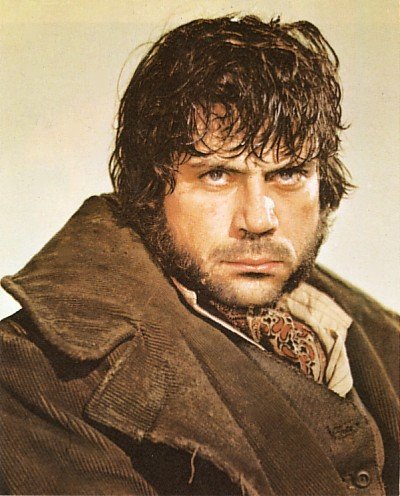
Reed began acting in the late 1950s, and starred in a number of movies, perhaps most notably at the time in his uncle Carol Reed’s version of Oliver (as Bill Sikes).

The tough, strapping Reed had a similar look to Sean Connery, but Reed’s reputation as a womanizer and party animal kept him from being seriously considered for Bond when Connery left the role.

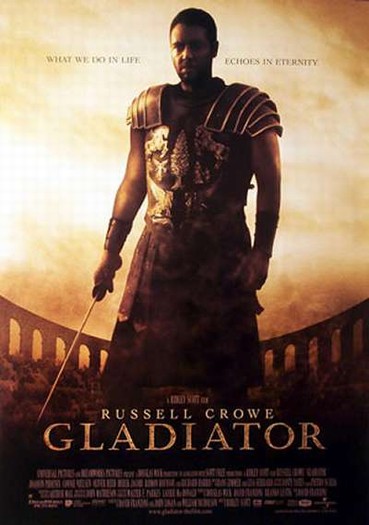
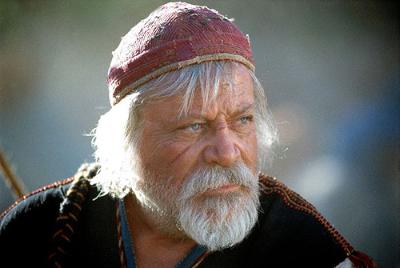
Anyhow, in 1999, after four decades in the film business, Reed began filming Gladiator, as Proximo, the slave dealer who “owned” the titular character in the film.

Here’s Reed…

Sadly, during a break in filming, Reed died of a heart attack at the age of 61. He had been heavily drinking the night before, as was his wont, totaling an $866 alcohol bill!!

With the tragic loss of Reed, Gladiator director Ridley Scott was at a bit of a loss. He still had scenes left in the film with Proximo in them!

So what they did was quite remarkable (and slightly creepy).
Read the rest of this entry »

Tags: , , , , , , , , ,

November 24th, 2012 | Posted in Movie Legends Revealed | 6 Comments

A Black Friday Sale That You All Hopefully Can Get Behind

My latest book, Why Does Batman Carry Shark Repellent And Other Amazing Comic Book Trivia, is on sale at Amazon.com for just $10.20. Also, you can buy BOTH of my books (Why Does Batman Carry Shark Repellent and my first one, Was Superman A Spy And Other Comic Book Legends Revealed) for just $21.40!

The perfect Christmas present for…well…everyone!

Check it out here (do note that if you buy the book, or anything else on Amazon, using that link, I get a cut of the sale – same wityh all the Amazon links I have on the site. It’s Black Friday, go nuts on the Amazon links!).

Was Die Hard an Adaptation of a SEQUEL to a Book That Was ALSO Made Into a Film?

Here is the latest in a series of examinations into urban legends about movies and whether they are true or false. Click here to view an archive of the movie urban legends featured so far.

MOVIE URBAN LEGEND: Die Hard was a screen adaptation of the sequel of a book that also was adapted into a film.

Die Hard has had a very interesting history when it comes to the novels and screenplays that the film and its ensuing sequels have been based on.

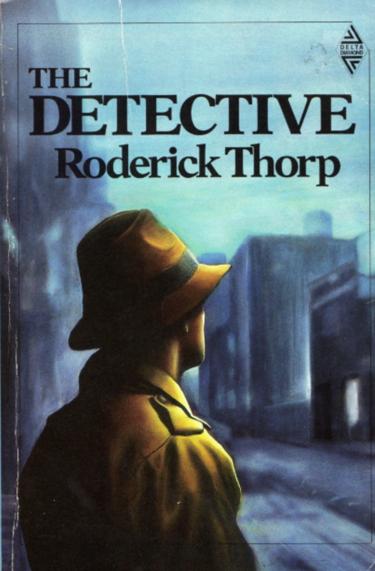
Roderick Thorp’s 1966 novel The Detective ended up playing a significant part in film history, and not just for its later connection to the Die Hard series.

The book, which is about private detective Joe Leland being hired to investigate the death of a woman’s husband only to find that the man’s death tied into a murder that Leland investigated while on the police force, became a best-seller.

Robert Evans purchased the rights to the book, and he used that fact to parlay said rights into a role as a producer on the film adaptation.

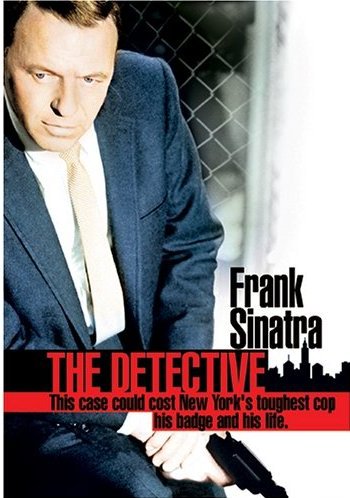
The film starred Frank Sinatra (now as a police detective, and the plot was slightly different – but the main thing about the book that the film captured was the FEEL of the story – the book was noted for its darkly realistic take on detectives and police and the movie followed suit) and its success led to Evans’ highly successful career as a film producer.

Thirteen years after his first book starring Joe Leland, Thorp wrote a sequel, 1979’s Nothing Lasts Forever.
Read the rest of this entry »

Tags: , , , , , , , , , , , , , , , , , , ,

November 23rd, 2012 | Posted in Movie Legends Revealed | 5 Comments

Did John Gilbert’s Voice Translate So Poorly to “Talkies” That His Career Was Ruined?

Here is the latest in a series of examinations into urban legends about movies and whether they are true or false. Click here to view an archive of the movie urban legends featured so far.

MOVIE URBAN LEGEND: John Gilbert’s voice translated so poorly to “talkies” that his career was ruined.

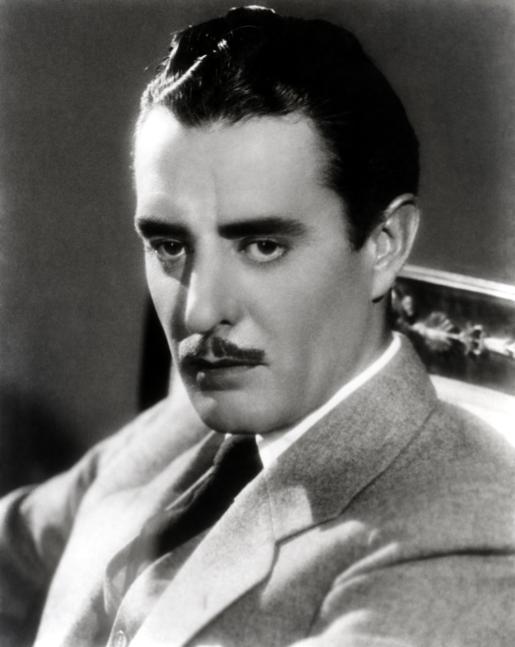
As established in a previous installment of Movie Legends Revealed, John Gilbert was one of the major male sex symbols of the silent movie era.

However, once films began having dialogue in them, Gilbert’s star waned, and by the time he died of a heart attack in 1936 (not even 40 years old) his time as a matinee idol was over.

For years, the story goes that in his first “talkie” (a film with spoken dialogue), His Glorious Night, in 1929, his light tenor voice made him sound like a squeaky kid, and not the red-blooded Lothario his fans all expected him to be.

Is the story true?
Read the rest of this entry »

Tags: , , , ,

November 22nd, 2012 | Posted in Movie Legends Revealed | 1 Comment

How Did a Disc Jockey’s Joke Inadvertently Lead to an Alvin and the Chipmunks Comeback?

Here is the latest in a series of examinations into urban legends about music and whether they are true or false. Click here to view an archive of the music urban legends featured so far.

MUSIC URBAN LEGEND: Alvin and the Chipmunks made a comeback in 1980 based on a joke by a New York disc jockey.

The origins of Alvin and the Chipmunks go back to early 1958, when Rostom “Ross” Bagdasarian, an aspiring actor and singer (who had been in some plays and films and also had a novelty hit in the mid 50s called “The Trouble With Harry”) used experimentation with tape speeds to record his #1 hit (another novelty record) called “The Witch Doctor” under the stage name David Seville.

You know the one, “Oo ee, oo ah ah, ting tang, walla walla bing bang”

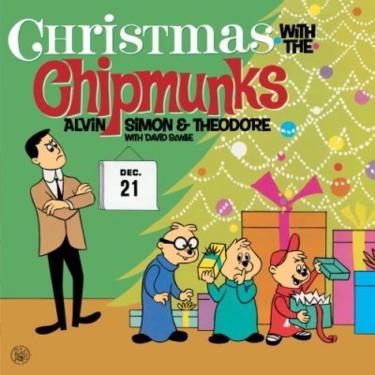
Later in 1958, Bagdasarian used the same technology to create “The Chipmunks,” and he had his second #1 hit, the popular Christmas tune, “The Chipmunk Song (Christmas Don’t Be Late),” also as David Seville (although I believe he doesn’t even list himself on the record at all, just the Chipmunks).

The song turned the Chipmunks into a mini-industry of their own.

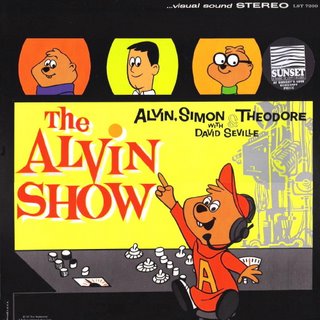
They had their own animated series in 1961 called The Alvin Show.

thealvinshowsunsetlpfront

The last album released by the Chipmunks under Bagdasarian was 1969’s The Chipmunks Go to the Movies.

Bagdasarian died of a heart attack in 1972 at the age of 52.

In the late 1970s, the Chipmunks were beginning to have a bit of a return of popularity as NBC began replaying the 1961 cartoon series on Saturday mornings in 1979. That led to the biggest break for the Chipmunks, all based on a joke by a disc jockey!

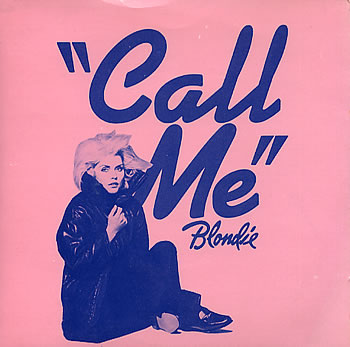
Los Angeles KMET disc jockey Chuck Taylor played the 12″ version of the Blondie song “Call Me” at double speed and told everyone that it was a “new Chipmunks record.”

The response was tremendous. It appeared that the time was right for a new Chipmunks album!

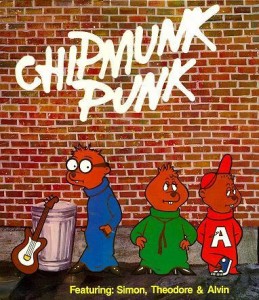
Ross Bagdasarian, Jr., who had taken over his father’s business, quickly recorded a new album and put it out in June 1980 titled Chipmunks Punk.

chipmunk_punk_cover

The album went gold and set up the release of the 1983 Alvin and the Chipmunks cartoon series that last eight seasons, and whose popularity certainly played a part in the eventual Alvin and the Chipmunks film (which had TWO sequels, or should I say “squeakel”? No, I really shouldn’t say that, although they did).

And it was all due to a joke by a DJ.

The legend is…

STATUS: Basically True

Thanks to Scott for the question and thanks to Ben Myers’ great book on Green Day, Green Day: American Idiots & The New Punk Explosion, for the confirmation!

Feel free (heck, I implore you!) to write in with your suggestions for future urban legends columns! My e-mail address is bcronin@legendsrevealed.com

Tags: , , , , , , , , , , , ,

November 21st, 2012 | Posted in Music Legends Revealed | 3 Comments

Did the Green Day Song “Stuck With Me” Gain Its Name Accidentally?

Here is the latest in a series of examinations into urban legends about music and whether they are true or false. Click here to view an archive of the music urban legends featured so far.

MUSIC URBAN LEGEND: The Green Day song “Stuck with Me” got its name by someone in the studio switching the labels on two songs.

Reader Scott K. wrote in with this one. He said:

A legend I’ve heard about Green Day is that the song “Stuck With Me” from their “Insomniac” album actually ended up having the name of a totally different song because the labels on the tapes got mixed up by the producer and it was too late to change it by the time anyone caught it. Any truth to that one?

There’s definitely some truth to this one, Scott, in that it is mostly all true!
Read the rest of this entry »

Tags: , , , ,

November 20th, 2012 | Posted in Music Legends Revealed | No Comments
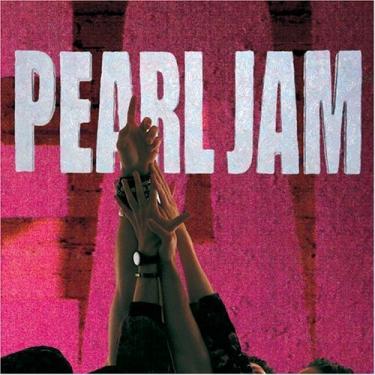
Was Pearl Jam Really Named After a Peyote Concoction Made by Eddie Vedder’s Great-Grandmother?

Here is the latest in a series of examinations into urban legends about music and whether they are true or false. Click here to view an archive of the music urban legends featured so far.

MUSIC URBAN LEGEND: Pearl Jam was named after a peyote concoction that Eddie Vedder’s great-grandmother Pearl used to make.

The band Pearl Jam was one of the most popular bands of the 1990s, and were a major part of the mass of great bands who came out of the Pacific Northwest during the late 80s and early 90s.

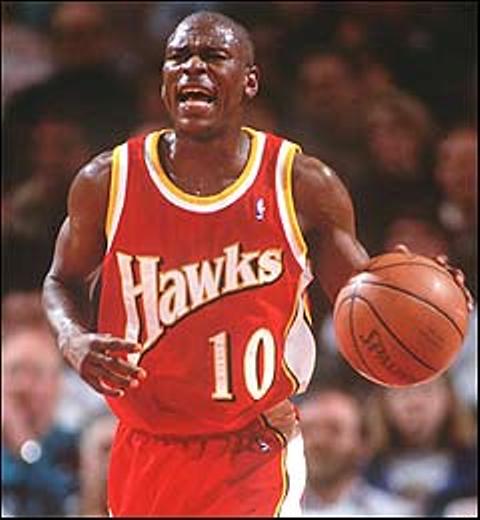
When the band first formed in the middle of 1990, their name was Mookie Blaylock, after the then-current NBA player of the same name.

However, when the band signed with Epic Records (which happened soon after their first gig – their demos were very impressive, as they already had a number of their most popular early songs), the record company felt that there were too many trademark issues with naming a band after a current NBA player, so they had the band pick a new name.

Although, amusingly enough, Pearl Jam’s first album is called Ten, which was Mookie Blaylock’s uniform number…

In any event, the band chose the name Pearl Jam. How did they come up with it?
Read the rest of this entry »

Tags: , , , , , ,

November 19th, 2012 | Posted in Music Legends Revealed | 1 Comment

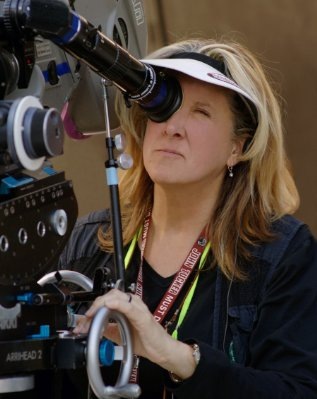
Did An Impostor Accept Betty Thomas’ Emmy For Her?

Here is the latest in a series of examinations into urban legends about TV and whether they are true or false. Click here to view an archive of the TV urban legends featured so far.

TV URBAN LEGEND: An impostor came up on to the stage to accept Betty Thomas’ Emmy for her in 1985.

Betty Thomas is one of the few Emmy Award winners to win an Acting Emmy AND a Directing Emmy (Charles S. Dutton and Alan Alda are the only other ones that come to mind)!

Years later, Betty Thomas would become a popular Director for film and television.

betty-thomas-alvin-chipmunks

She won a Directing Emmy for directing an episode of Dream On in 1993 and in 1985 she won an Emmy for Best Supporting Actress in a Drama Series (her only win out of a remarkable SEVEN nominations!) for her role as Officer Lucy Bates on Hill Street Blues.

bates

Sadly for Thomas, her moment in the sun did not go as she planned!
Read the rest of this entry »

Tags: , , , , , , , , , ,

November 15th, 2012 | Posted in TV Legends Revealed | 2 Comments