Was an Episode of Hill Street Blues Re-Shot to Bring Officer Joe Coffey Back to Life?

Here is the latest in a series of examinations into urban legends about TV and whether they are true or false. Click here to view an archive of the TV urban legends featured so far.

TV URBAN LEGEND: A Hill Street Blues episode was actually re-shot after airing to show a character who was killed surviving his attack so that they could bring him back.

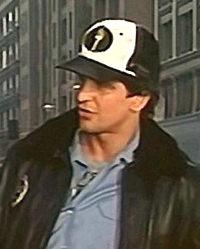
The first season of Hill Street Blues was meant to only be thirteen episodes, but NBC asked for some more at the end, so Stephen Bochco and company put together two two-hour movies that worked basically like a mini-series within a series, with essentially a four-hour long episode of the show. In the episode, a few new characters debuted who would stick around, including some narcotics cops and Officer Joe Coffey, played by Ed Marinaro.
coffey

Coffey was paired with Officer Lucy Bates (played by the great Betty Thomas), and it was clear that he wanted to take their friendship to the next level.

In any event, as a sort of tragic bookend to the first season, the final part of the last episode involves Coffey and Bates pulling over a suspect and the man shooting Coffey when he approaches the driver’s side window.

Originally, as aired, the blast clearly kills Coffey, giving the season a very somber ending.

However, as you might imagine, as the episodes were added very last minute, the producers of Hill Street Blues really didn’t have much time to dwell upon various decisions, and after the season ended, they decided that they would prefer that Coffey remained a character on the show.
Read the rest of this entry »

Tags: , , , , ,

November 15th, 2012 | Posted in TV Legends Revealed | 2 Comments
Were Renko and Hill Originally Meant to Die in the First Episode of Hill Street Blues?

Here is the latest in a series of examinations into urban legends about TV and whether they are true or false. Click here to view an archive of the TV urban legends featured so far.

TV URBAN LEGEND: Officers Renko and Hill were intended to be killed off at the end of the first episode of Hill Street Blues

Hill Street Blues debuted as a mid-season replacement in the middle of the 1980-81 TV season (January, to be precise). It is about the police department in a gritty town, most likely somewhere in the Midwest or the Northeast.

Each episode (more or less) is a “day in the life” type episode, following around the various officers, detectives, sergeants and captains of the police precinct on Hill Street.

hillstreetblues

An acclaimed drama, its great critical success (it won six Emmys its first season) and the burgeoning study of “demographics” (Hill Street Blues was watched mostly by more affluent viewers, allowing the show to sell more high end products in its commercials) allowed the show to be renewed for a second season despite terrible ratings (I believe at the time it was the lowest-rated show ever to be renewed for a second season). Eventually its ratings improved (and the critical acclaim remained) and the show ran for seven seasons, six of which were part of amazing 10 O’Clock hour on NBC’s Thursdays, a time slot that had literally three dramas air there regularly over the span of more than twenty-eight years (Hill Street Blues for six, L.A. Law for eight then E.R. for fifteen).

One of the most shocking parts of the first episode of Hill Street Blues is the tragic shooting of partners, Officer Bobby Hill and Officer Andy Renko, played by actors Michael Warren and Charles Haid, respectively.

At the the time of the shooting, it sure looked like both characters had been killed, but later in the episode, they both show up, showing the after-effects of the shooting (they’re both extra tense now that they’ve been shot – their friendship, also, is not as solid as it once was).

A long-lasting legend has sprung up based on behind-the-scenes talk mixed with the fact that they both looked pretty dead when the shooting happened. The legend is that the shooting was originally INTENDED to be fatal, but test audiences liked Hill and Renko so much that NBC told the producers of Hill Street Blues to bring them back.

Is it true?
Read the rest of this entry »

Tags: , , , , ,

November 15th, 2012 | Posted in TV Legends Revealed | No Comments

Was Djuna Barnes’ Novel, Nightwood, Named By T.S. Eliot?

Here is the latest in a series of examinations into urban legends related to poetry and poets and whether they are true or false. Click here for an archive of all poetry legends featured so far.

POETRY URBAN LEGEND: The famed poet T.S. Eliot came up with the name for Djuna Barnes’ classic novel, Nightwood.

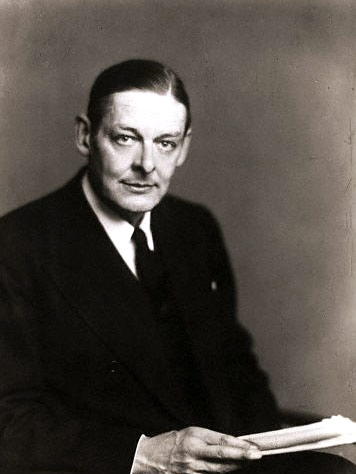
Thomas Stearns (T.S.) Eliot is one of the most acclaimed and well known poets of pretty much any century, but certainly the 20th Century.

eliot

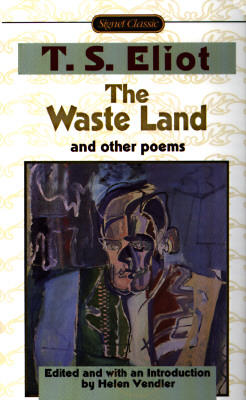
Born in 1888, by the time Eliot became part of the English publishing firm of Faber and Gwyer (later Faber and Faber) in 1925 he had already written most of the works of poetry that people would regard as his “classic” works, including The Love Song of J. Alfred Prufrock and The Wasteland.

9780451526847

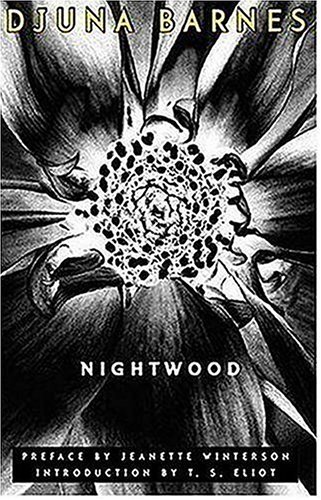
Eliot would work at Faber and Faber for the rest of his life. Perhaps the most important piece of work he did at that company was to aid in the publishing of Djuna Barnes’ classic novel, Nightwood.

61fzfr3fcfl_sl500_

Read the rest of this entry »

Tags: , , , , , , , , ,

November 7th, 2012 | Posted in Grab Bag Legends, Poetry Legends Revealed | No Comments

Did the Founder of the Modern Olympics Also Happen to Win the First Olympic Gold Medal for Literature?

Here is the latest in a series of examinations into urban legends related to poetry and poets and whether they are true or false. Click here for an archive of all poetry legends featured so far.

POETRY URBAN LEGEND: The first winner of an Olympic Gold medal for Literature went to a poem written by the creator of the modern Olympics.

In 1924, Oliver St. John Gogarty (from this earlier Poetry Urban Legend) won an Olympic medal.

What did he win it for?

Why, for a poem he wrote called “Ode to the Tailteann Games.”

You see, for a number of years, the Olympics actually gave out medals for ARTISTIC competitions as well as athletic ones!

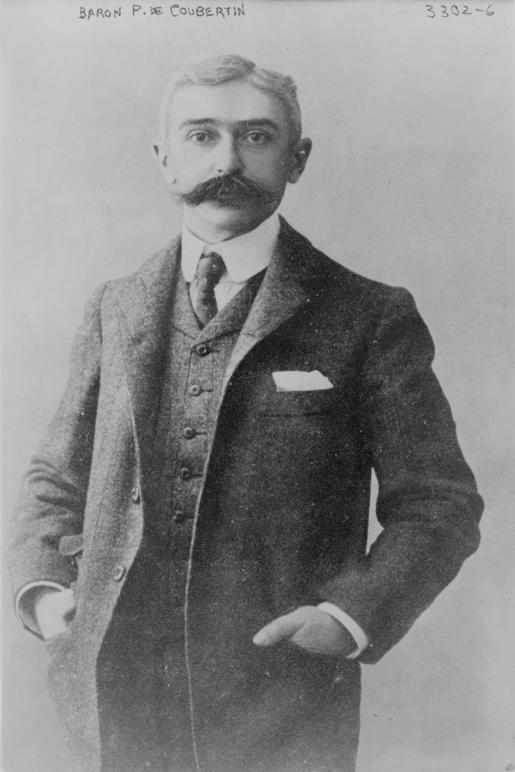
The idea was first proffered by Baron Pierre de Coubertin, the man who actually (more or less) founded the modern Olympic Games, in 1894, at the formation of the International Olympic Committee, a Committee he would be President of from 1896 to 1925 (and Honorary President until his death in 1937).

baron_pierre_de_coubertin

de Coubertin felt that artistic competition should follow alongside athletic competition at the Olympics.

His early pleas went to no avail for the first three Olympics in 1896, 1900 and 1904, but in 1906, the Committee finally agreed with him and scheduled to have them at the 1908 Olympics in Italy. However, due to financial issues, Italy had to back out of hosting the Olympics, and London instead held them. Given the time crunch (they had about a year to prepare), there was no time to plan artistic competitions, as well.

Undaunted, de Coubertin finally got them to have artistic competitions in 1912.

These competitions would continue until 1948, at which point the IOC determined that artists were, almost by their very nature, professionals and should not be able to compete in the Olympics, which were intended to only be for amateurs. As a way of making up for it, every Olympics ever since has had attached to the Games a series of cultural exhibits for those who are interested.

But during the time of the art competitions, the categories were Architecture, Literature (all kinds), Music, Painting and Sculpture. The works all had to be brand new for the Games and they all had to do with sports somehow.

So fair enough, but hilariously enough, the very first Gold Medal given out for Literature (and in fact, the ONLY medal given out, as they did not award any Silvers or Bronzes for the category that year) in 1912, the very first art competition at the Olympics, went to none other than the Baron Pierre de Coubertin himself!!
Read the rest of this entry »

Tags: , , , , , , ,

November 7th, 2012 | Posted in Grab Bag Legends, Poetry Legends Revealed | No Comments

Did an Irish Poet Sneak An Insult Into a Seemingly Patriotic Poem?

Here is the latest in a series of examinations into urban legends related to poetry and poets and whether they are true or false. Click here for an archive of all poetry legends featured so far.

POETRY URBAN LEGEND: Oliver St. John Gogarty wrote a poem dedicated to the returning Irish soldiers from the Boer War that contained a hidden, less celebratory, meaning within.

Oliver St. John Gogarty (1878-1957) was an Irish physician who was also a poet and author and was especially prominent in literary society as being quite witty and funny.

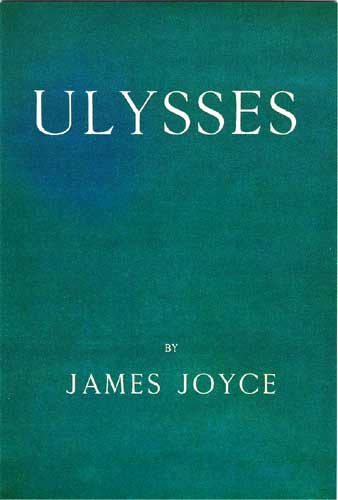
A contemporary and one time friend of James Joyce, many scholars believe that Gogarty is the basis for the character of Buck Mulligan in Ulysses. One of Gogarty’s poems does make its way into Ulyesses, or at least a reference to one of his poems, that is (the poem, The Ballad of Japing Jesus, appears in Ulysses as The Ballad of Joking Jesus).

ulysses-cover-image

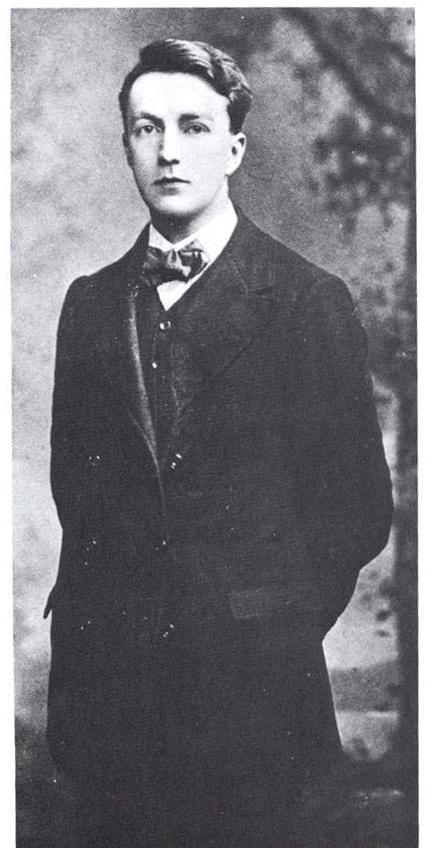
Here’s Gogarty at the age of 21…

gogarty

Gogarty was, like many Irishmen, a proponent of a free Irish state, and like a great deal of Irishmen, he was not happy with the Boer War (really, the second Boer War, but whatever), which involved England and the Boers, who were European settlers (mostly Dutch) who had migrated to South Africa years earlier and had co-existed with England in a state of mutual distrust. Like many Irishmen, Gogarty found parallels in the way the British treated the Boers to the way that the British treated the Irish, and it did not help that Irish soldiers were enlisted to help fight the war!

So Gogarty had an interesting response to the war…
Read the rest of this entry »

Tags: , , , , , , ,

November 7th, 2012 | Posted in Grab Bag Legends, Poetry Legends Revealed | No Comments

Did Frances McDormand Really Almost Miss Out On Her Big Break to Watch a Soap Opera?

Here is the latest in a series of examinations into urban legends about movies and whether they are true or false. Click here to view an archive of the movie urban legends featured so far.

MOVIE URBAN LEGEND: Frances McDormand almost lost her role in Blood Simple because she had to watch a soap opera.

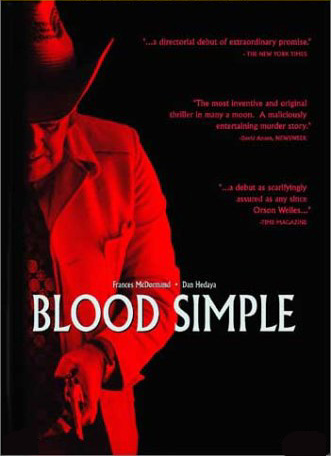
Looking back, a lot was riding on Blood Simple, the brilliant noir crime film by Joel and Ethan Coen.

bloodsimple

It was the directorial debut of the Coen Brothers.

It was Frances McDormand’s film debut.

And Frances McDormand and Joel Coen have been married since 1984.

And yet, it was almost all de-railed because of…a soap opera?!?
Read the rest of this entry »

Tags: , , , , ,

November 1st, 2012 | Posted in Movie Legends Revealed | No Comments

Did Elvis’ First On-Screen Kiss Really Later Become a Nun?

Here is the latest in a series of examinations into urban legends about movies and whether they are true or false. Click here to view an archive of the movie urban legends featured so far.

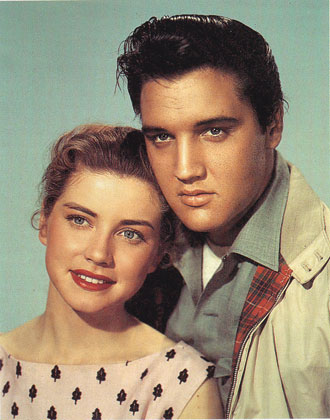
MOVIE URBAN LEGEND: Elvis Presley’s first on-screen kiss became a Catholic nun a few years later.

Dolores Hart was the stage name for Dolores Hicks, a girl from Chicago whose parents divorced when she was a young girl (after the family had moved to Los Angeles so that her parents could each pursue a career in show business). While living back in Chicago with her grandparents, Hicks attended parochial school and also spent a lot of time with her grandfather, who was a movie projectionist.

Eventually, Hicks grew up to pursue a career in films, as well, and at the age of 18 years old, she appeared in one of Elvis Presley’s first movies (to be more precise, it was his second film to be released), Loving You under the stage name Dolores Hart…

elvis999_001_500x454

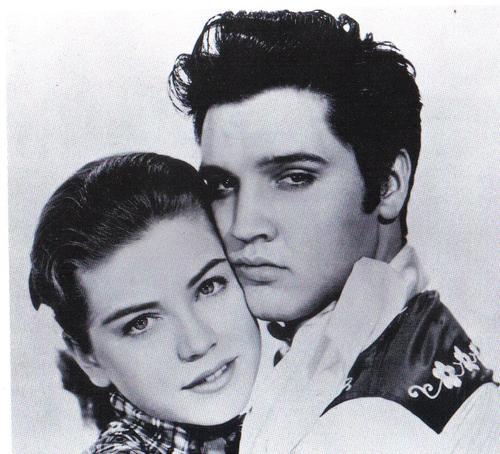
The next year, Hart appeared in ANOTHER film with Elvis as his love interest, King Creole.

doloresdelvis

The film is notable for not only being Elvis’ favorite film that he starred in, but also for being the first film in which Elvis had an on-screen kiss. And that kiss was with Dolores Hart.

What she later did with her life, though, was quite surprising…
Read the rest of this entry »

Tags: , , , , , , , , , , , , , , , , , , , ,

November 1st, 2012 | Posted in Movie Legends Revealed | No Comments

Did Frank Sinatra Keep the Manchurian Candidate Under Wraps After the Kennedy Assassination?

Here is the latest in a series of examinations into urban legends about movies and whether they are true or false. Click here to view an archive of the movie urban legends featured so far.

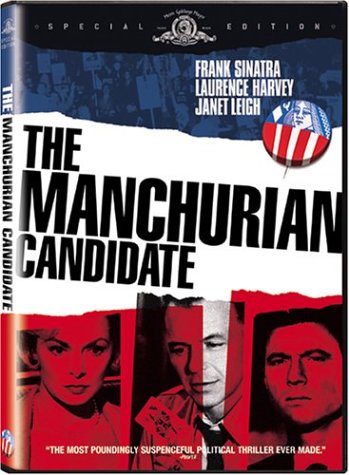
MOVIE URBAN LEGEND: Frank Sinatra kept the Manchurian Candidate under wraps for years in the wake of the Kennedy Assassination.

The Manchurian Candidate is about a United States soldier (played by Lawrence Harvey) who is brainwashed in an attempt to get him to assassinate a Presidential candidate, allowing the Vice-Presidential candidate (who is controlled by the Communists) to take over control of the party and run the United States FOR the Communists (and be the “Manchurian Candidate” that the title refers to).

Frank Sinatra plays a fellow soldier who does his best to stop this plan. Angela Lansbury is magnificent as the evil mother of Harvey.

manchurian

The film was released in October of 1962.

A little more than one year later, the President of the United States, John F. Kennedy, was assassinated.

It has long been said that Frank Sinatra got a hold of the film rights and then squashed the film until the late 1980s in honor of the President. In fact, it was said that he got the rights specifically TO squash the film.
Read the rest of this entry »

Tags: , , , ,

November 1st, 2012 | Posted in Movie Legends Revealed | No Comments

Were The Lovin’ Spoonful the Original Choice for the TV Series That Became the Monkees?

Here is the latest in a series of examinations into urban legends about music and whether they are true or false. Click here to view an archive of the music urban legends featured so far.

MUSIC URBAN LEGEND: The Lovin’ Spoonful were the original choice for the TV series that eventually became the Monkees.

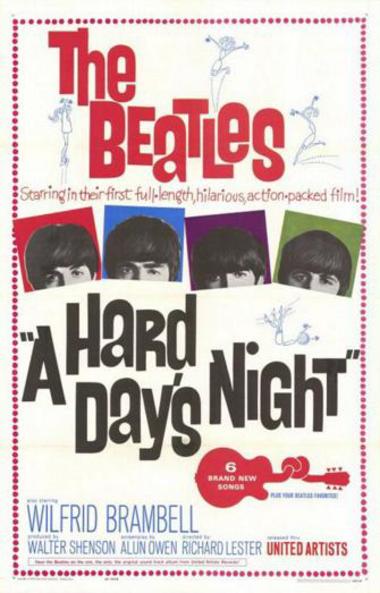
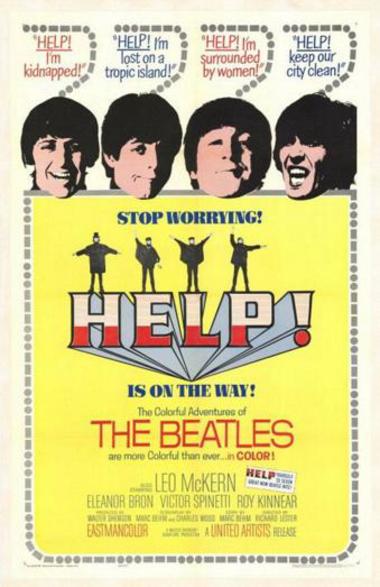
In 1966, in response to the massive popularity of The Beatles and their two popular films following the band on various madcap adventures, A Hard Day’s Night and Help!, filmmakers Bob Rafelson and Bert Schneider decided that they would try to do an American version of A Hard Day’s Night, only as a television program.

At first, the producers figured that the easiest way for them to do this was to get an already established band and build the series around them the same way that the Beatles had their films built around them.

They zeroed in on the Lovin’ Spoonful, as the band definitely had a certain zany, lighthearted spirit to them (“Do You Believe In Magic?,” “Daydream,” etc.).
Read the rest of this entry »

Tags: , , , , , , , , , , , , , , ,

October 25th, 2012 | Posted in Music Legends Revealed | 4 Comments

Did The Lovin’ Spoonful Get Their Name From a Sexual Slang Term?

Here is the latest in a series of examinations into urban legends about music and whether they are true or false. Click here to view an archive of the music urban legends featured so far.

MUSIC URBAN LEGEND: The Lovin’ Spoonful got their name from a slang term for male ejaculate.

As established here, The Lovin’ Spoonful did not get their name from a slang term for heroin. However, there is ANOTHER famous claim for the origin of the band’s name, stating that it is a reference to male ejaculate. And this claim is a far trickier one.

Read the rest of this entry »

Tags: , , ,

October 25th, 2012 | Posted in Music Legends Revealed | 1 Comment