Did The Beatles Use Flag Semaphore to Spell Out “Help” on the Cover Of Their Album “Help!”?

Here is the latest in a series of examinations into urban legends about music and whether they are true or false. Click here to view an archive of the music urban legends featured so far.

MUSIC URBAN LEGEND: The Beatles used flag semaphore to spell out “help” on the cover of their album, Help!

Robert Freeman is an acclaimed photographer and designer who is mostly known for his work with the Beatles, specifically a number of their early album covers.

When it came to the Beatles 1965 album, “Help!,” Freeman figured he would have a little fun with the title of the album.

So for an album titled “Help!” he decided to use a cover based on the Flag Semaphore Signaling System.

The Flag Semaphore Signaling System is a system in which ships communicated with each other in the 1800s. It is a lot like morse code – someone goes out on the deck of the ship with bright flags in both arms and then makes movements that correspond with letters and/or phrases.

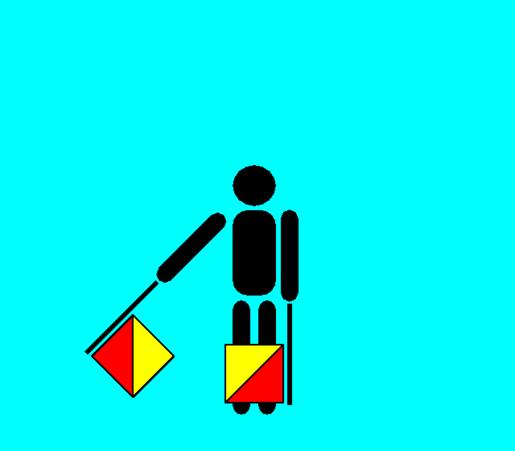
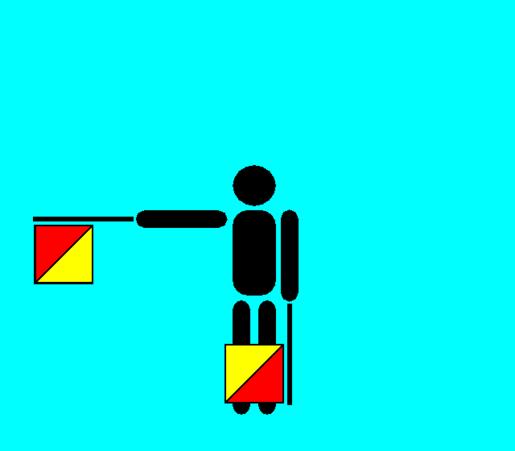
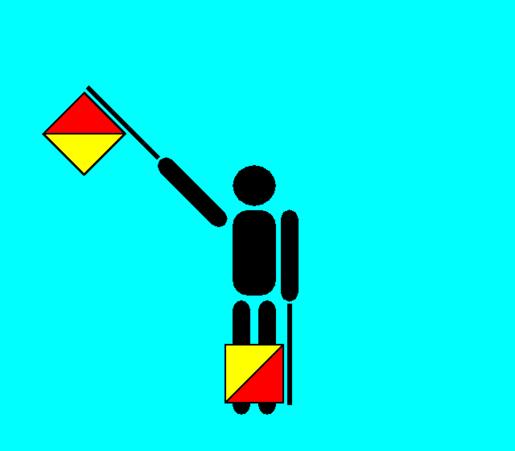
Here are examples of the ABCs of Flag Semaphore, in this instance, the actual letters A, B and C….

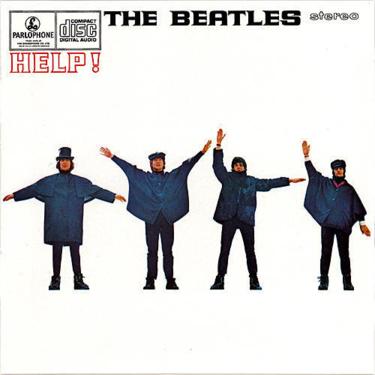
So, then, Freeman had the idea for the cover of Help! be the Beatles signaling the word “Help” using flag semaphore (sans flags, but apparently it’s called flag semaphore even when you don’t use flags)…

However, that’s not actually the flag semaphore signals for “Help”!!
Read the rest of this entry »

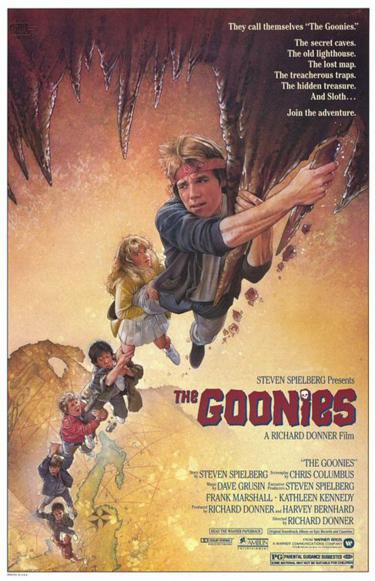
Was There Originally a Giant Octopus in The Goonies?

Here is the latest in a series of examinations into urban legends about movies and whether they are true or false. Click here to view an archive of the movie urban legends featured so far.

MOVIE URBAN LEGEND: There really a giant octopus in The Goonies.

The Goonies was a popular 1985 film directed by Richard Donner and written by Chris Columbus (based on a story by Steven Spielberg, who was the executive producer on the movie).

It was about a group of best friends who live in the “Goon Docks” in Oregon. Their whole neighborhood was set to be bulldozed because all of the homes were foreclosed. The “Goonies” get together for one last adventure when they discover what appears to be an old Spanish treasure map. During their search for the treasure, they run afoul of a group of criminals and hilarity and adventure ensue. SPOILERS FOR A TWENTY-EIGHT YEAR OLD MOVIE! The Goonies end up with some of the treasure, allowing their parents to save their homes. At the end of the film, the kids are being interviewed by a reporter. One of the kids, Data (played by Ke Huy Quan), says to the reporter “The octopus was really scary!” There was no octopus in the film. The line seemed to presumably be an example of how kids exaggerate. You know, while in the midst of this crazy story with crooks and pirate ships, they still somehow manage to still make stuff up! However, that has led to fans of The Goonies over the years to believe that there was an actual deleted scene with an octopus that was just cut from the theatrical run of the film. Is that true? Or is it just another case like the phantom “deleted scene” from Raiders of the Lost Ark that we covered here a while back?

Read on to find out the answer!
Read the rest of this entry »

Did The Band Behind the Hit Song “Na Na Hey Hey Kiss Him Goodbye” Not Even Really Exist?

Here is the latest in a series of examinations into urban legends about music and whether they are true or false. Click here to view an archive of the music urban legends featured so far.

MUSIC URBAN LEGEND: The band behind “Na Na Hey Hey Kiss Him Goodbye” did not really exist.

Paul Leka is a singer/songwriter (mostly a songwriter) from Connecticut.

After doing some work for Warner Brothers with his band, The Chateaus, they broke up and Leka began finding work as a solo songwriter.

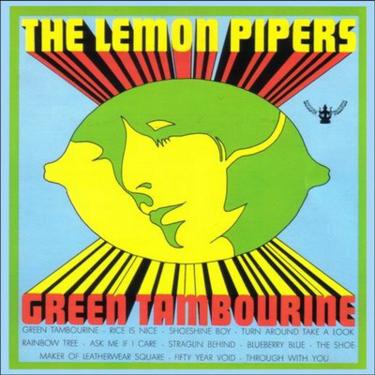
He popped on to the radar at Mercury Records after he wrote the hit song “Green Tambourine” for the Lemon Pipers.

Mercury signed him to work on songs for them in 1969.

Leka quickly hooked up with his former Chateau bandmate Gary DeCarlo, and the pair began working on a number of singles that the pair (and Mercury Records, as well) felt were good enough to be hit singles.

The problem was, if they were all good enough to be hits, it wouldn’t make sense to release them together, because if you put two would-be hits on one single as the A-Side and the B-Side, the disc jockeys might not have a preference, and in that case, they might end up splitting the playtime between the two songs, keeping EITHER of the songs from being hits.

So Leka and DeCarlo sat down to come up with some throwaway songs that could be included as B-Sides and would not distract from the “real” song on the single.

They brought in their fellow former Chateau bandmate, Dale Frashuer, to help them with the songs, and the trio decided to resurrect one of their old Chateau songs, “Kiss Him Goodbye.”
Read the rest of this entry »

Did the Original Version of the Remington Steele DVDs Omit Stephanie Zimbalist’s Name From the Box?

Here is the latest in a series of examinations into urban legends about TV and whether they are true or false. Click here to view an archive of the TV urban legends featured so far.

TV URBAN LEGEND: When the series was first conceived, Remington Steele was not going to exist…for real!

It has long been said about Remington Steele that Stephanie Zimbalist and Pierce Brosnan did not get along. Brosnan has done his best to dispel these rumors, but he has never been all that convincing (however, it’s certainly not so obvious that I could state it as a fact, but if I ever had to bet on whether the pair liked each other, I would bet on “not”) and Doris Roberts claims that they did not (Zimbalist has been silent on the subject).

If Zimbalist DID have a problem with Brosnan, it likely had to do with the fact that the show was initially intended as a starring vehicle for her, while it eventually became a dual starring show, and by the end of the program, Brosnan was the driving force.

That did not, however, likely prepare her for the embarrassment of the initial release of the Remington Steele Season 1 DVD.
Read the rest of this entry »

Was Remington Steele Originally Not Going to Exist as a Character?

Here is the latest in a series of examinations into urban legends about TV and whether they are true or false. Click here to view an archive of the TV urban legends featured so far.

TV URBAN LEGEND: When the series was first conceived, Remington Steele was not going to exist…for real!

Remington Steele was the brainchild of Robert Butler.

As Glenn Gordon Caron once said (I’m paraphrasing here), Robert Butler is not just a part of television history, Bob Butler essentially IS television history!

Born in 1927, Butler began his career in television as a stage manager and then as an assistant director. Eventually, he worked his way up to director of a number of popular shows during the 1960s, including the Dick Van Dyke Show and the Twilight Zone.

Butler had a very unique style of directing, and while he worked on a variety of television programs (he also directed a number of films for Disney in the late 60s/early 70s, including the films that first made Kurt Russell a star, The Computer Wore Tennis Shoes and The Barefoot Executive), he soon became known as the go-to guy when you wanted your pilot directed, because he would give you the best shot of getting picked up.

He directed the original pilot for Star Trek. He directed the pilot for Batman. He directed the pilot for Hogan’s Heroes. He directed the pilot for Blue Knight (now forgotten, but at the time, Butler won an Emmy for his directing).

Later, he directed the pilot for Moonlighting, Lois & Clark: The New Adventures of Superman, Sisters and The Division (the show that launched Jon Hamm’s career).

However, he was not just a director. In the late 1970s/early 1980s, he was developing a story idea for a TV series when he was approached by MTM Enterprises to direct the pilot of Hill Street Blues.
He did and he continued to be involved with that show for the first season or so (he won a second Emmy for his direction of the pilot episode – he was nominated for an Emmy the next year for a Season 2 episode).

At the time, the story idea he had should sound quite familiar – it was about a female detective who is not getting enough clients, so she decides to invent a super masculine sounding male boss who she only “works” for, thus giving clients the security they want in hiring her.

That’s Remington Steele, basically, right?
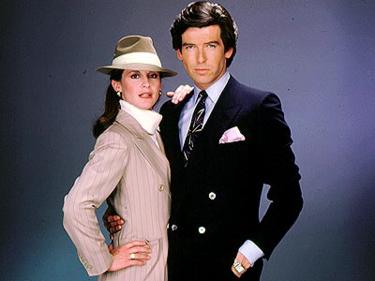
Heck, if you recall the first season of the series, Laura Holt (played by Stephanie Zimbalist) would even introduce the show as:

Try this for a deep, dark secret: the great detective, Remington Steele? He doesn’t exist. I invented him. Follow. I always loved excitement, so I studied, and apprenticed, and put my name on an office. But absolutely nobody knocked down my door. A female private investigator seemed so… feminine. So I invented a superior. A decidedly MASCULINE superior. Suddenly there were cases around the block. It was working like a charm… until the day HE walked in, with his blue eyes and mysterious past. And before I knew it, he assumed Remington Steele’s identity. Now I do the work, and he takes the bows. It’s a dangerous way to live, but as long as people buy it, I can get the job done. We never mix business with pleasure. Well, almost never. I don’t even know his real name!

However, in Butler’s idea of the show, there not only was not a REAL Remington Steele, there was no Remington Steele at ALL. Read the rest of this entry »
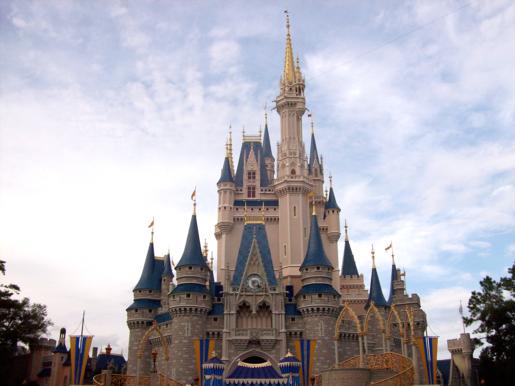
Is Cinderella’s Castle at Disney World Designed to be Able to be Broken Down in the Event of a Hurricane?

Here is the latest in a series of examinations into urban legends related to amusement parks and whether they are true or false.

AMUSEMENT PARK URBAN LEGEND: Cinderella’s Castle at Disney World is designed to be able to be broken down in the event of a hurricane.

Cinderella’s Castle is a major tourist attraction at both the Magic Kingdom in Walt Disney World….

AND in Tokyo Disneyland…

For something as fairly straightforward as Cinderella’s castle, it sure has drawn a lot of untrue stories over the years.

The simplest false story about the castle is the notion that bricks are involved in the building of the castle. That’s just plainly untrue – it’s just made to LOOK like brick and stones are used to make it.

However, an explanation for what it REALLY is made out of is also off the mark a bit, as well. The castle is often described as being made out of fiberglass (besides, of course, the concrete and steel foundation). While there ARE fiberglass aspects to the castle, the majority of the castle is instead made out of fiberglass-ESQUE material, specifically it is carbon fiber reinforced gypsum plaster. As you might imagine, “it’s made out of fiberglass” is a lot easier to relay than “it’s made out of carbon fiber reinforced gypsum plaster,” which would explain the confusion.

A story about Cinderella’s Castle that is even more fanciful is the notion that the castle is designed so that it could be taken apart in case of a hurricane, as Orlando is certainly susceptible to hurricanes.
Read the rest of this entry »
Tags:

March 21st, 2013 | Posted in Amusement Park Legends Revealed, Grab Bag Legends | 1 Comment

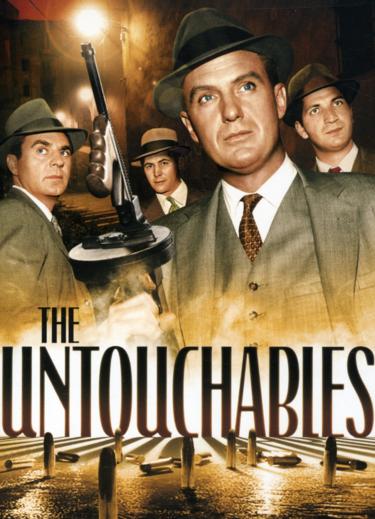
Did the Mafia Really Order a Hit on Desi Arnaz For His Role as the Producer of The Untouchables?

Here is the latest in a series of examinations into urban legends about TV and whether they are true or false. Click here to view an archive of the TV urban legends featured so far.

TV URBAN LEGEND: Did the Mafia really order a hit on Desi Arnaz for his role as the producer of The Untouchables?

As the discussion about violence in television and films continues to take a front seat in the media (particularly after the tragic events in 2012 in Aurora, Colorado and Sandy Hook, Connecticut), it is interesting to see just how long the battle over television violence has been going on. Over fifty years ago, there were Congressional hearings addressing television violence! In 1961, the third congressional hearing took place discussing the effects of television violence upon juveniles took place. It lasted nearly a year from June 1961 to May 1962. Once it finished, Congress released no reports and made no findings. However, the two series that were generally the two most discussed during the hearings were the short-lived anthology series Bus Stop (some folks even refer to the 1961 hearings as the “Bus Stop hearings”) and the hit weekly series about Elliot Ness and his elite group of federal agents taking on the mob, The Untouchables.

Bus Stop was mostly in trouble for its usage of teen idol Fabian as a serial killer in one episode. The Untouchables, on the other hand, was roundly criticized in general for its use of violence on a regular basis. Anti-violence advocates were not the only people angry at The Untouchables, though. Decades before The Sopranos found themselves on the bad side of the Italian Anti-Defamation League, The Untouchables was attacked by many who felt that the show treated Italians and Italian-Americans as cartoonish villains. Unsurprisingly, among those angry at the show and its producer, Desi Arnaz (of I Love Lucy fame), was the Mafia. However, did their anger go so far as to order that Arnaz be murdered?

Read on to find out!
Read the rest of this entry »
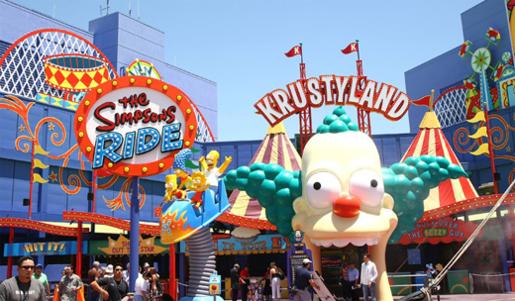
Did Some Riders on the Simpsons Ride in Universal Studios Once Unexpectedly Get Doused With Vegetable Oil?

Here is the latest in a series of examinations into urban legends related to amusement parks and whether they are true or false.

AMUSEMENT PARK URBAN LEGEND: Riders of The Simpsons Ride at Universal Studios Orlando were unexpectedly doused with vegetable oil during a ride!

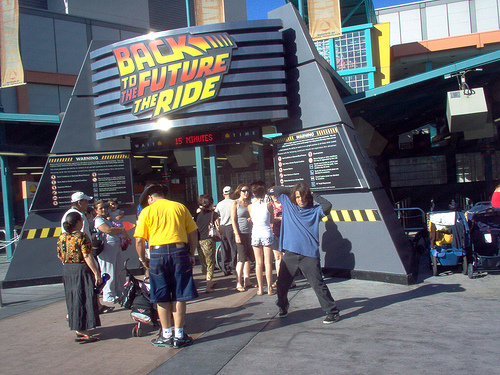
After a long and popular tenure at Universal Studios (both Orlando AND Hollywood branches), Back to the Future: The Ride became a thing of, well, you know…

It was replaced by what has become one of the most popular amusement park rides of all-time, The Simpsons Ride.

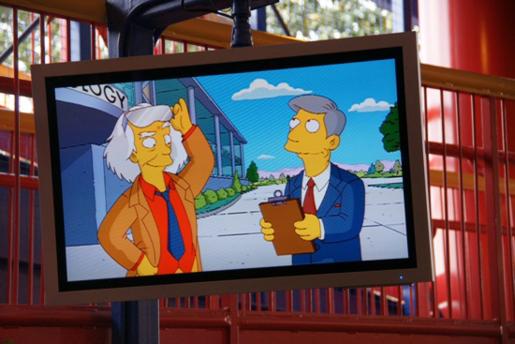
The Simpsons, as they are wont to do, even made self-referential fun of the fact that they are replacing Back to the Future, with a video that plays as people wait on lie that works in Doc Brown from Back to the Future…

Christopher Lloyd even voices Doc Brown for the short video (which features Professor Frink going back in time to try to stop Krustyland from taking over from Doc Brown’s Institute of Future Technology, only to inadvertently CAUSE the ruination of the Institute, allowing Krusty to take over).

The ride was the fastest ride to ever reach one million customers, which it achieved in July of 2008, only months after opening in May of 2008.

However popular it was, fans of the rides were likely NOT fans of something that happened on June 13th of 2008.
Read the rest of this entry »

Was Disneyland’s First Opening So Screwed Up That They Pretended It Didn’t Happen for More Than a Decade?

Here is the latest in a series of examinations into urban legends related to amusement parks and whether they are true or false.

AMUSEMENT PARK URBAN LEGEND: The Opening Day of Disneyland was so fraught with problems that for a decade or so Walt Disney did not acknowledge it as the park’s actual opening.

Every year, on July 17th, workers at Disneyland (at least the “cast members” or whatever the heck they call the people who interact with the public) wear buttons stating how many years it was since Disneyland opened its doors on July 17th, 1955.

However, that Sunday was such a disaster that for over a decade, Disney did not even acknowledge that day AS the opening day for the park!
Read the rest of this entry »
Tags:

March 18th, 2013 | Posted in Amusement Park Legends Revealed, Grab Bag Legends | No Comments

Did Jean Acker Sue For the Right to be Referred to as “Mrs. Rudolph Valentino”?

Here is the latest in a series of examinations into urban legends about movies and whether they are true or false. Click here to view an archive of the movie urban legends featured so far.

MOVIE URBAN LEGEND: Jean Acker sued for the right to call herself “Mrs. Rudolph Valentino.”

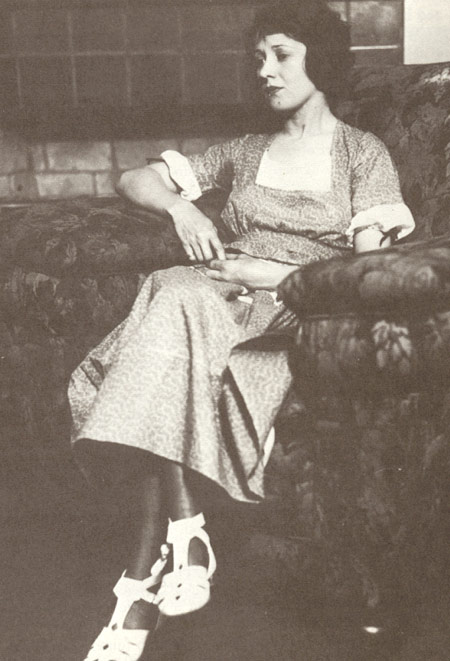
Jean Acker was a silent film actress whose career lasted well into the 1950s (okay, it lasted INTO the 50s, it was not doing “well” at that point, however).

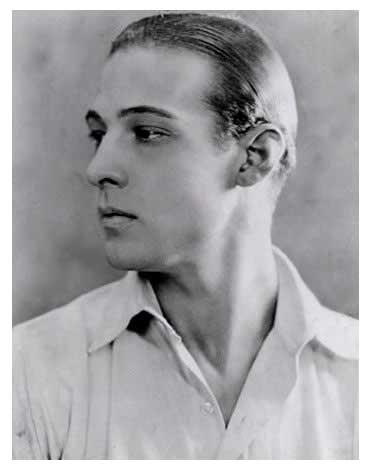
After a quick courtship, she entered into basically a marriage of convenience (as Acker was a lesbian) with budding film star, Rudloph Valentino.

She locked him out of their hotel on the night of their marriage, and according to the court proceedings of their divorce, the marriage was never consummated.

Soon after, Valentino hit it big in the movie industry, with his roles in a few major films, including the Sheik…

Now that he was famous (and wealthy), Acker decided to sue him for divorce, with the knowledge that he actually married another woman while they were technically still married.

The battle was a rough one, with attempts on both sides to tear each other’s character apart.

In the end, Valentino basically won, although he still had to pay a settlement to Acker that he felt was too much.

Acker then actually sued for the right to use the name “Mrs. Rudolph Valentino” publicly!
Read the rest of this entry »